Listen to this article
Read by an AI-generated voice · Report a mispronunciation
What happened?
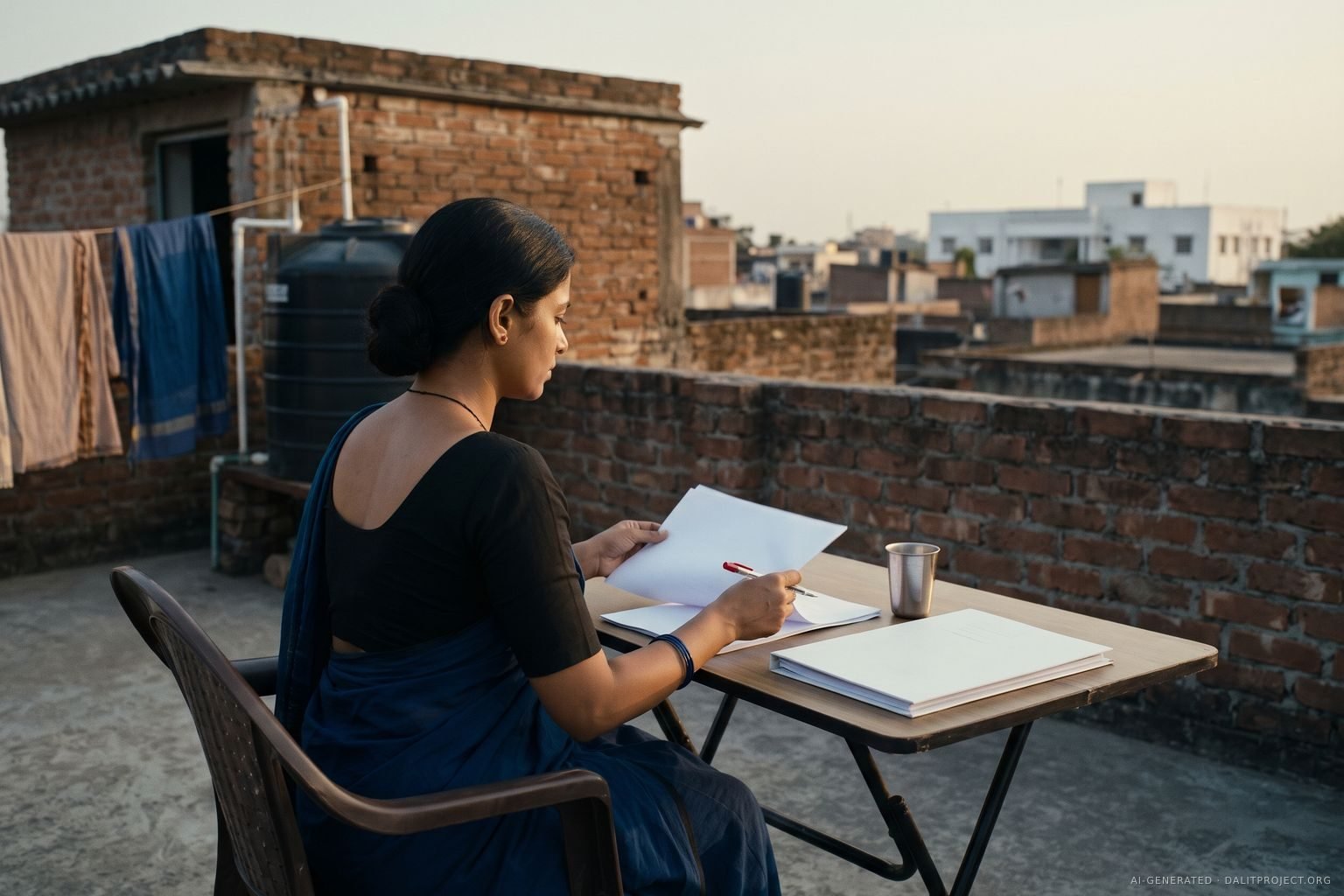
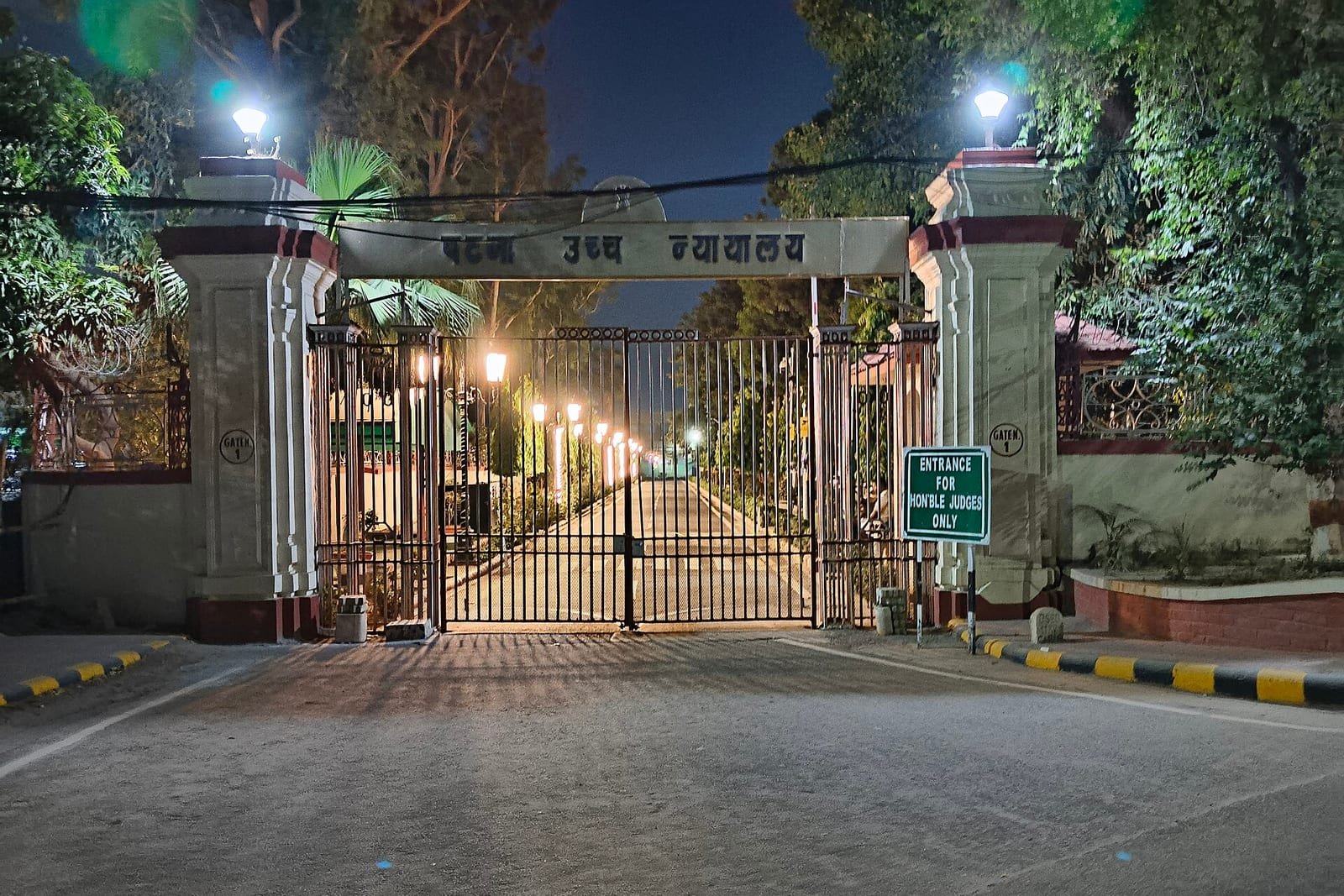
The Patna High Court is the highest court of Bihar, a State in eastern India. A Division Bench (a two-judge bench) of that court, Justices Prabhat Kumar Singh and Rana Vikram Singh, upheld the rejection of a woman’s application under the Scheduled Caste category for the post of Assistant Prosecution Officer, LiveLaw reported on 9 November 2026. Scheduled Castes are the communities, among them those once branded “untouchable”, that India’s Constitution lists for reserved seats and jobs; Dalit is the name many of their people chose for themselves.
She told the Court that she belongs to the Dushadh caste, which is recognised as a Scheduled Caste both in Uttar Pradesh, the northern State she comes from, and in Bihar, its eastern neighbour, where she married on 27 February 1996, according to the same report. She told the Court she had studied in Bihar and lived there permanently for more than 28 years.
She applied to the Bihar Public Service Commission (BPSC), the State’s recruitment body, under Advertisement No. 01/2020, passed the preliminary examination, sat the main examination and was interviewed. When the final results came out on 2 December 2023, she was one of eight candidates declared unsuccessful; the ground in her case was that her caste or domicile certificate had not been issued on the basis of her father’s permanent place of residence, LiveLaw reported. Her father was a permanent resident of Uttar Pradesh. The BPSC rejected her representation (a formal objection) and a review; a single judge of the High Court dismissed her petition on 6 August 2024, and she appealed. Her father’s address, not her own, decided which State’s list she could claim under.
What did the Court say?
Her lawyer argued, LiveLaw reported, that under sections 15 and 16 of the Indian Succession Act, 1925, a colonial-era law on inheritance, a woman takes her husband’s domicile on marriage, so her domicile was Bihar. The Bench called that argument “wholly misplaced”. It held, citing Article 16(4) of the Constitution, the clause that lets a State reserve posts in its services for classes of citizens it finds not adequately represented there:
“Civil domicile acquired by operation of law upon marriage does not automatically confer constitutional reservation benefits under Article 16(4) of the Constitution of India… A person who is a member of a Scheduled Caste in State ‘A’ cannot carry that status to claim reservation benefits in State ‘B’ upon voluntary migration or marriage. Reservation rights are anchored to the origin and birth of the candidate in the state where the disadvantage was historically suffered.”
The State and the BPSC told the Court that the advertisement limited caste reservation to permanent or original residents of Bihar. The Bench held that these conditions had been fixed before the examinations began and that she was bound by them, LiveLaw reported.
Why does it matter?
The rule does not ask where a Dalit woman lives, works, studies or faces caste. It asks where she came from, and the BPSC read that from her father’s address. On the courts’ reading, a woman who stays in the State she was born in never meets the rule. A woman who moves to her husband’s State meets it for as long as she lives there.
That is not only this case. In a 2018 order of the Supreme Court, India’s highest court, a woman of the Valmiki caste lost her claim. Valmiki is a Scheduled Caste in Punjab, in the north-west, where she came from. She married a Valmiki man in Uttarakhand, a northern hill State where Valmiki is also listed, and moved there. In November 2025 the Uttarakhand High Court turned away women from other States who had settled there after marriage, among them a woman of the Jatav community, a Scheduled Caste in Uttar Pradesh, from that State’s Moradabad district, ETV Bharat reported. The High Court of Madhya Pradesh, in central India, upheld the refusal of a permanent caste certificate to a woman who had moved from Uttar Pradesh after marriage; the authorities had turned her down because her father’s family had not lived in Madhya Pradesh in 1950, Verdictum reported in October 2026. The High Court of Jharkhand, the eastern State carved out of Bihar, applied the same rule, for Scheduled Tribes (the Adivasi communities the Constitution lists in the same way), to a woman from Bihar who had married into Jharkhand, Verdictum reported in December 2023. The Himachal Pradesh High Court, in the northern hill State next to Punjab, upheld the State government’s refusal of reservation to three women from Punjab and Haryana, its neighbours to the west and south, who had married men of their own castes in Himachal Pradesh, among them a woman of the Valmiki community, a Scheduled Caste in Haryana, ETV Bharat reported in June 2026. In each, those who lost were women who had moved to their husbands’ States.
Why is Scheduled Caste status tied to a State at all?
i
CC BY-SA 4.0Original on Wikimedia CommonsBecause the Constitution writes it that way. Article 341 lets the President specify which castes count as Scheduled Castes, and the Order made under it lists them State by State, as our explainer on who writes those lists sets out. Articles 341 and 342 identify Scheduled Castes and Scheduled Tribes in relation to particular States, the Madhya Pradesh High Court explained, and extending the privileges across States would render the constitutional expression “in relation to that State” ineffective, Verdictum reported.
The Supreme Court has given the reason in two Constitution Bench judgments (rulings of its larger benches that settle questions of constitutional law), Marri Chandra Shekhar Rao (1990) and Action Committee (1994). Relying on the first, the Madhya Pradesh High Court said a migrant “does not carry and cannot carry the special rights and privileges” granted in the home State; citing the second, it said the hardships that put a caste on one State’s list may not exist, or may exist to a different degree, in another, Verdictum reported.
What if her caste is on both States’ lists?
Under the Supreme Court’s 2018 order, it makes no difference, though not every judge has read the law that way. Earlier rulings, in the cases of Alka Singh, Madhu Rana and Sanjay Kumar Singh, had held that benefits could follow a migrant where the same caste was listed in both States, the Madhya Pradesh High Court noted, but the Supreme Court’s three-judge order in Ranjana Kumari settled the question against that view, according to Verdictum’s report. That order of 1 November 2018 says “merely because in the migrant State the same caste is recognized as Scheduled Caste, the migrant cannot be recognized as Scheduled Caste of the migrant State”, and that a caste certificate issued by the new State “cannot dilute the rigours” of the two Constitution Bench judgments, the order reads.
The question has not gone away. In January 2026 a single judge of the Madhya Pradesh High Court, Justice Jai Kumar Pillai, held that women from other States who had moved to Madhya Pradesh on marriage were not to be treated as migrants for service and reservation purposes, and that, where the recruitment rules did not bar certificates from other States, the recruiters had to check whether the women’s caste was reserved in both States, LiveLaw reported. In October 2026 a Division Bench of the same High Court, in the case of the woman from Uttar Pradesh above, took the opposite line on the strength of Ranjana Kumari, Verdictum reported.
Does she lose Scheduled Caste status altogether?
No. The settled position, the Jharkhand High Court said, is that a person who has migrated to another State “shall get benefit of reservation only in the State of origin”, Verdictum reported. On that position, the woman in the Patna case could look for reservation only in Uttar Pradesh, the State she left when she married in 1996, and not in Bihar, where she lives.
Is there a case for the rule?
The courts give two reasons. One is to protect each State’s own Scheduled Castes: extending reservation to migrants would violate the constitutional rights of the State’s original Scheduled Caste members, the Uttarakhand High Court held, ETV Bharat reported. The other, in the Patna Bench’s words, is “to prevent candidates belonging to general or forward classes in their home State from claiming unearned benefits in another State by marriage or relocation”, LiveLaw reported.
The second reason does not describe this appellant. Her caste is a Scheduled Caste in her home State too, by her own case as LiveLaw reports it. The first reason has weight: a reserved post a migrant takes is one a State’s own Scheduled Castes do not get. But the rule draws its line at the State border and at the father’s address, not at disadvantage, and the cases show who stands on the wrong side of that line.
Key terms
- Scheduled Castes: the communities listed, State by State, under Article 341 of the Constitution for reserved seats and jobs.
- Article 16(4): the clause of the Constitution that lets a State reserve posts for any backward class not adequately represented in its services.
- Domicile: the place the law treats as a person’s permanent home.
- State of origin and State of migration: the courts’ terms for the State a person comes from and the State they move to.
What’s next?
LiveLaw’s report does not say whether the appellant will go to the Supreme Court. The rule she lost under rests on the Supreme Court’s own Constitution Bench judgments, which its 2018 order applied to a woman who had moved by marriage. Watch the other High Courts: with Patna, at least five have now applied the same rule to women who married across a State line, while a single judge in Madhya Pradesh read the law the other way in January 2026.