Listen to this article
Read by an AI-generated voice · Report a mispronunciation
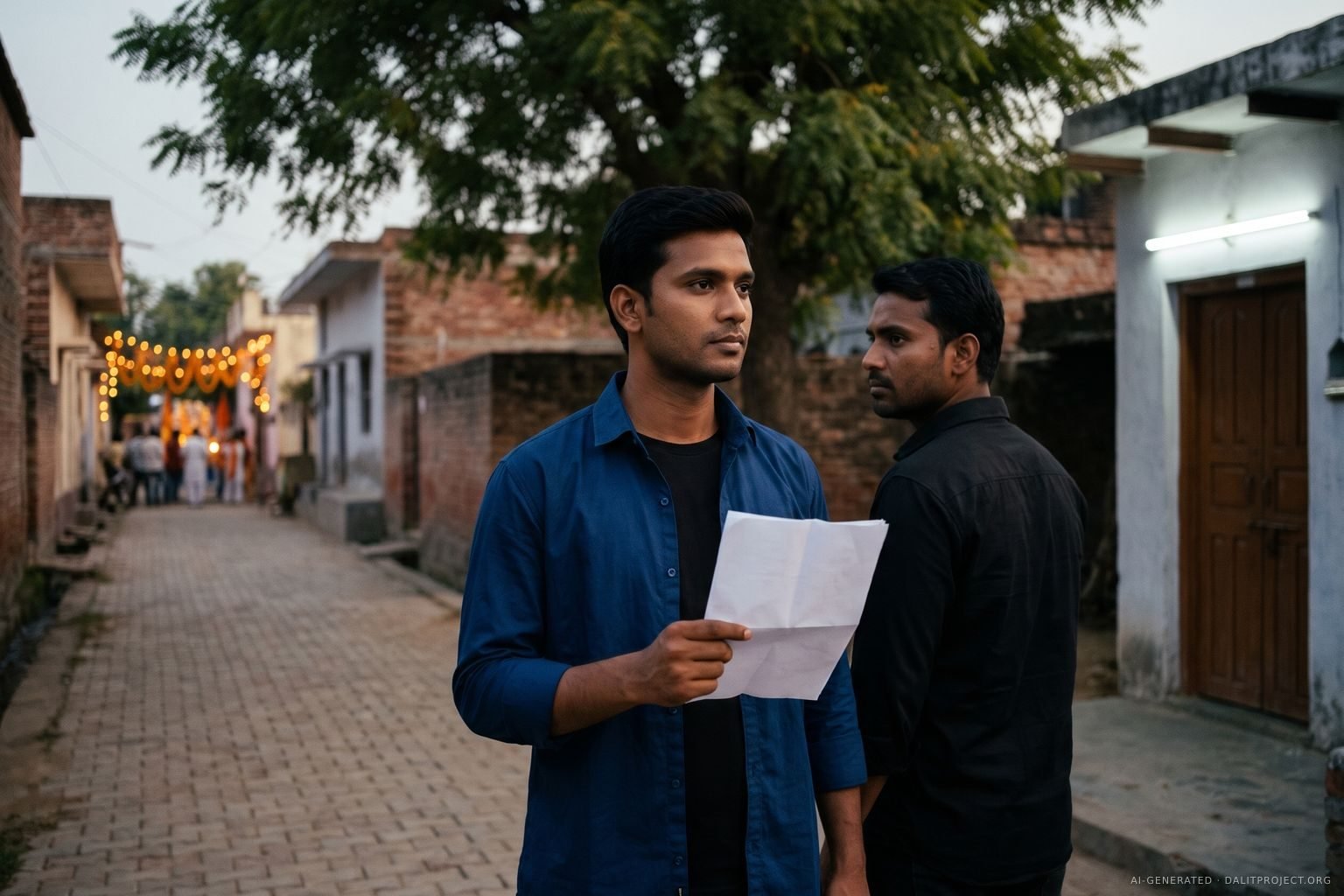
On 23 October 2026, a Dalit woman went with her cousin to a toilet built beside a village pond in Pilibhit district, in the north of the state of Uttar Pradesh. Dalits are among the communities once branded “untouchable” under India’s caste order. According to the account reported by The Mooknayak, a Hindi news site that reports on caste and marginalised communities, two men from the Thakur community, which claims a place near the top of the caste order, grabbed her and molested her there. When she screamed, two other women of the village ran towards her, and the men fled. As they ran, she says, they abused her with casteist slurs and threatened to kill her.
Her father told The Mooknayak that theirs is the only Dalit family in the whole village, where most people are savarna, the castes that claim the top of the caste order, and that some influential people in the village have often harassed the family.
That is what makes this case more than one complaint among thousands. India’s law against caste violence was written for harms like the ones she describes: the sexual assault of a Dalit woman, a caste insult and a threat. But a law on paper works only through the people who enforce it, and the family it must protect here has no Dalit neighbours to stand with them. What the police and the state do next, and how fast, is the test.
What happened
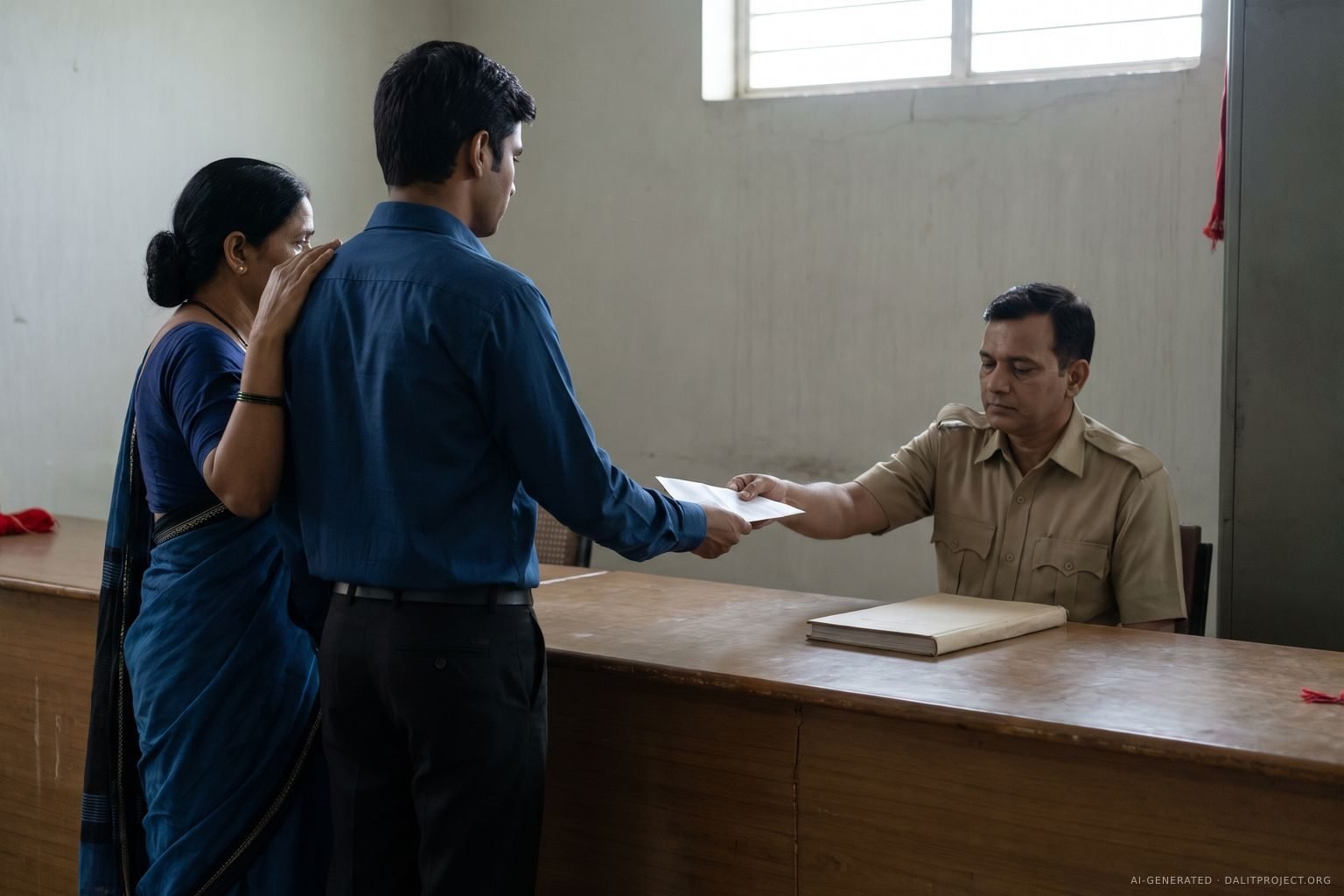
The account so far comes from one report, published by The Mooknayak on 27 October. It rests on the woman’s written complaint, her father’s account and what a police officer said. Her father went to the police on 26 October. The case was registered that Monday evening, on her written complaint.
The acting station house officer, the officer in charge of the local police station, told The Mooknayak that strict legal action is being taken against the accused. The report says the First Information Report (FIR), the police complaint that opens a criminal case, was registered against both men under four sections of the Bharatiya Nyaya Sanhita (BNS), India’s criminal code since 2024: 126(2), wrongful restraint; 74, assault intended to outrage a woman’s modesty; 352, intentional insult; and 351(3), criminal intimidation. It also carries what the report calls the relevant sections of the Scheduled Castes and Scheduled Tribes (Prevention of Atrocities) Act, India’s 1989 law against caste violence, usually called the Atrocities Act. (Scheduled Castes and Scheduled Tribes are the official categories for Dalit and Adivasi communities; Adivasis are India’s Indigenous peoples.) The report does not say which ones.
The report does not name the two men or say whether either has been arrested, and it carries no response from them. What the FIR records are allegations; none has been tested in court. By 21 November, The Dalit Project’s searches of English and Hindi news found no later report of an arrest, a charge sheet or a response from the two men.
The mechanism: what the law adds, and who must make it work
14,642 crimes against Scheduled Castes recorded in Uttar Pradesh in 2024, the most of any state. Source: National Crime Records Bureau (NCRB), as reported by The Quint, an Indian news site
Uttar Pradesh records more crimes against Dalits than any other state: 14,642 in 2024, on figures from the NCRB, the central government’s crime-statistics office.
The criminal code already punishes molestation, insult and threats. The Atrocities Act adds three things that matter here.
First, it names the harm. Since an amendment passed in 2015, a person who is not Dalit or Adivasi commits an offence if he “intentionally touches a woman belonging to a Scheduled Caste or a Scheduled Tribe, knowing that she belongs to a Scheduled Caste or a Scheduled Tribe, when such act of touching is of a sexual nature and is without the recipient’s consent”. The same section covers abusing a Dalit person “by caste name in any place within public view”, the slurs the woman says the men shouted as they fled, with two women of the village running towards them. Whether a place counts as within public view is a question courts have argued over at length. These offences carry six months to five years in prison. The report does not say which of them the FIR carries, and that is the first thing a charge sheet will show.
The same amendment also anticipates the defence that an accused did not know the woman was Dalit. Where an accused “was having personal knowledge of the victim or his family, the Court shall presume that the accused was aware of the caste or tribal identity of the victim, unless the contrary is proved”. The report does not say whether the two men knew the woman or her family; that is for the investigation, and then a court, to establish.
Second, it puts the police on a clock. Among the duties the Act sets for a public servant is to “conduct the investigation and file charge sheet in the Special Court or the Exclusive Special Court within a period of sixty days, and to explain the delay if any, in writing”. A charge sheet is the police’s final report setting out the charges; a Special Court, or an Exclusive Special Court, is a court set aside to try cases under the Act. A public servant who is not Dalit or Adivasi and who wilfully neglects those duties faces six months to a year in prison. The Act does not say from which day the 60 days run. Counted from the FIR on 26 October, they end on 25 December 2026. The Act also says a trial should, as far as possible, be completed within two months of the charge sheet. It does not mean every FIR ends in a charge. It means an answer, on the record and on time, with a written reason if it is late.
Third, it makes the state answer for the family’s safety. The Act says “[i]t shall be the duty and responsibility of the State to make arrangements for the protection of victims, their dependents, and witnesses against any kind of intimidation or coercion or inducement or violence or threats of violence”, and that a victim has the right to timely notice of any court proceeding, “including any bail proceeding”. Here the complaint itself records a threat to kill, and the two women who ran to help her live in the same village as the family.
“Sexual violence against Dalit women and girls is a violation of their fundamental rights to equality, life and dignity. The stigma associated with it as well as the caste discrimination by state authorities compounds the trauma experienced by Dalit survivors and act as barriers to their access to justice.”
— Manjula Pradeep, Dalit lawyer and national convenor of the National Council of Women Leadersi
Source: quoted in BehanBox, an Indian publication on gender, 2022
The strongest counter-reading, and why it falls short
The case for patience is real. The family went to the police on 26 October, and the FIR was registered the same evening, on the woman’s own written complaint, with the Atrocities Act applied rather than left out. That is more than many Dalit complainants get: in other cases, a father waited ten days for an FIR, and an FIR left the atrocities law out. Everything in the public record is still one side’s account. The 60 days have not run out.
But registration is where the record begins, not where it is settled. Across India, trials pending under the Atrocities Act reached 287,694 in 2024, on NCRB data tabled in Parliament’s upper house, the Rajya Sabha, in July 2026, as reported by SCC Times, an Indian legal news site. The same figures record convictions in 5,192 cases that year. A case like this one rests on the word of a woman, the cousin who was with her and two other women of the village, in a village where her family stands alone. The stages of the law that keep those witnesses safe and on the record are the ones after the FIR, and those are the stages no report yet describes.
What to watch
Three things. First, arrests: whether the police detain the two men, and say so. Second, the charge sheet: whether one is filed in the Special Court by about 25 December, and whether it carries the Act’s offence of sexual touching and the offence of caste abuse in public view, or only the general sections. Third, protection: whether the state does anything visible to keep the woman, her family and the women who ran to help her safe from the threat the complaint records.
She says two men grabbed her by the village pond and abused her by caste. Three days later, her father went to the police, and the case was registered on her written complaint. The law promises her an answer within 60 days, and her family protection while she waits. In a village where hers is the only Dalit family, the second promise may matter as much as the first.