Listen to this article
Read by an AI-generated voice · Report a mispronunciation
The rules that keep caste in place are usually told as rules about other people: who may enter the kitchen, who may touch the water, whom a family’s children may marry. A paper published on 13 November 2026 in the journal Studies in Comparative International Development asks what those same rules do to the women inside the households that keep them. Its answer is in its title: “Caste is Gender, Gender Caste.”
The authors are Nandagopan, of the Sarla Anil Modi School of Economics at NMIMS, a university in Mumbai, in western India, and of the Indian Institute of Management (IIM) Kozhikode in Kerala, in southern India, and Anirban Ghatak of IIM Kozhikode. They report two findings. Where a household reports practising untouchability, the women in it face “more restrictive gendered outcomes”. Where a woman has married across caste, she has “higher autonomy across multiple domains”. Read together, the two findings make a structural point: the boundary a household draws against Dalits, the communities once branded “untouchable”, and the boundary it draws around its women are drawn by the same hand.
What the study did
The paper uses the India Human Development Survey-II (IHDS-II), a household survey from 2011–12. The Indian Express, a national daily newspaper, described it as covering more than 42,000 households across India. It was run by the National Council of Applied Economic Research (NCAER), an independent, non-profit economic policy research institute, and the University of Maryland in the United States.
The authors say they shift attention “from caste as identity to caste as practice”. Rather than asking which caste a household belongs to, they look at two things households do. The first is enforcing purity and pollution, the idea that contact with Dalits defiles: in the survey, whether a household says it practises untouchability. The second is endogamy, the rule that people marry only inside their own caste, and the breach of it, inter-caste marriage.
On untouchability, the paper looks at three outcomes for women: whether they work for pay, whether they veil, and the order in which members of the household eat. On inter-caste marriage, it looks at women’s autonomy in four areas: decision-making, mobility, economic agency and social participation. It uses instrumental-variable methods, a statistical technique that tries to separate cause from coincidence by using a third factor that shapes the practice but should not, on its own, shape the outcome. The abstract reports that reported untouchability is “consistently associated with more restrictive gendered outcomes”, and that inter-caste marriage is “associated with higher autonomy across multiple domains”.
The full paper is behind Springer’s paywall. Only the abstract, the authors’ notes and the rest of the article’s public page are open, so the size of each association, the instrument the authors used and how their results differ by region are not public; the page lists appendix tables on regional differences, state-level checks and how far the estimates would bend before breaking.
The mechanism: one boundary, two directions
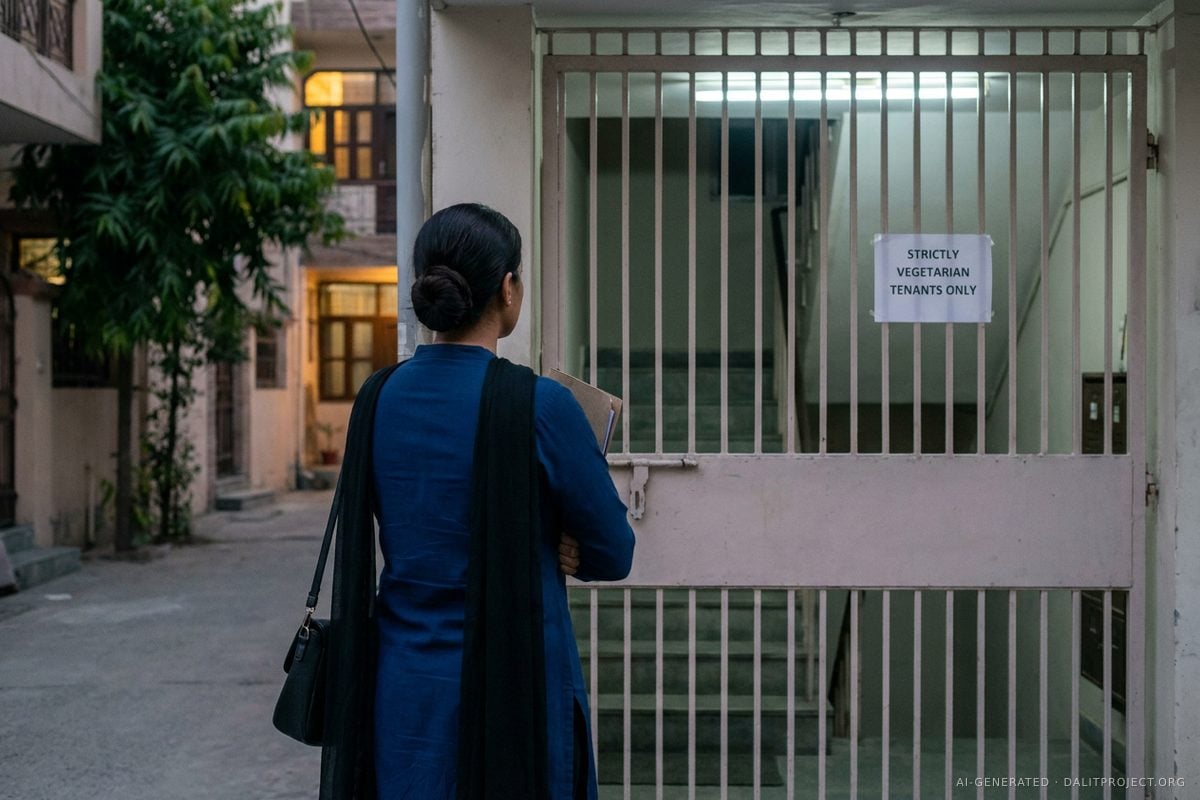
The survey the paper draws on has already shown how common the first practice is. When IHDS-II asked, “Does anyone in your family practise untouchability?”, and followed a “No” with “Would it be okay for a Scheduled Caste person to enter your kitchen or use your utensils?”, 27 per cent of respondents reported practising untouchability in some form, The Indian Express reported in 2014. (Scheduled Castes is the Indian Constitution’s term for Dalit communities.) The share was 52 per cent among Brahmin respondents, the caste ranked highest in the scriptural order.
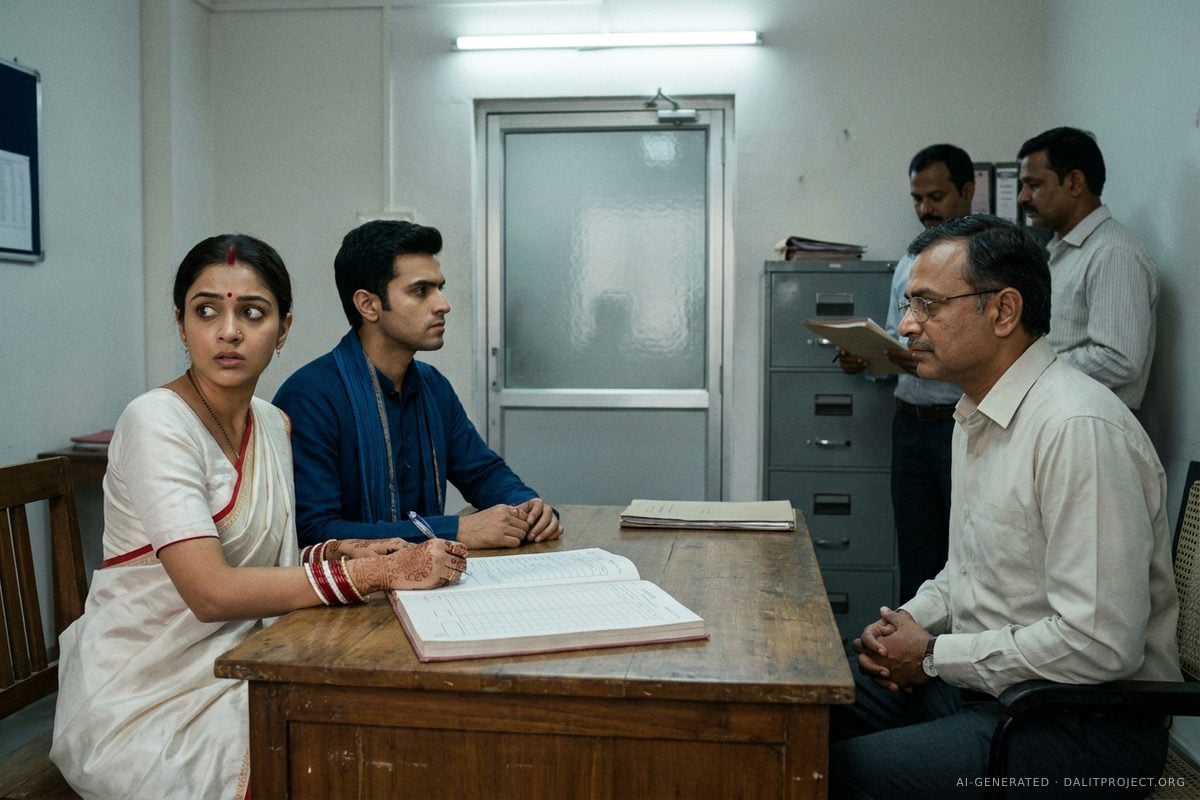
The second practice is rarer to breach than to keep. When married women aged 15 to 49 were asked whether theirs was an inter-caste marriage, 5.4 per cent said yes, The Hindu, a national daily newspaper, reported in November 2014, in a report NCAER republished. There was no change from the survey’s previous round in 2004–05. The share ran from under 1 per cent in Madhya Pradesh, in central India, to more than 11 per cent in Gujarat, in the west, and Bihar, in the east.
5.4% of married women aged 15 to 49 said theirs was an inter-caste marriage, India Human Development Survey, 2011–12. Source: The Hindu, republished by NCAER
The two numbers belong together. A household that keeps a Dalit out of its kitchen is guarding a line of contact, and, on Ambedkar’s reading below, the guarding of that line has always run through its women: what they eat and when, where they may go, who sees their face, whom they marry. The paper’s word for what women in inter-caste marriages gain is a “dividend”. Read with the survey’s 5.4 per cent, it is a dividend that about 19 married women in 20 in the survey did not have.
The survey itself warned that “different caste” means what the woman takes it to mean. “Questions on caste are some of the most complex questions Indian surveys can ask,” Sonalde Desai, the demographer who led IHDS-II, told The Hindu. The survey asked women whether their natal family belonged to the same caste as their husband’s, which Desai said let it “bypass the complex issue of defining what caste means”.
Ambedkar’s reading, a century earlier
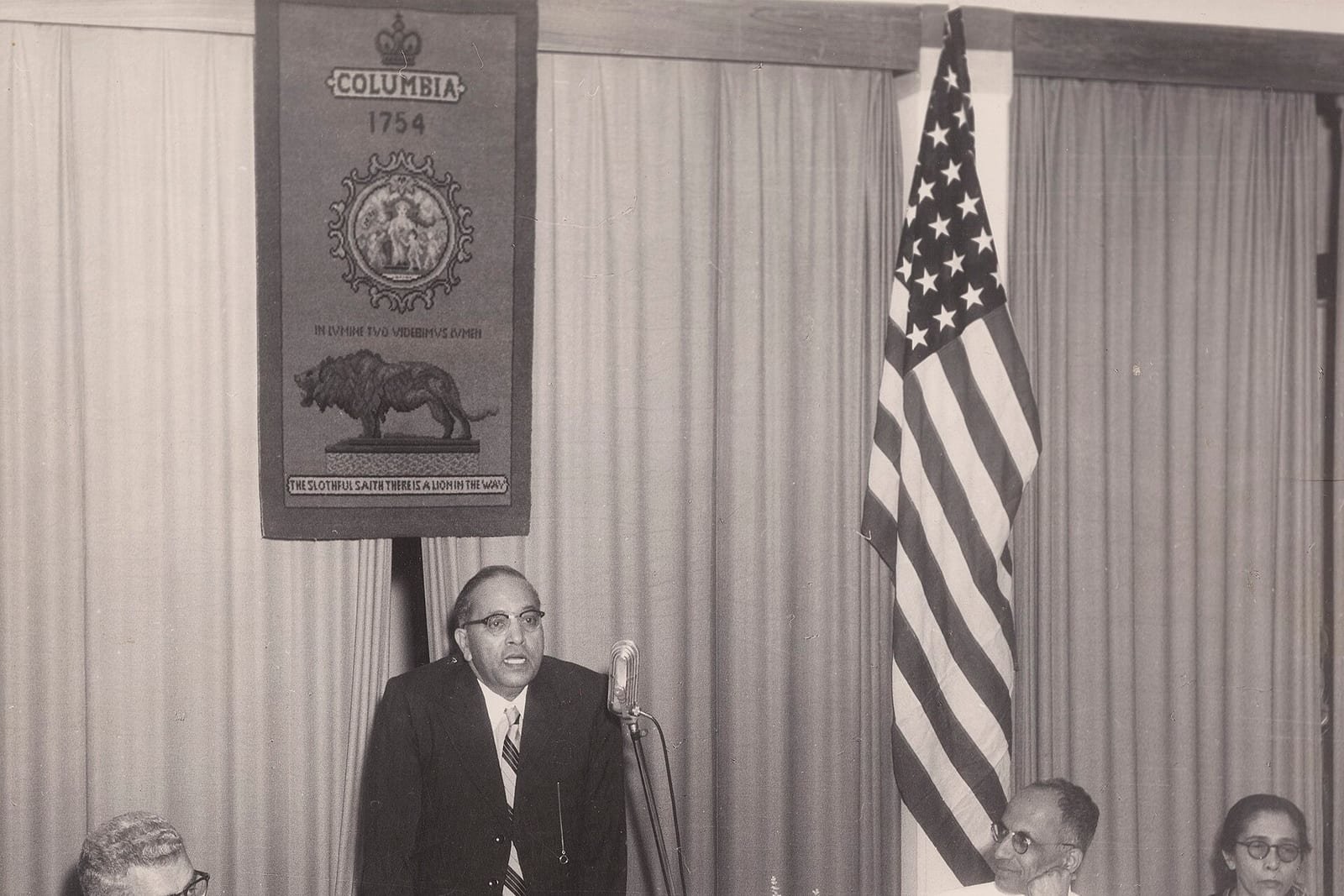
None of this would have surprised B.R. Ambedkar, the Dalit scholar and leader. In a paper he read at Columbia University in New York in 1916, he argued that endogamy is caste:
“Caste in India means an artificial chopping off of the population into fixed and definite units, each one prevented from fusing into another through the custom of endogamy.”
— B.R. Ambedkar, “Castes in India: Their Mechanism, Genesis and Development” (1916)i
Source: Wikisource
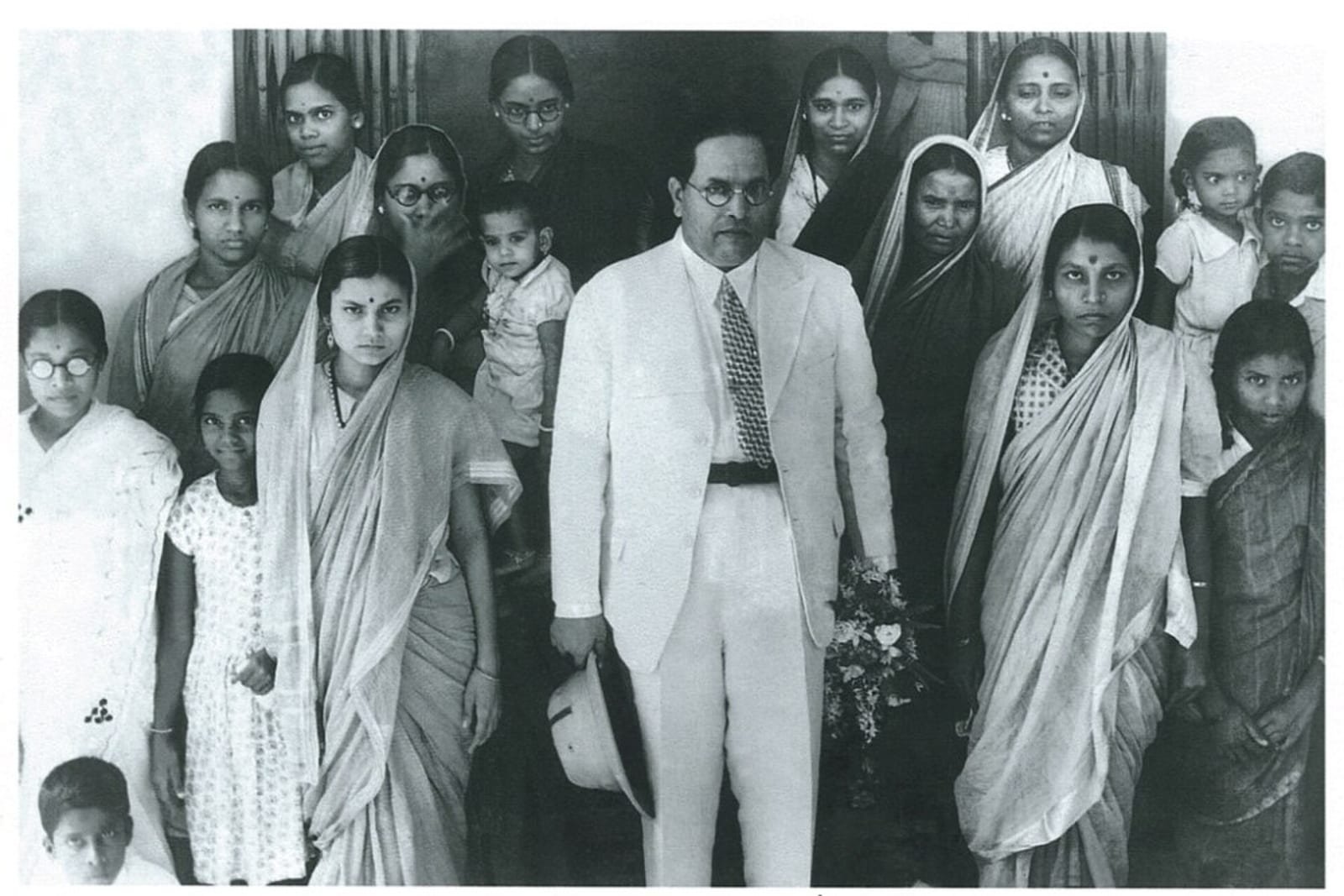
i
Public domainOriginal on commons.wikimedia.orgIn the same paper he argued that keeping a caste closed required controlling women: he named sati, the burning of a widow on her husband’s funeral pyre, enforced widowhood and girl marriage as customs “primarily intended to solve the problem of the surplus man and surplus woman in a caste and to maintain its endogamy”. “Strict endogamy could not be preserved without these customs,” he wrote, “while caste without endogamy is a fake.”
The new paper measures something narrower and more recent: a household’s own report of untouchability and a woman’s own report of her marriage, in 2011–12. But its argument is the one Ambedkar made. The controls on women are not a side effect of caste. They are part of how it is kept.
The strongest objection
The obvious objection is that the study may have the arrow the wrong way round. Women who already had more freedom, through education, work, money or a family more willing to bend, may be the ones able to marry across caste, so inter-caste marriage would be a sign of autonomy, not its source. Households that report untouchability may differ in many other ways that also shape women’s lives.
The instrumental-variable design is the authors’ answer to exactly this, and the appendix tables on how far the estimates would hold under weaker assumptions suggest they tested it. The paper’s own wording, “associated with”, is careful not to claim more. Without the full text, how strong the instrument is cannot be judged from outside.
But the objection, even if it held, would not weaken the structural point. If only women who already have room to move can cross the boundary, then the boundary is doing what Ambedkar said it does: keeping women’s lives inside the caste’s limits, and making the way out a privilege. Either way, the practice and the restriction travel together.
Two further limits matter. The data are from 2011–12, and the survey counts what households and women were willing to say. A household that practises untouchability but will not admit it is not counted as one, so the 27 per cent is more likely a floor than a ceiling.
What to watch
The paper’s abstract does not say whether the link holds the same way for Dalit women and for women in dominant-caste households, those of the castes that hold land and social power over Dalits. The practice is not confined to one side of the line: in the same survey, 15 per cent of Scheduled Caste respondents said they practised untouchability in some form, against 52 per cent of Brahmin respondents. Whether the link differs between groups is a question for the paper’s tables on regional differences and on how the association varies, which are behind the paywall.
It also points at the state. In a note on the article’s public page, the authors write that the Special Marriage Act of 1954, the law meant to be a secular route for inter-faith and inter-caste marriage, has a 30-day notice and public display requirement that has been “widely criticized for turning it into a surveillance and harassment tool in conservative districts”. Another of its notes cites news reports of violence over inter-caste marriage, among them a report in The Hindu headlined, as the note gives it, “Intercaste marriage: girl’s brothers hack youth to death near Sivakasi in Tamil Nadu’s Virudhunagar district”. If marrying out is where the autonomy is, the law’s own procedure stands at the door.
The kitchen and the marriage
The kitchen a Dalit may not enter and the marriage a daughter may not make are usually reported as separate stories, one about untouchability and one about so-called “honour”. This study, on one national survey, treats them as one. Where a household keeps caste’s rules, its women live inside them too. Where a woman breaks the rule that matters most, she has, on the survey’s own measures, more say over her own life. Ambedkar called endogamy the mechanism. A century later, the data put women at its centre.