Listen to this article
Read by an AI-generated voice · Report a mispronunciation
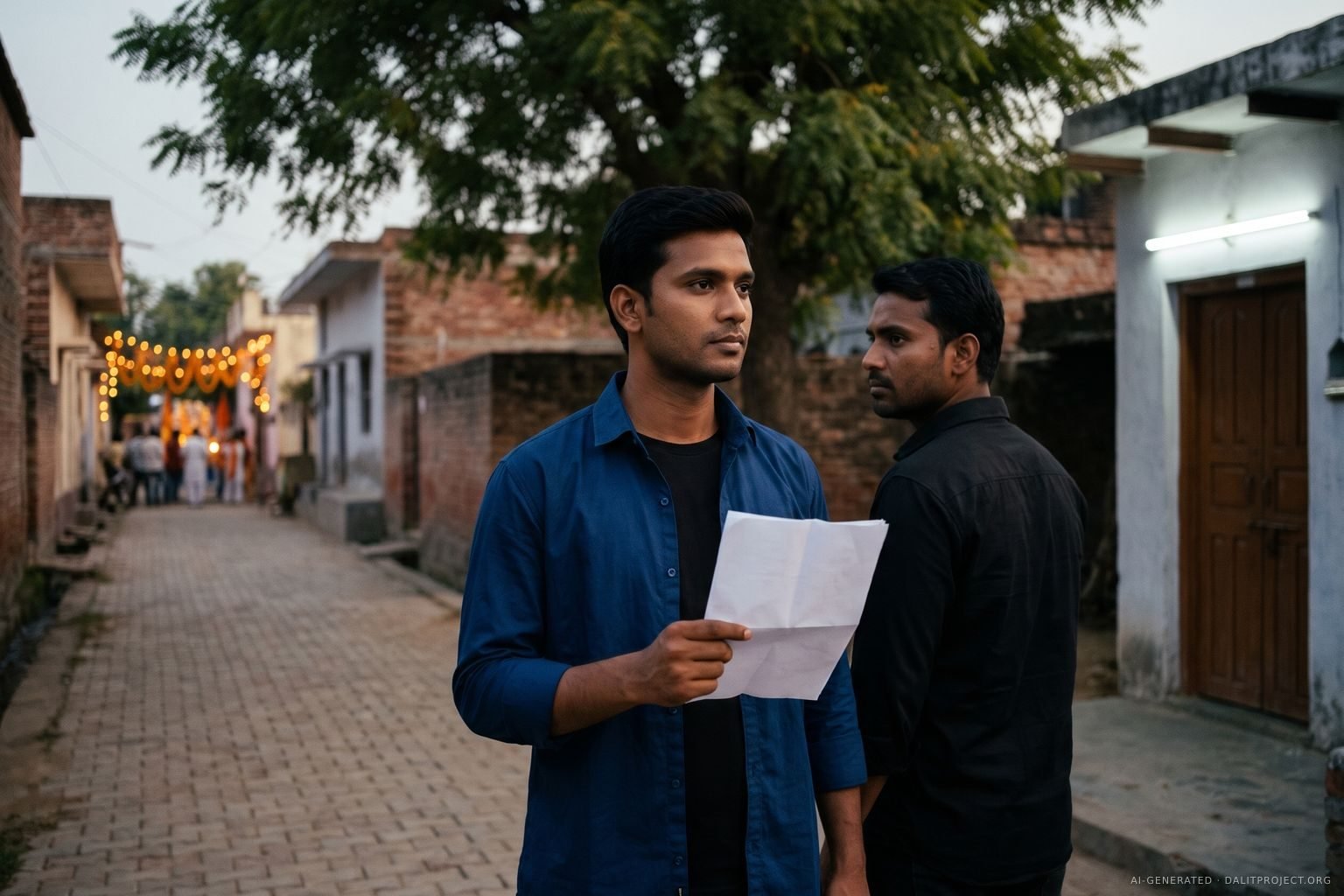
On 2 October 2026, Gandhi Jayanti, the birthday of Mohandas Gandhi, the village of Tamadaddi held its fair for the goddess Lakshmi Devi. Tamadaddi is in Teradal taluk, a sub-district of Bagalkot district in the north of the southern state of Karnataka. According to a complaint a Dalit resident later made to the police, the villagers who belong to the dominant castes were served the fair’s regular meal. Dalits, among the communities once branded “untouchable”, were given only ganji, a rice gruel, served separately, The Observer Post reported.
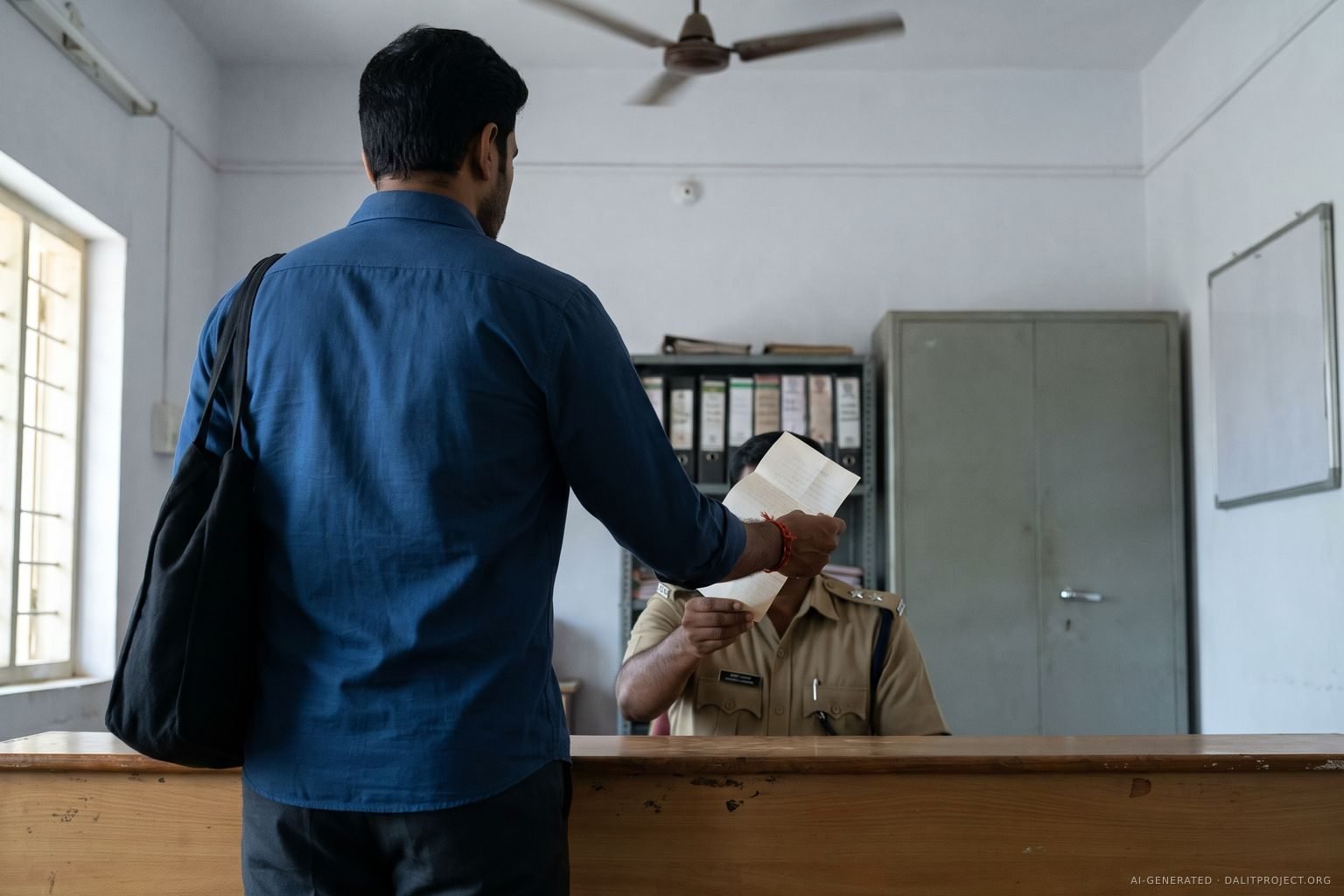
The man who complained is Basappa Yaladagal, a Dalit resident of the village. A case was registered on his complaint at the Teradal police station on 3 October, and about 20 people are named in it, the same report said. The Kannada news site Naanu Gauri, which gives his surname as Yaladagudda, reported that the complaint said separate arrangements were made for Dalits at the fair. Janayugom, a daily in Malayalam, the language of the neighbouring state of Kerala, reported that the complaint said Dalits were made to sit apart, and that police said an investigation had begun.
A plate of gruel is a small thing to take to a police station. That is the point of it. A shared feast at a village deity’s fair is where a village shows itself as one community, and a separate line with a lesser food tells Dalits, in front of everyone, that they belong to it only on terms. Indian law has called this a crime since 1955. The question the Tamadaddi case poses is whether the law can reach exclusion of the kind the complaint describes: practised in public, at a village’s own festival, on Gandhi’s birthday, with food rather than fists.
What happened
The reports agree on the core of the complaint. The fair was held at a Lakshmi Devi temple in Tamadaddi on 2 October. Dominant-caste villagers were served the regular meal; Dalits were served ganji, separately, according to the complaint as The Observer Post reported it. The reports name some of the roughly 20 people in the case but do not say what part each is alleged to have played. These are allegations in a police complaint. None of the reports says that anyone has been charged in court, and The Dalit Project found no public response from any of the people named.
The reports also say the allegation is not the village’s first. Similar allegations had surfaced earlier in Tamadaddi during another religious event, the Panchakalyanotsava, The Observer Post and Naanu Gauri reported. Neither says when that was, whether anyone complained to the police then, or what came of it.
Several things the reports do not say matter as much as what they do. None says which law the case was registered under: the Protection of Civil Rights Act, India’s 1955 law against untouchability, the Scheduled Castes and Scheduled Tribes (Prevention of Atrocities) Act, its 1989 law against caste violence, the general criminal code, or a mix. None reports an arrest. Since the case was registered, The Dalit Project has found no further report on it.
The mechanism: food, place and rank
Untouchability is the part of the caste order that treats Dalits as ritually polluting, so that what they touch, and who eats beside them, becomes a question of rank. Food is one of the places it lives on: where open exclusion became illegal, much of it moved into food habits and the kitchen, The Dalit Project has reported. Who may cook, who may serve, who sits in the same row and who eats from the same pot are how a village marks, without saying a word, which families count as equals.
A separate serving at a temple feast does that work in public. It is not hidden in a home or a tea stall. It happens at the village’s own festival, in the name of the deity, in public. The lesser food adds a second message to the first: not only apart, but less.
Karnataka has seen complaints like this before, including over gruel. In 2009 members of the Madiga Dandora, a group named for the Madiga community, a Dalit community, protested that separate gruel centres had been set up for Scheduled Castes and Scheduled Tribes, the official lists of Dalit and Adivasi (Indigenous) communities, in the state’s flood-hit districts, and demanded that the officials running them be suspended, Deccan Herald reported. In February 2024, in Haalavarthi village in Koppal district, another north Karnataka district, police filed a case against three people after media reports that a hotel, as small eateries are often called in India, would close if Dalits entered it and that Dalits were kept out of a barber shop, a temple and the village lake; two were arrested, Deccan Herald reported. Officials then held a “peace meeting”. Snacks were provided to everyone at the hotel, and the officials took Dalits to two of the village’s temples and offered puja, or worship, with them.
Crimes against Dalits recorded by the police in Karnataka rose from 1,504 in 2019 to 1,923 in 2023, an increase of 27.9%, according to National Crime Records Bureau (NCRB) figures compiled by the National Campaign on Dalit Human Rights (NCDHR), a Dalit rights campaign, in its five-year analysis. The NCRB is the crime-data agency of India’s central government. Its counts are of cases the police registered, not of what happened: a custom that no one reports is not counted at all.
i
Source: NCRB, compiled by The Dalit Project’s Data desk.What becomes of the cases
India’s Constitution abolished untouchability in 1950 and, in Article 17, forbade its practice “in any form”. Two national laws carry that out. The older is the Protection of Civil Rights (PCR) Act of 1955, which punishes enforcing any disability arising from untouchability. The newer is the Scheduled Castes and Scheduled Tribes (Prevention of Atrocities) Act, India’s 1989 law against caste violence, which since 2016 covers much of the same ground with heavier sentences and special courts, as The Dalit Project has explained.
The PCR Act has almost fallen out of use. Police across India registered 234 cases under it for crimes against Scheduled Castes in 2017 and 13 in 2024, NCRB figures compiled by the Data desk show. Five more were registered in 2024 for crimes against Scheduled Tribes, The Dalit Project has reported. Karnataka registered fewer than five, the Data desk’s figures show. In 2024 courts decided 13 such cases, acquitted in all 13, and left 878 waiting for trial.
Untouchability did not fall to 13 cases a year. More than a quarter of Indian households admitted practising it in some form in the country’s largest non-government household survey, The Dalit Project has reported. What fell away was the use of the law written to punish it.
The counts fit police officers choosing the Atrocities Act instead, though no official study has asked them, The Dalit Project has explained. That law’s record is better, and still poor. In 2024 courts convicted in 5,757 Atrocities Act cases of crimes against Scheduled Castes, and 338,975 such cases were still pending trial at the year’s end, the NCRB’s court tables show, as The Dalit Project has set out. In what NCDHR counts as atrocity cases against Scheduled Castes, 31.9% of the trials completed in 2023 ended in conviction and 63.1% in acquittal, and 93.8% of the cases before the courts were still pending at the year’s end, according to NCDHR’s analysis of NCRB data.
Those numbers describe a long road to a verdict: a case can be closed before it reaches court, and a trial can wait for years. A case against about 20 people travels that road slowly.
The road outside the courts can be as long. In a village in Surpur taluk of Yadgir district, also in north Karnataka, Ramappa Kori, a villager and a leader of the Dalit Sangharsh Samiti, a Dalit rights organisation, told the Kannada news site eedina in November 2026 that he had petitioned officials about untouchability in 2021. He raised it again at a grievance meeting for Scheduled Castes and Scheduled Tribes, and handed over video evidence so that officials could not dismiss the complaints as false. Officials counselled the villagers, he said, but the practice did not stop. After the media reported it, officials visited the village and held a peace meeting, and dominant-caste villagers promised not to discriminate, eedina reported. An elderly Dalit woman in the same village described living with it:
“Because we are of a ‘low’ caste, no one will let us touch them. Even during bhajans [devotional songs] and worship they keep us away. They refuse even to give us water.” — Hanamanthi, a Dalit woman in a village in Surpur taluk, Yadgir district, north Karnataka, to the Kannada news site eedina, November 2026, our translation
The counter-reading
The strongest case against reading Tamadaddi this way is that a fair’s meal is a private religious function. Organisers, on this view, may cook and serve as they please, and a dispute over a menu is not a crime.
The law does not see it that way. Article 17 bars untouchability “in any form”, not only by the state, and India’s Supreme Court has held that the right binds private people, as The Dalit Project has reported. A public fair at a village temple is not a family dinner. The complaint is not that the food was plain, but that one group was set apart and served something lesser because of caste. If the facts are as the complaint says, that is what the law was written for. Whether they are is for the investigation and, if it comes to it, a court.
A second reading says the case itself shows the system working: a Dalit villager complained, and a case was registered the day after the fair. That is true, and it matters. In Junagadh, in the western state of Gujarat, Dalits who were told in April 2026 to bring their own plates and eat after everyone else at a temple’s consecration feast also went to the police, and five organisers faced cases under the Atrocities Act, The Wire reported. Complaints like these are an assertion of dignity, a refusal to eat on humiliating terms. But registering a case is the first step of a road whose end, by the national figures, is usually an acquittal or no verdict at all.
What to watch
- The law and the charge sheet. Which sections the Teradal police used, and whether they file a charge sheet, the police’s formal case for trial, against any of the roughly 20 people named.
- The earlier allegations. What came of the Panchakalyanotsava allegations, and whether anyone acted on them then.
- The next fair. Whether Tamadaddi’s next shared meal is served in one line. In Koppal, arrests were followed by a peace meeting and snacks provided to everyone at the hotel; a shared meal is not a conviction, and neither is a substitute for the other.
- The complainant’s safety. Whether Basappa Yaladagal faces pressure to withdraw his complaint.
On Gandhi’s birthday, according to the complaint, a goddess’s feast was served in two lines. The Constitution’s answer is plain. Whether the law gives it will be decided not on the day of the fair, but in the months and years of the case.