Listen to this article
Read by an AI-generated voice · Report a mispronunciation
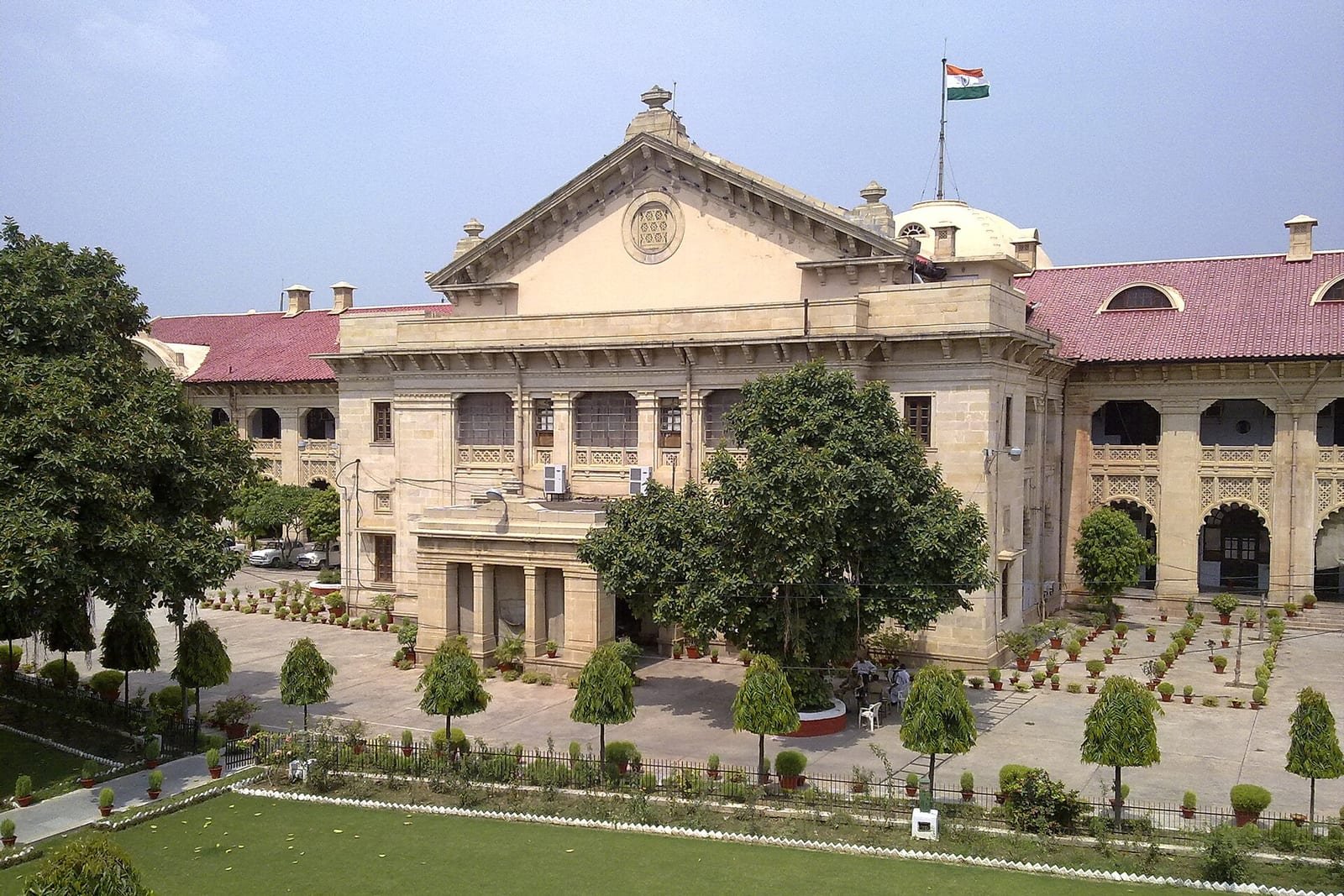
On 16 September 2026, a judge of the Allahabad High Court, in the northern state of Uttar Pradesh, answered a law student’s complaint that a teacher had marked him down for his caste with a remedy aimed at the marking itself. He ordered the student’s answer sheets re-marked by a new committee, with the names of the student and the original examiner masked, and without telling the committee what marks had first been given, the order says. Dalits are the communities once branded “untouchable” under India’s caste order.
The same order asked two judicial officers from outside the university to inquire into his complaint. A week later, two other judges of the same court stayed the case, pausing that inquiry. A university with its own Equal Opportunity Cell, the complaints body India’s university regulator requires, should, at first sight, have been left to examine the allegations itself, they said.
The allegations have not been tested, and the court said in terms that it was not judging them. But the case has already put a structural question before India’s courts. Bias in marking works through what an examiner knows about who wrote the paper, and the complaints system India’s universities run asks the institution to judge its own staff. The first order kept the accused teacher out of the re-marking, hid the names from the markers, and sent the inquiry outside the university. The appeal is about whether it should have.
What happened
The student is in the fifth semester of a BA LLB (Hons) law degree at Dr Rajendra Prasad National Law University (RPNLU), one of India’s specialist national law universities, in the Uttar Pradesh city of Prayagraj. The Wire reported that he belongs to the Dalit community.
On 20 August 2026 he emailed a complaint to the vice-chancellor, the university’s head, the order records. He wrote that he had secured the highest marks in Constitutional Law-I, and that Constitutional Law-II was the gold-medal subject. At the start of his fourth semester, he wrote, the head of the law department, who is also warden of the boys’ hostel, had said in Hindi: “jo constitutional law me highest lekar aya hai, ab mere me lekar aaye” (“the one who got the highest marks in constitutional law, let him get the highest marks in my subject now”, in LiveLaw’s translation). He took it as a reference to himself.
“I believe that the stricter evaluation of my answer-sheets is due to my caste,” the complaint says, as the order reproduces it. It says the teacher, “who belongs to an upper caste community”, had on several occasions made remarks in public about caste and reservation, India’s system of reserved places in education and government jobs for historically excluded groups, including: “Tum to achchi family se ho, tumhe reservation kyo chahiye?” (“You come from a good family; why do you need reservation?”). He asked for an impartial re-marking, and for his identity to be kept confidential for fear of harm to his studies.
The university took no action on the complaint despite reminders, he and a PhD scholar at the university said in a petition to the High Court, according to the order. Their grievance, it records, was that the department head had used academic and administrative authority “as an instrument of caste-based humiliation and retaliation”. Further allegations of caste remarks, in three annexures to the petition, were left out of the order because they were “yet to be inquired into”.
The department head is Dr Deepak Sharma, Bar and Bench reported. He is respondent number six in the petition, and his appeal is filed in his name. No court has found that he did anything wrong. No public statement from him on the allegations themselves has been reported; in court his senior counsel asked for time to file a reply, the order records, and his appeal argued that the university’s own mechanism, not judicial officers, should have looked into them, LiveLaw reported.
Justice Vinod Diwakar’s order of 16 September did four things, the order shows:
- Masked re-marking. A committee set up by the vice-chancellor, with no member who had marked the scripts first and no role for the department head, was to re-mark the student’s fifth-semester papers in the department head’s subjects, with the candidate’s and the examiner’s identities masked and the first marks withheld, within a week.
- An inquiry from outside. Archana Singh-I, a judge of the Small Cause Court in Prayagraj, a district civil court, and Arun Kumar Yadava, a senior criminal-court magistrate there, were asked to find out whether Scheduled Caste (SC) and Scheduled Tribe (ST) students, the official categories for Dalit and Adivasi (Indigenous) communities, had been subjected to caste-based humiliation or discrimination by the department head or anyone else at the university, and “whether the complaints made in that behalf were dealt with by the University in accordance with the applicable regulations”. Their report was due in a sealed cover, for the court alone.
- Protection. Neither student was to suffer for going to court. The department head was to have no role in the student’s marking or in disciplinary or hostel matters concerning either petitioner, and was relieved of all administrative duties until the inquiries ended.
- A question to the university. The vice-chancellor was to file an affidavit saying whether the university had set up an Equal Opportunity Cell and a committee for SC and ST students’ grievances, as the University Grants Commission (UGC), India’s higher-education regulator, requires; who sat on them; and “the reasons for which no action appears to have been taken” on the complaint.
Dr Sharma appealed. On 23 September a bench of Justices Siddhartha Varma and Kunal Ravi Singh stayed further proceedings in the case, LiveLaw reported. “Even if the allegations are of a serious nature, the power of the University to examine such allegations through an appropriately constituted Equal Opportunity Cell ought not to have been taken away, as it is within the domain of the University to look into the welfare of the students and deal with situations as they arise,” the bench said. It asked for the officers’ report, if it had already been prepared, to be placed before it in a sealed cover.
On 29 September the appeal came before a bench led by Chief Justice Arun Bhansali, who is also the university’s chancellor, its titular head. The bench sent it to another bench “of which one of us (Arun Bhansali, CJ) is not a member”, for 7 October, LawChakra reported, quoting the order. The order gives no reason. We could find no published report of what happened at the 7 October listing or since.
The mechanism: who knows whose paper it is
Bias in marking is the hardest kind of caste discrimination to prove. A remark in a corridor can be witnessed; a lower mark on an essay answer looks, to anyone outside, like an examiner’s judgment.
India’s rules already name the harm. The UGC’s 2012 equity regulations bar institutions from discriminating in evaluation on the basis of caste “by not properly evaluating and re-evaluating examination papers of such students and by giving them less marks”, the regulations say. They also bar staff from “labeling students as reserved category in the class” and from “passing derogatory remarks” about caste background as a reason for under-performance.
60 days The longest a university may take to decide a student’s complaint of discrimination under the UGC’s 2012 equity regulations, which are in force today. Source: UGC (Promotion of Equity in Higher Educational Institutions) Regulations, 2012
But the remedy those rules set up runs inside the institution. Each university must set up an Equal Opportunity Cell and appoint an Anti-Discrimination Officer, who in a university must be of at least professor rank, and must decide complaints within 60 days, the regulations say. So a complaint against a head of department goes first to an officer appointed by the same university’s administration. Those are the 2012 rules now in force: in January India’s Supreme Court paused the UGC’s newer 2026 rules and kept the 2012 ones running until further directions. We explained what that leaves students.
The masked re-marking goes at the mechanism directly. Hiding the candidate’s name removes what an examiner would need to know for caste to enter the mark. Hiding the first examiner’s name and the first marks stops the new committee from deferring to a colleague. It also produces evidence either way: marks that hold up weaken the complaint, and marks that rise are a finding no corridor remark could give.
Masking is not new. In a case at a university in Kanpur, also in Uttar Pradesh, that we reported in October, the university said it codes scripts to hide students’ identities, and its own committee found no bias. What the Allahabad order added was distance: re-marking by people who had no part in the first marks, with the result placed before a court, and an inquiry by judges from outside the university into whether its complaint system had worked at all.
“Often, when Dalit-bahujan students raise questions in class, professors tell them to read more and discourage them by saying ‘it is not a reasonable argument’. This kills our confidence and we hardly get access to professors’ cabins and when we do enter, we come out after facing humiliation or undermining of our capabilities.”
— Prajwal Gaikwad, a Dalit student and then president of the University of Hyderabad students’ union, in southern India, in 2023i
Source: Careers360
The strongest counter-reading
The appeal bench’s view deserves to be taken seriously. Universities are meant to have working complaint bodies, and a court that sends judicial officers to do their job may weaken the very institutions the 2012 rules ask universities to build. The bench also had a point specific to this case. The students had themselves first asked for an inquiry by the Equal Opportunity Cell, with the department head kept out of it, LiveLaw reported, and did not oppose the judicial officers’ inquiry once the university agreed to the court’s proposal.
That reading falls short on the record as it stands. No report says the cell heard this complaint and decided it; the students say the university had not acted on it at all. The appeal bench was told the university has an Equal Opportunity Cell, LiveLaw reported, but no report says what the cell did with this complaint. The single judge’s order did not assume the cell existed. It asked the vice-chancellor to say, on affidavit, whether it did, who sat on it and why nothing appeared to have been done, the order shows. No public report says that affidavit has been filed or what it says. Until it is, the appeal bench’s premise, an “appropriately constituted” cell able to do the job, is an assumption about this university, not a finding.
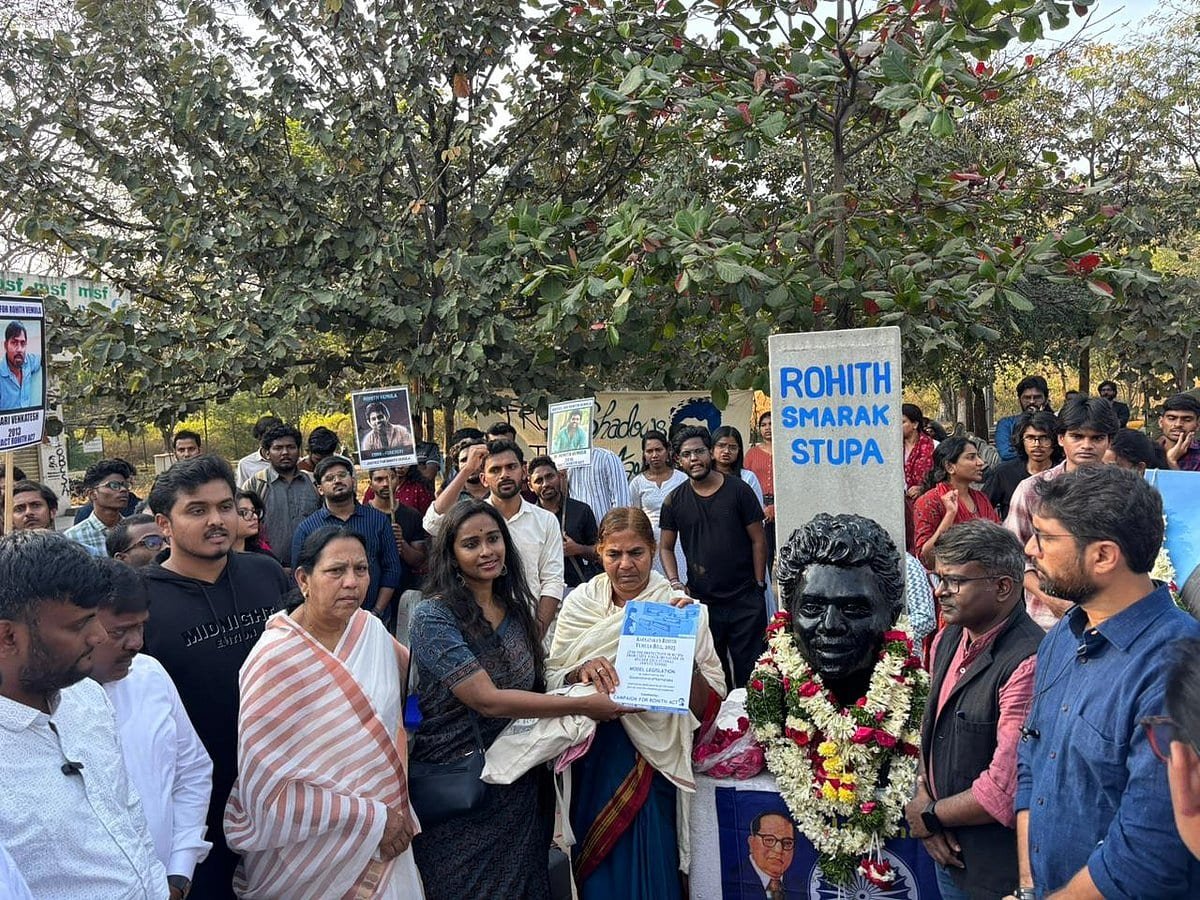
Nor is the assumption safe beyond this campus. The 2026 rules came out of a petition by the families of two students who died by suicide after what their families say was caste discrimination: Rohith Vemula, a Dalit PhD scholar, and Payal Tadvi, a resident doctor from the Tadvi Bhil tribal Muslim community, as we reported. The petition alleged “flagrant non-compliance with the existing norms and regulations in place”, The News Minute reported. Those existing norms are the 2012 rules the appeal bench would send this complaint back to.
What to watch
- The appeal. It was listed before a new bench on 7 October. Whether the judicial officers’ inquiry goes ahead, or the complaint goes back to the university, will decide whose finding the student gets.
- The two reports. The officers’ report was due by 24 September, sealed; the masked re-marking was due within a week of the order. Neither result is on the public record.
- The affidavit. Whether RPNLU has a working Equal Opportunity Cell and SC/ST grievance committee, and why, as the students say, the complaint went unanswered, is the question the court asked and the public record has not yet answered.
- The Supreme Court. The challenge to the 2026 rules, which the court joined with the families’ petition, is due back on 5 November, as we reported, and is likely to shape what a cell like RPNLU’s must look like.
A student who says he topped one constitutional-law paper asked for his papers to be re-marked by an impartial examiner. A judge went further: he ordered the marking done blind, sent officers from outside to find out whether the university had handled caste complaints by the rules, and asked it to explain on oath why, by the students’ account, nothing had been done. Whether that stands now depends on a narrower question: whether a campus’s own committee should be the one to judge the campus, when by the students’ account the university had not acted on the complaint at all.
If you or someone you know is struggling, help is available. In India, call Tele-MANAS on 14416. In Australia, call Lifeline on 13 11 14.