Listen to this article
Read by an AI-generated voice · Report a mispronunciation
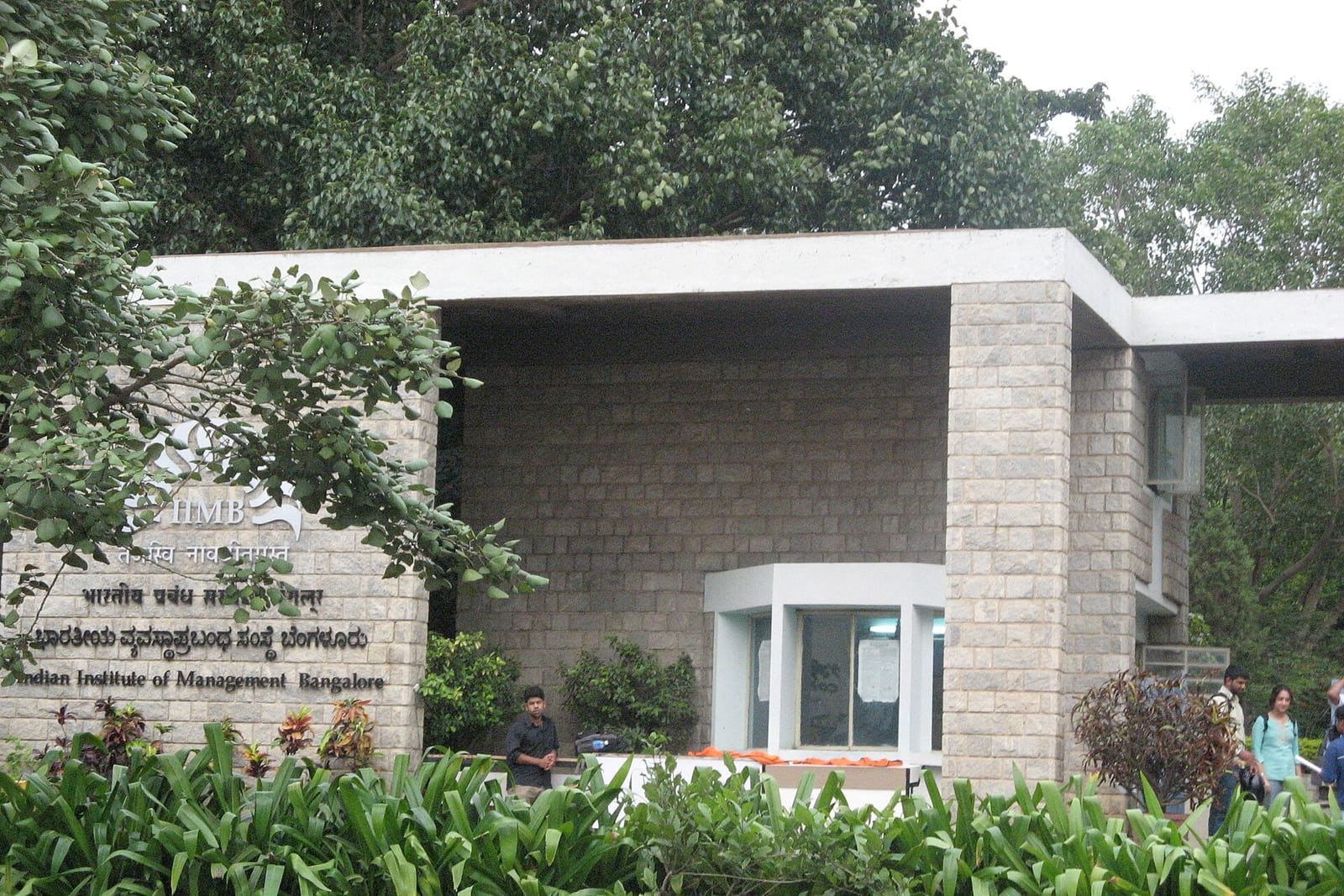
On 11 November 2026, the Dr. Babasaheb Ambedkar National Association of Engineers (BANAE), named after the Dalit leader B. R. Ambedkar, wrote to P. K. Mishra, Principal Secretary to India’s Prime Minister, asking him to stop one appointment. Prof. U. Dinesh Kumar, director-in-charge of the Indian Institute of Management Bangalore (IIMB), a public business school, since July 2025, should not be made its regular director, the letter said, while a police case under India’s caste-atrocities law that names him is still pending, The Mooknayak reported.
The case against IIMB’s leadership began with a complaint by Gopal Das, an associate professor of marketing who is Dalit, from the communities once branded “untouchable”. IIMB is in Bengaluru, capital of the southern state of Karnataka. A state police unit inquired into the complaint and reported evidence of caste discrimination. Within days of the First Information Report (FIR), the police complaint that opens a criminal case, the state’s High Court stayed the proceedings, citing doubts about the unit’s power to inquire. Two years later, nobody has decided whether the discrimination happened, and the man the inquiry named alongside the director may now lead the institute.
A stay is meant to hold things still while a court decides. At IIMB it has held the complaint still, while the two men at its centre have moved on: one to lead a private university, the other to run the institute.
What the inquiry found
Das joined IIMB in 2018. In January 2024, when India’s President, Droupadi Murmu, visited the campus, he wrote to her detailing incidents of exclusion from institutional activities, restricted access to resources and caste-based humiliation, The News Minute reported. Acting on a directive from the President’s office, the Directorate of Civil Rights Enforcement (DCRE), a wing of the Karnataka police, began an inquiry in March 2024.
Its report, submitted by Arun Chakravarthy, an Additional Director General of Police (a senior police rank), to the Karnataka government’s Social Welfare Department on 26 November 2024, found that the then director, Rishikesha T. Krishnan, publicly disclosed Das’s caste in a mass email circulated within the institute, and that Krishnan and Kumar, then Dean (Faculty), denied Das equal opportunities in professional activities. It also found that IIMB had not set up the grievance mechanism that the law requires for its Scheduled Caste (SC) and Scheduled Tribe (ST) employees, the official categories that include Dalits and Adivasis, India’s Indigenous peoples. The department’s letter to the police, seen by ThePrint, sets out the same three findings: “deliberate publicising of and revelation of the caste of the petitioner (Das) through mass email”, “denial of equal opportunity to the petitioner in the workplace”, and “non-conformity to the statutory need to establish the institutional mechanism to redress grievances”.
On 9 December 2024 the department directed the Bengaluru police commissioner to act under the Scheduled Castes and Scheduled Tribes (Prevention of Atrocities) Act, India’s 1989 law against caste violence. On 20 December 2024, police at Mico Layout in Bengaluru registered FIR No. 0467/2024 against eight people: Krishnan, Kumar and six other faculty members. It invokes Sections 3(1)(r) and 3(1)(s) of the Act, on insulting or intimidating an SC or ST person and abusing one by caste name, and two criminal-intimidation sections of the Bharatiya Nyaya Sanhita, India’s penal code. These are allegations: none has been tried.
What the High Court stayed
The High Court moved fast. Before the FIR, it had already stayed, in July 2024, the DCRE’s proceedings against Devi Prasad Shetty, the cardiologist who chairs IIMB’s Board of Governors and whom Das’s complaint also named. Then, on petitions by Krishnan, Kumar and four other faculty members, Justice Hemant Chandanagoudar granted interim relief against the DCRE’s notice, Deccan Herald reported. Under the state’s 1992 reservation rules, he wrote, the DCRE “can prosecute a person who has obtained a caste certificate fraudulently and has no authority to enquire into the allegations of harassment of a person belonging to the Scheduled Caste and Schedule Tribe community”. The notice, “prima facie, lacks authority.”
Reports differ on how far the stay reaches and when it came. The News Minute reported that the court stayed the FIR proceedings against Krishnan and the seven others on Friday, 20 December 2024; ThePrint, citing IIMB, reported a stay on action against the accused issued “Friday evening”. The Mooknayak dates an interim stay on the FIR and investigation to 31 December 2024. Its report this month says the court stayed further proceedings against several of the accused, and that the criminal petition (Crl.P. No. 14410/2024) and the writ petition (W.P. No. 19036/2024), a challenge asking the court to review official action, are still pending.
The order Deccan Herald reported turned on who may inquire, not on what happened, and The Mooknayak says the stay of the FIR cited jurisdictional concerns over the DCRE’s authority. No court has said whether Das was discriminated against. Nearly two years later, the case remains pending, with no final decision on the merits, The Mooknayak reported.
What has moved instead
In July 2025, as Krishnan’s five-year term neared its end, The Mooknayak reported, citing sources, that the Ministry of Education had directed Krishnan to withdraw from the interview process for his continuation as director, because of allegations including caste-based discrimination. His term ended that month, and Kumar took charge as director-in-charge. On 15 June 2026 Ashoka University, a private university, announced Krishnan as its next vice-chancellor, from 1 August 2026. BANAE and the All India OBC Students Association (OBC stands for Other Backward Classes, an official category of disadvantaged castes) objected.
At IIMB, an earlier search panel recommended by the board was reportedly not accepted by India’s central government in early 2026, and the selection restarted, The Mooknayak reported. BANAE’s letter says the central Ministry of Education may forward Kumar’s name to the Prime Minister’s Office and the institute’s Visitor without fully disclosing the FIR and the pending proceedings. Under the 2023 amendment to the Indian Institutes of Management Act, the director is appointed by the board “with prior approval of the Visitor”, and the Visitor is the President of India, the office Das first wrote to.
The letter also raises a conflict of interest. It says Shetty, who chairs the search-cum-selection committee, and Kumar are both named as accused in W.P. No. 19036/2024. “Prof. Dinesh Kumar’s appointment should not be considered until the pending proceedings have been concluded and the allegations have been appropriately addressed,” it says. BANAE asks that every FIR, pending proceeding and investigation record be “fully disclosed and independently examined” before any decision, and says it may go to court with a public interest litigation, a case brought on the public’s behalf, if the appointment goes ahead without that scrutiny.
“It is completely unacceptable that someone facing serious unresolved charges of caste injustice is being pushed for the top post at IIM Bangalore while the case is still alive in court and questions of fairness in the selection process remain unanswered,” Nagsen Sonare, BANAE’s national president, told The Mooknayak. Published reports carry no public comment from Kumar on the letter.
How a complaint goes nowhere
i
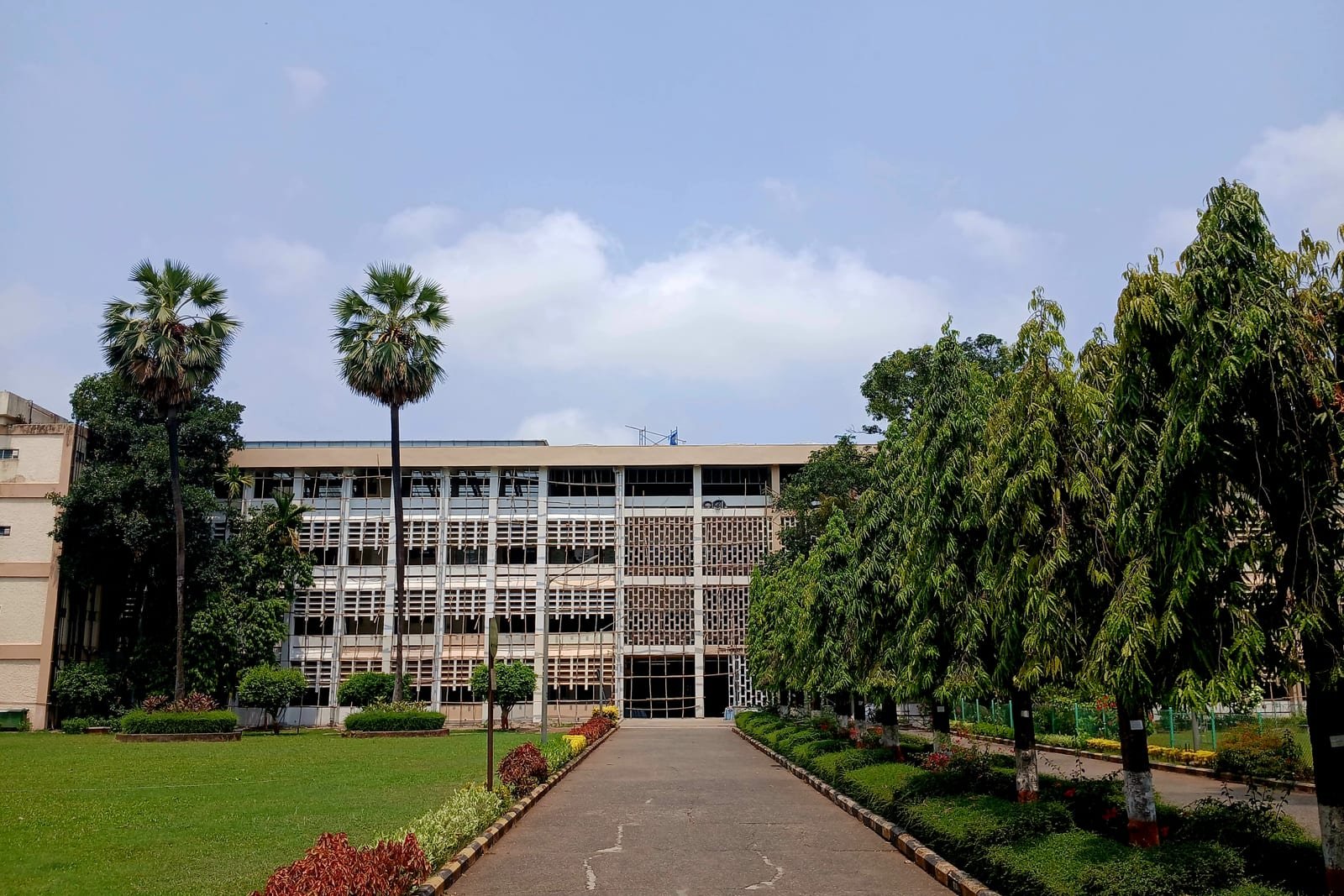
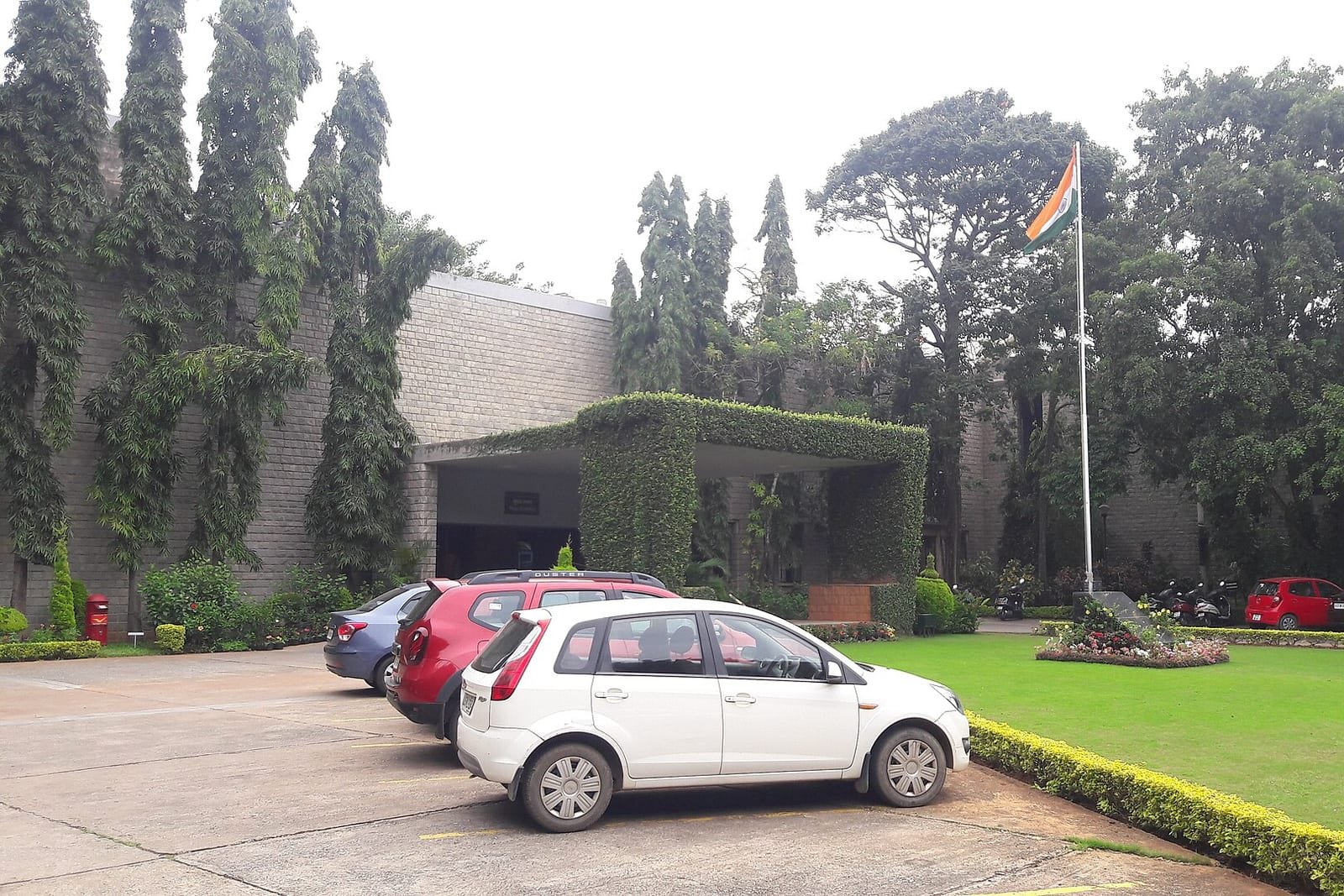
CC BY-SA 4.0Original on Wikimedia CommonsThe stall is what happens when every route a Dalit complainant can take is either run by the institution itself or open to challenge on its powers.
The first route was internal. IIMB says its Diversity and Inclusion Grievance Redressal Committee (DIGRC) found Das’s complaints of harassment and discrimination “unfounded”. That committee belongs to the institute whose director and dean the complaint was about. It is a pattern seen elsewhere: a university in Kanpur, in the northern state of Uttar Pradesh, closed a Dalit student’s caste complaint in September 2026, relying on an internal report that absolved the faculty, The Mooknayak reported.
The second route was the state’s own civil-rights police. It reported evidence of discrimination, and its findings became an FIR. The High Court then found, prima facie (on first view), that the unit had no power to inquire into harassment, and the proceedings on the FIR were stayed. While the court considers that question, the finding sits unused: not upheld, not overturned.
The third route is the appointment itself. A selection can weigh an unresolved finding, disclose it, or pass over it. BANAE fears it will not even be disclosed.
118% — the rise in complaints of caste-based discrimination in India’s higher education institutions between the 2019-20 and 2023-24 academic years, according to data from the University Grants Commission, India’s higher-education regulator, submitted to India’s Supreme Court and a parliamentary panel, as reported by LawBeat.
Complaints are rising; IIMB shows how one can stall before any decision. The Dalit economist Sukhadeo Thorat, a former chairman of the University Grants Commission, has described Dalits’ entry into higher education as a contest over space.
“There is a feeling of uneasiness, even opposition, to the entry of Dalits in the higher education. And that is because it encroaches on the share of upper castes. This is different from traditional caste equations. Earlier, Dalits were stigmatised; it puzzled higher castes as to why Dalits wanted to enter the higher education system. Now, it is an issue of gaining and losing space in the system.” — Sukhadeo Thorat, to Scroll, 2016
The case for letting it run
IIMB rejects the allegations. It said Das received “all forms of support” since he was recruited in 2018, including appointment above the post he had applied for, research and teaching incentives, places on its committees, and courses of his choice. It said his allegations surfaced only after his application for promotion was put on hold over harassment complaints by doctoral students, which its own inquiry, whose committee included “a reputed academic from the SC category from an eminent institution”, found “justified”, and that the DCRE appeared not to have considered the evidence the institute gave it. A former IIMB faculty member told ThePrint that he had not witnessed any discriminatory practices in his 15 years at the institute. ThePrint called Das for a response and the calls went unanswered. Das, for his part, wrote to the Social Welfare Department in May 2024 that the harassment had intensified after the inquiry began; the director then issued him a show-cause notice, asking him to explain himself, accusing him of sharing information with the media without authorisation, The News Minute reported.
Das’s side is more specific. The Mooknayak’s account of the DCRE report goes beyond the three findings other outlets quote: it says the report also found that the accused coerced pre-doctoral and PhD students to file false, anonymous complaints against him in retaliation for his advocacy. The outlet also carried the account of Anil H. Wagde, an anti-caste activist: that Das’s MBA electives were often discontinued after one or two semesters, that he got no core courses and too little support, such as teaching assistants, that his name was reportedly disguised in course bidding, and that he was denied equal opportunities in PhD teaching. None of this has been tested in court either, and IIMB says its own inquiry found the doctoral students’ complaints against him “justified”.
Neither Krishnan nor Shetty has responded publicly in his own name in published reports. The Mooknayak said in July 2025 that it had emailed Krishnan for his stance; the report as published carries no reply.
There is a narrower doubt too. A senior Karnataka government official told ThePrint that the case may concern “discrimination” rather than an “atrocity” as the Act defines it. “Even the DCRE report says that prima facie it is a case of discrimination and further probe was required to ascertain the same,” the official said.
That is the strongest case for letting the appointment run its course: the findings are prima facie, the forum that made them is under challenge, and no one named in the FIR has been tried. Kumar, like the others, is entitled to be presumed innocent.
But BANAE is not asking anyone to presume him guilty, only that those who approve the appointment see the record first. A court’s stay protects the accused from the inquiry while the question of powers is settled. It was never a finding that the discrimination did not happen, and it is not a clearance for the institute’s top job. If the official is right that the report called for “further probe”, the case for one is stronger, not weaker, two years on.
What to watch
- The High Court. Whether it decides the pending petitions, and if it holds that the DCRE had no power to inquire, whether any other body is asked to examine what Das alleged.
- The selection. Whether the Ministry of Education’s file to the Visitor discloses FIR No. 0467/2024 and the pending petitions, as BANAE demands, and how the committee handles the conflict of interest the letter alleges.
- The mechanism. Whether IIMB now has the statutory grievance mechanism for SC and ST staff that the inquiry found missing.
Das took his complaint to the President in January 2024. The President, as Visitor, must now approve IIMB’s next director. Whatever the court finally decides, the office that ordered an inquiry into his complaint may be asked to approve a man the inquiry named, before anyone has ruled on whether its findings were right.