Listen to this article
Read by an AI-generated voice · Report a mispronunciation
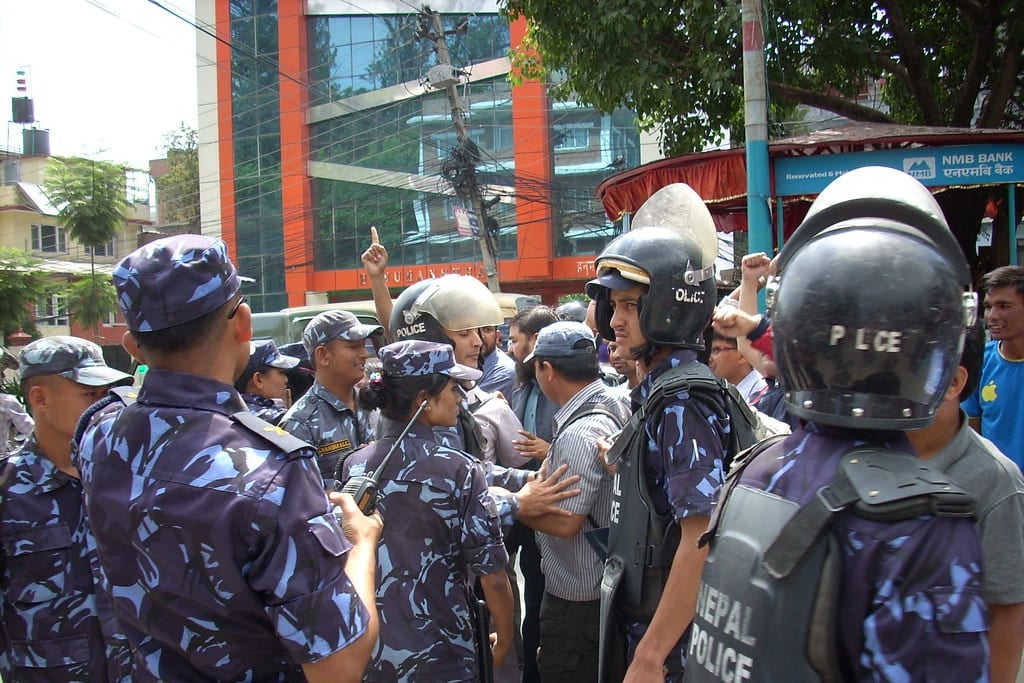
On November 1, a ministry in Nepal’s government put out a statement addressed, in effect, to one woman on a pavement. Deepa Nepali, a Dalit activist who says no landlord who asked her surname would rent her a room in nine years in the capital, had by then sat for six and a half months at Maitighar Mandala, a protest square in central Kathmandu, asking the government to act on caste discrimination in renting. Dalits are the communities that Nepal’s caste order has long branded “untouchable”, about 13 to 14 percent of the country’s people, The Daily Star reported. The Ministry of Women, Children, Gender and Sexual Minorities and Social Security asked the protesters to end the sit-in and come to talks, Nagarik, a Kathmandu daily, reported. It listed what the government had done. Near the top was a “concept paper”, approved by the Cabinet, for a reform programme that includes a formal acknowledgement of the discrimination done to Dalits and, in our translation, “an apology on behalf of the state”.
In March, the new government promised Dalits that apology within 15 days. Seven and a half months later, the public record shows a plan for one. Two other questions, a Dalit rights law and a death in custody, stand much where they stood. A Dalit rights bill is still a draft. The police report on a young Dalit man’s death in custody in April has not, on the public record, been published. Each now rests on a document the state writes and keeps for itself: a concept paper, a draft bill, a police report. None has yet become the kind of act that binds the state: a notice in the official gazette, a law passed by parliament, or a finding by anyone outside the police.
The apology: from 15 days to a concept paper
On March 27, the first Cabinet meeting of Prime Minister Balendra Shah’s government approved a 100-point reform agenda. Point five pledged that “we will formally acknowledge the injustice, discrimination and deprivation of opportunities inflicted on Dalits and historically marginalised communities by the state, society and policy structures”, with a formal apology and a reform programme to be announced within 15 days.
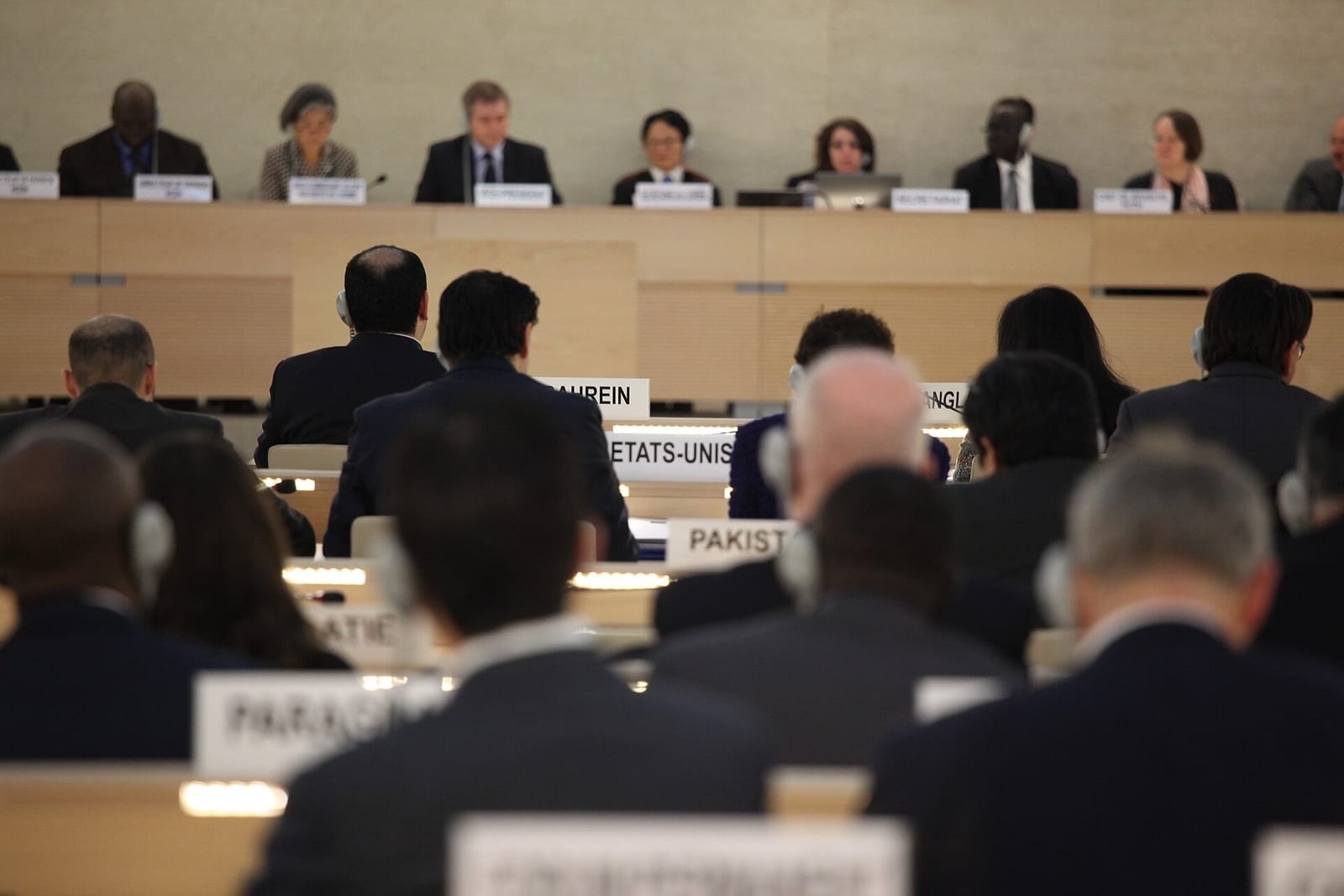
On April 2, Rabi Lamichhane, chair of the ruling Rastriya Swatantra Party (RSP), told the House of Representatives, the lower house of Nepal’s parliament: “No Nepali shall ever have to bow down again in the name of caste. I apologise on behalf of my entire party, the prime minister, and the government.” Mitra Pariyar, a Dalit rights activist and Kathmandu Post columnist, wrote that a party chair’s words cannot be a state apology. By his account a state apology needs three steps: a written decision passed by the Cabinet, its publication in the Nepal Gazette, the official record of state decisions, and its presentation to both houses by the prime minister. In July he wrote that no formal apology had been passed by the Cabinet and no notice printed in the gazette. In mid-August Republica, another Kathmandu daily, found that neither the prime minister nor any other official had apologised in parliament or at a formal ceremony. Six weeks later, at the United Nations in New York, Foreign Minister Shisir Khanal “reminded the global community of the heartfelt apology made to the Dalit community in Nepal”, tying it to Lamichhane’s speech. How that speech came to stand in for the state’s word is set out in an earlier report.
The November statement is the first we found to say the Cabinet has approved anything towards the apology since March, though it does not say when. The concept paper it describes proposes economic empowerment, free health insurance, special scholarships, safe housing, land for the landless and more Dalits in state bodies. The same statement says a separate Cabinet decision, on the definition of “Dalit” and a list of Dalit surnames, has been approved and published in the gazette. It does not say that the apology itself has been made or gazetted, and we found no report that it has been.
The law: a bill still in draft
The government’s answer to critics has been that the apology will come with law and money. On August 13, Law Minister Sobita Gautam told the National Assembly, parliament’s upper house, that a “bill relating to Dalits’ rights and development” had been drafted under Article 40 of the constitution, which sets out Dalits’ rights. On September 24, the women’s ministry’s secretary, Krishna Bahadur Raut, told a National Assembly committee that the draft would go to the Cabinet “soon”, after talks with the finance, law and home ministries, and only then be registered in parliament, Ratopati, a news site, reported in machine-translated English. At the same meeting, Samjhana Devkota, a lawmaker from the Communist Party of Nepal (Unified Marxist–Leninist), or CPN (UML), proposed taking the word “Dalit” out of the bill’s name, and Bhuwan Bahadur Sunar, a lawmaker from the Nepali Congress party, asked for it to be registered within the session.
The November statement still describes a draft: the “Bill, 2083”, named for the year in Nepal’s calendar, has been prepared and “the process of lawmaking taken forward”. Among its proposals is a Dalit development authority. The statement added one line that matters at Maitighar: the government is “positive” about amending the Caste-Based Discrimination and Untouchability (Offence and Punishment) Act of 2011, Nepal’s law against caste discrimination, to fit the times. That amendment is what Deepa Nepali has asked for since April. The statement gave no draft and no date.
The sit-in: 200 days
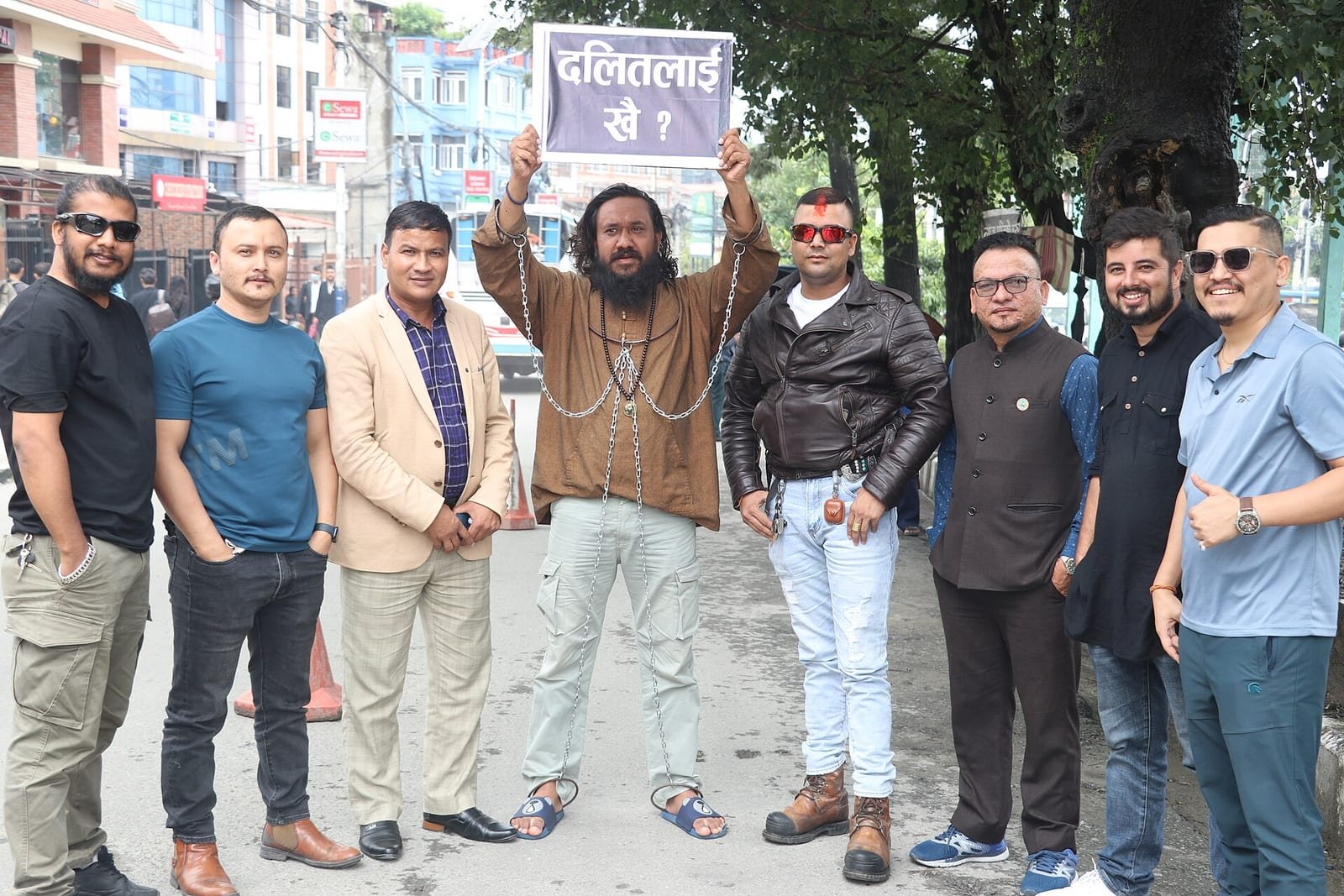
On October 21, when families across Nepal gathered for the Dashain festival, Nepali spent the 186th day of her protest at the square. “If a citizen has to stand on the road for 186 days over a fundamental question of humanity, where is the state? Where is the government?” she asked, the Kathmandu Post reported.
On November 4, three days after the ministry’s statement, the sit-in completed 200 days. Its demands, Republica reported, are a clear legal ban on caste discrimination in renting, strict punishment, and a zero-tolerance policy on untouchability. Nepali said the government had still not opened high-level talks. A parliamentary committee had heard her on July 16 and the women’s minister’s office had invited her on July 21, she said, and neither had led anywhere. “We will expand the sit-in launched at Maitighar into a nationwide movement until our demands are addressed at the highest level,” she said.
“I have begun to feel that even those in policy-making positions want to preserve discrimination. Otherwise, why are they silent?” — Deepa Nepali, at Maitighar Mandala on the 186th day of her sit-in, to the Kathmandu Post
Her case is set out in full in an earlier report.
The death: a report still unpublished
Shree Krishna BK died in police custody on April 20 at the Khurkot Area Police Office in Sindhuli, a hill district south-east of Kathmandu. Police say he took his own life. His family says he was pressured to sign a statement and tortured, and asked why the CCTV footage from his custody was not made public. A police committee under a Deputy Inspector General, Dinesh Kumar Acharya, recommended action against 10 police personnel, from a Superintendent of Police down to constables. On June 19, Home Minister Sudan Gurung told the National Assembly that it had found no evidence of physical or mental torture, and that further investigation would continue.
i
CC BY-SA 4.0Original on Wikimedia CommonsBy July, Pariyar wrote, the report had gone to the Home Ministry but had not been released to the public, and the independent probe that the National Dalit Commission, a constitutional body, and Dalit lawmakers in the RSP had asked for had not been ordered. His mother, Bindamaya BK, had gone to the police in April with a First Information Report (FIR), the complaint that opens a criminal case. The police and the government attorney both refused to register it. We found no report since July of the committee’s report being published, an independent inquiry being ordered or her complaint being registered.
The question has since gone to the Supreme Court in general form. On August 3, Advocate Kumar Prasad Thapaliya filed a public interest petition asking the court to order an independent and impartial mechanism to investigate deaths in custody and prisons, with post-mortems on video. It says that the vast majority of those who have died are poor, Dalit or from marginalised Indigenous communities. We found no report of a hearing or an order since.
Why the three end in the same place
A concept paper, a draft bill and an unpublished police report have one thing in common: they stay in the hands of the institutions that answer for the harm. A gazetted apology binds every state body. A bill in parliament can be debated, amended and voted on in public. A published report can be tested. Until then, each can be cited, as the apology was in New York, without binding anyone.
Who sits in those institutions matters. Nepal’s House of Representatives has 17 Dalit members against 134 from the Khas Arya, the historically dominant group, and the Cabinet had one Dalit minister when the Kathmandu Post counted in March.
The law that the ministry now says it may amend shows how much depends on a complaint being taken. Nepal Police recorded 24 cases of caste-based discrimination in the 2024/25 fiscal year, the daily Rising Nepal reported in June. Activists told the paper that police often push for reconciliation rather than a case, and that the real numbers are much higher.
24 cases of caste-based discrimination recorded by Nepal Police in the 2024/25 fiscal year. Source: Nepal Police records, reported by Rising Nepal.
The strongest case for the government, and where it falls short
The strongest reading in the government’s favour is the one its ministers give. An apology tied to a reform programme, a law and a budget is worth more than words, and that is what many critics asked for. Gautam said in August that the government wanted the apology linked to legal and budgetary measures, and the government pointed to a doubled child support allowance for Dalit children. The November statement says the ministry has talked with the law and home ministries, Dalit lawmakers in both houses, the National Dalit Commission and parliamentary committees, and that after talks with the Inspector General of Police it directed the Nepal Police’s Dalit help desk to be strengthened and complaints to be investigated quickly. Some of the protesters’ demands, it says, are already in the draft bill and the concept paper.
Each of those steps is still in the state’s own hands. The programme has been approved as a concept, not announced. The bill, on the public record, has not reached parliament. The amendment has no text. In August, critics quoted by Republica feared the pledge could remain “little more than an unfulfilled promise” until the apology was formally adopted and published in the Nepal Gazette. Three months on, that is still the test. And the ministry’s request to Nepali comes in a set order: leave the square first, then talk.
What to watch
The tests are the government’s own. For the apology: a Cabinet announcement of the reform programme, a notice in the Nepal Gazette and, by Pariyar’s standard, the prime minister presenting it to both houses. For the law: the Dalit rights bill registered in parliament, whether “Dalit” stays in its name, and a draft amendment to the 2011 Act that reaches renting. For the death in custody: the Acharya committee’s report made public, and the Supreme Court’s answer to the Thapaliya petition.
At Maitighar, the ministry has asked Deepa Nepali to go home and talk. She has answered that she will take the sit-in to the rest of the country.
If you or someone you know is struggling, help is available. In India, call Tele-MANAS on 14416. In Australia, call Lifeline on 13 11 14.