Listen to this article
Read by an AI-generated voice · Report a mispronunciation
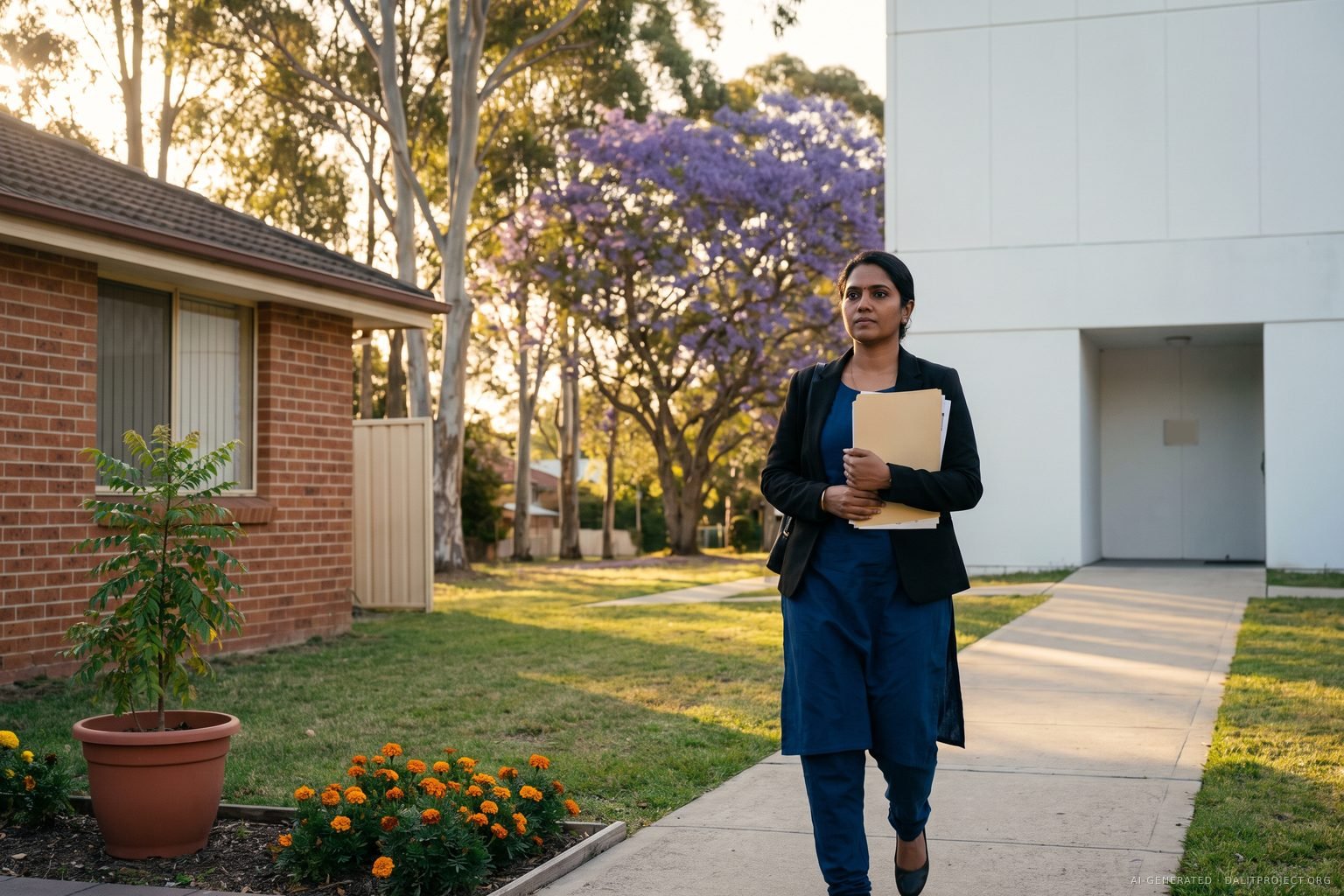
“Our children are prohibited from joining birthday parties at the same time as other children,” a mother in Sydney said in a national consultation on caste discrimination. “They are made to wait outside the place where the ritual is being undertaken. They know which caste we belong to and that’s how they think we are.”
Her words opened an opinion piece in the Guardian on 30 October 2024 by Asang Wankhede, a doctoral candidate in law at the University of Oxford and research lead of the study that recorded them, who wrote that he too comes “from a Dalit slum colony in India”. She belongs, he wrote, to the Chamar caste, a Dalit community, among those once branded “untouchable” under South Asia’s caste order.
She lives in Sydney, but the order that sorted her family by caste began in South Asia. Caste does not stay where it began. It travels with the people who carry it, and the evidence now says it has arrived in Australia.
The UN saw it coming
In 2016 the UN’s Special Rapporteur on minority issues, an independent expert who reports to the UN Human Rights Council, devoted a report to caste. Over 250 million people suffer caste-based discrimination worldwide, it estimated, and while the highest numbers are in South Asia, “discrimination on the grounds of caste or analogous status is a global phenomenon”. “The caste system migrated with the South Asian diaspora to other regions,” the report says, including the United Kingdom, the United States, Canada, the Gulf, Malaysia, Fiji and Australia.
The UN had already given caste a place in international law. In 2002 the committee that oversees the international convention against racial discrimination said discrimination based on “descent”, one of the convention’s grounds, “includes discrimination against members of communities based on forms of social stratification such as caste and analogous systems of inherited status”, in its General Recommendation XXIX. The 2016 report cited that reading and asked states to adopt “specific legislation prohibiting discrimination on the grounds of caste”.
The numbers that make it Australia’s question
Australia’s South Asian communities have grown fast. Australians born in India recorded the largest increase of any overseas-born group between 2015 and 2025, and those born in Nepal the fourth largest. On 30 June 2025, people born in India were the largest group of Australians born overseas for the first time on record, at 971,020, up from 449,040 in 2015, the Australian Bureau of Statistics reported. The number born in Nepal rose from 50,150 to 213,580 over the same decade. At the 2021 census Punjabi, a language of northern India and Pakistan, was the language with the largest increase in use at home, up 80.4% in five years.
Numbers alone say nothing about prejudice. But the UN’s point is that caste moves with communities, not with any one person’s beliefs. The larger the communities, the more it matters to know where caste follows them.
It has arrived
The study Wankhede led, Caste in Australia: A Phenomenology of Casteism, was run by two organisations of caste-oppressed communities, the Shri Guru Ravidass Sabha in Sydney, a religious organisation that spreads the teachings of Guru Ravidass, and the Ambedkar International Mission, named for the Dalit leader B.R. Ambedkar, for the Australian Human Rights Commission, the national human rights body, and the Federation of Ethnic Communities’ Councils of Australia, the national body for migrant community groups. It interviewed 146 people from oppressed castes across Australia.
It found that caste discrimination in Australia “is not just a case of an interpersonal and inter-cultural issue within the South Asian diaspora, it is a pervasive, systemic and racism problem”. Participants reported physical assault, children “being treated as untouchables”, and boycotts of their businesses. Many change their surnames to ones of dominant castes, those at the top of the caste order, Wankhede wrote, and some give up cultural and religious identities that would give them away.
It also found that caste crosses faiths. Among the 146 participants, 45% gave their religion as Buddhism and 44% as Ravidasia, followers of Guru Ravidass’s teachings; only 5% gave Hinduism, the study records. That matches the UN’s finding that caste systems “can be found within diverse religious and/or ethnic groups”.
“It erodes the inherent belief you have in your own capacities that tends to affect you more in the long term rather than an immediate loss of opportunities.”
— A participant in the national community consultation on caste discrimination, quoted by Asang Wankhede in the Guardian, October 2024
Australia has started to listen
The Australian Human Rights Commission’s National Anti-Racism Framework, released in late 2024, recognises caste discrimination as a form of intersectional racial discrimination, and its recommendation 17 asks the federal government to investigate legal protections against it. At Senate Estimates, the hearings where senators question officials, in February 2026, the commission’s president, Hugh de Kretser, spoke of “the imported caste discrimination that’s happening in the Indian community here”, NRI Affairs reported. He said the Racial Discrimination Act refers to “descent” and “social origin”, and that the commission’s legal advice suggests a “beneficial interpretation” of those terms could let it accept some caste complaints. “It hasn’t been tested in Australian courts,” he added.
Local government moved early. In March 2024 the City of Monash, a council in Melbourne, included caste as a protected characteristic in its policies, and the City of Melbourne followed that September. In October 2026 the upper house of the parliament of New South Wales, an Australian state, agreed without objection to a motion that acknowledged the advocacy of the Periyar Ambedkar Thoughts Circle of Australia, an anti-caste group, for the recognition of caste discrimination. The state’s Law Reform Commission, its official law-review body, is reviewing the Anti-Discrimination Act, and the Law Society of New South Wales, the state’s solicitors’ body, has asked it to protect caste expressly.
What the United States learned
The United States met the same question first. In February 2023 Seattle’s city council voted 6-1 to add caste to the city’s anti-discrimination laws, the first US city to do so, the Associated Press reported.
California’s legislature then passed a bill to name caste in the state’s civil rights law. Governor Gavin Newsom vetoed it in October 2023, writing that “discrimination based on caste is already prohibited under these existing categories”, such as ancestry, in his veto message. Hindu, Sikh and other South Asian groups were divided on the bill, Bloomberg Law reported. The Hindu American Foundation and the Coalition of Hindus of North America argued that caste protections would “specifically target Hindus and Indian Americans”, NBC News reported. A federal appeals court, upholding the dismissal of a challenge to the California State University’s caste policy in March 2025, adopted the finding that caste “is an expansive term referring to social hierarchies that exist across the world in many religions and societies”.
Newsom’s answer was that existing law already covers caste, much as Australia’s commission has said “descent” may, though no court has tested it. Either way, the question does not go away once raised. Whether caste is named in a law or read into “ancestry” or “descent”, people need to know which.
Why Australia should keep watching
The UN report asked for exactly what Australia has begun: “further in-depth studies of caste-affected communities, particularly outside of South Asia”, and data that “allow for diverse forms of self-identification” and respect privacy. Australia’s study is a start. It should not be the last.
As South Asian communities grow, the commission should keep caste on its agenda and publish guidance on how “descent” and “social origin” apply, so that people know where they stand. Governments should fund research that follows up the 146 accounts and asks where else caste shows up. The New South Wales review gives the state a chance to settle the question in its own law.
Caste reached Australia the way the UN said it would, with the people who carry it. The children waiting outside the party are growing up in Australia. Australia should keep looking, so that what is happening to them is seen.