Listen to this article
Read by an AI-generated voice · Report a mispronunciation
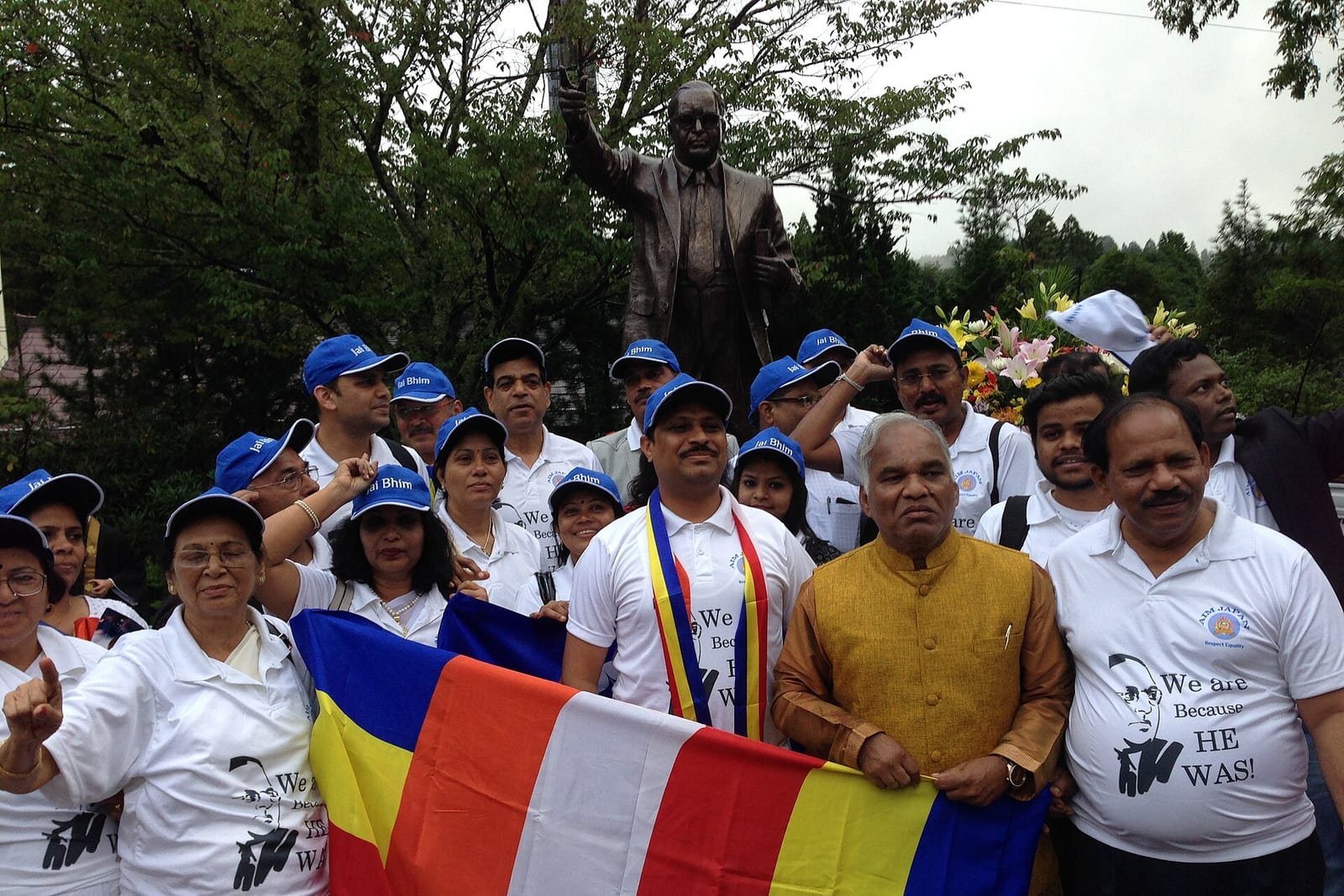
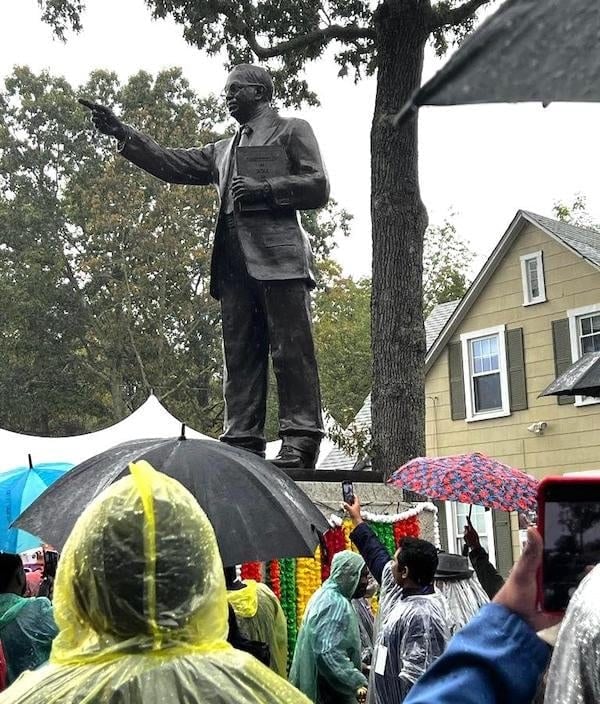
On 14 October 2023, more than 500 people stood in heavy rain in Accokeek, a suburb in Maryland, United States, about 22 miles (35 km) south of the White House, for the unveiling of a 19-foot (5.8-metre) statue of B.R. Ambedkar. Many had driven for as long as 10 hours, the Press Trust of India (PTI), an Indian news agency, reported. “We are calling it the Statue of Equality,” Ram Kumar, president of the Ambedkar International Center, whose site is in Accokeek, told PTI.
Ambedkar chaired the committee that drafted India’s Constitution and played a key role in the movements that fought for the rights of Dalits, the communities once branded “untouchable” under South Asia’s caste order. In 1916 he called caste “a local problem, but one capable of much wider mischief”, and took up a warning from the scholar Ketkar’s study of caste: “if Hindus migrate to other regions on earth, Indian caste would become a world problem.” That 1916 paper, “Castes in India”, is now in the first volume of his collected Writings and Speeches.
A paper published in October 2026 argues that Ambedkar’s statues outside India have become one of the places where that world problem is fought over. They let Dalits abroad claim dignity and organise, its authors find, and they draw fire for exactly the reason they matter: they name caste in public, in countries where many in the Indian diaspora would rather it went unnamed.
What the study found
The paper, “Asserting Dalit identity beyond borders”, is by Nookaraju Bendukurthi of the Central University of Kashmir, India, and Vikrant Kishore of the University of Nottingham Ningbo China. It appears in Transitions: Journal of Transient Migration, in a special issue titled “Resisting Caste in Diaspora: Mobility, Agency, and Activism” (volume 10, issue 2, pages 255 to 275).
Kishore, who co-edited the issue, told The Mooknayak that the paper is one of six in it. The others cover Australian news and diaspora media, digital platforms, the reality series Indian Matchmaking, the film Kabali and anti-caste rap. A companion issue, “Caste across Borders: Persistence and Transformation in Diaspora”, appeared in April 2026, The Mooknayak reports.
Its abstract says the statues “make caste visible in public life while also attracting denial, backlash and attempts at erasure”, and that they work as points where Dalits and their allies “express resistance, build confidence, confront silence around caste and speak against discrimination”. The argument rests on an online survey of 161 respondents across several regions.
A report on the paper by The Mooknayak, an Indian news site, sets out its figures. Asked what the statues do in diaspora communities, 36 per cent of respondents said they strengthen collective identity, 32 per cent that they raise awareness of caste discrimination and 26 per cent that they are sites for cultural and political mobilisation. One per cent called them insignificant.
Asked whether they had witnessed opposition to the public presence of Ambedkar’s legacy, 10 per cent said they had met such backlash often and 32 per cent occasionally, and 52 per cent knew of incidents even if they were not involved. Only 7 per cent had neither experienced nor heard of such opposition. Backlash ranged from online trolling and public discrediting to vandalism of physical sites, the paper reports.
Of the 156 who gave their location, the largest groups lived in Australia and New Zealand (16 per cent), the United States (15 per cent), India, as return migrants (12 per cent), the United Kingdom (11 per cent) and Canada (10 per cent).
The mechanism: a statue says out loud what the diaspora keeps quiet
The paper’s central idea is what the authors call “hidden casteism”. Open discrimination is easier to name and fight, they write, as The Mooknayak reports. Concealed casteism, in their account, works through denial, silence and unwritten rules of community life. It lets people from dominant castes, those at the top of the caste order, keep their privileges while backing liberal causes in public, the authors argue.
In Western countries, the authors argue, talk about discrimination centres on race, ethnicity and religion. Indian diaspora groups, as minorities, are more likely to concentrate on fighting racism and promoting minority rights, they write. Many worry, in the authors’ account, that admitting caste would weaken their claim to respectability, and the “model minority” image of a successful community free of the old country’s problems hardens that silence, the paper says. The authors describe the avoidance as a calculated silence that protects dominant-caste interests.
i
Shared with creditOriginal on American KahaniA statue breaks that silence, the authors argue, by standing in a public place. Ambedkar’s usual pose, holding the Constitution and pointing forward, stands for citizenship and justice, the paper notes. To read the statues, the authors borrow from the French philosopher Michel Foucault. A statue makes Dalit presence visible, they argue, which also puts Dalits under watch and invites backlash. They use the term “anopticism” for the deliberate erasure that vandalism of Dalit symbols attempts.
The respondents’ answers describe that backlash.
40% of respondents described the response of dominant-caste diaspora members to Ambedkar statues as oppositional or resistant; 32 per cent called it indifferent and 17 per cent supportive. Bendukurthi and Kishore, Transitions: Journal of Transient Migration, 2026, survey of 161 respondents; figures as reported by The Mooknayak.
One participant said public forums aligned with Hindu nationalist groups have tried to discourage anti-caste activities, especially in the United States; the paper reports this as one participant’s account. Another said that openly asserting caste identity or anti-caste activism can close off professional opportunities and social acceptance in dominant-caste Indian networks abroad. On the barriers to speaking out, a participant described a defensive response from “forward-caste” members, as dominant castes are often called in India, who insisted, “Caste is a non-issue. No discrimination exists.” Some said the term “Hinduphobia” is used to shut down discussion of caste.
“Ambedkar’s children have globalised the resistance”
Dalit activists abroad have described the same turn the paper documents: caste travelled with migrants, and so did the movement against it.
“What we are seeing is that South Asians certainly have globalised caste but Ambedkar’s children have globalised the resistance.”
— Thenmozhi Soundararajan, US-based director of Equality Labs, a Dalit civil rights group, and author of The Trauma of Caste: A Dalit Feminist Meditation on Survivorship, Healing, and Abolitioni
Source: the Indian newspaper Mint
The paper’s respondents put Ambedkar at the centre of that resistance. A respondent in the United Kingdom said Ambedkar is a central figure for the Dalits who organised there to demand caste legislation, and that many Dalits prefer to identify as Ambedkarites, followers of Ambedkar’s politics, rather than as Hindus. Of the 110 who answered an open question on his legacy, a significant number pointed to his stress on education, dignity and constitutional rights. Another cited his slogan, “educate, agitate, organize”.
The strongest counter-reading
There are two good reasons to doubt the paper’s case, and it meets one of them itself.
The first is the sample. The 161 respondents chose themselves, finding the survey through social media and community networks, and the authors say they use the numbers descriptively, not to draw statistical conclusions, The Mooknayak reports. Most had never visited an Ambedkar statue: 64 per cent said they had not visited an Ambedkar statue or memorial outside India. Asked which medium had done most to keep Ambedkar’s legacy alive, 38 per cent named digital platforms and 17 per cent public memorials and statues. The survey cannot say how common backlash is across the diaspora, and it does not show that statues matter more than the online and community work around them.
The second is the statue itself. A statue can be honoured and emptied at the same time. “You just hang up somebody’s picture on the wall, garland it and forget it,” Anand Teltumbde, a scholar of the Dalit movement and Ambedkar’s biographer, told the Indian magazine Frontline, warning that the worship of Ambedkar by political parties and ordinary people eclipses his “very progressive values”. The Maryland ceremony shows how wide the readings can run. Deelip Mhaske, whom PTI described as leading the Ambedkarite movement in the US, called the statue “a historic step towards unifying the Indian-American diaspora and working towards making India a superpower, not just in technology but also in social justice”, and said congratulatory messages had come from India’s Prime Minister Narendra Modi and its foreign minister, S. Jaishankar, PTI reported. Ram Kumar put it differently to PTI: “this (inequality) is not only the problem in India, everywhere (in) different forms (it exists).”
Neither objection undoes the central finding. The paper does not claim the statues are the movement’s strongest tool, only that they make caste legible in public. And it names a defence that works the way Teltumbde warns: dominant-caste individuals, the authors write, often reduce Ambedkar to a neutral cultural icon. Among those who answered the survey, the opposition that 40 per cent describe suggests the neutral reading has not taken hold. What draws it is the figure itself: Ambedkar, holding the Constitution and pointing forward, in a public square where caste is meant to go unmentioned.
What to watch
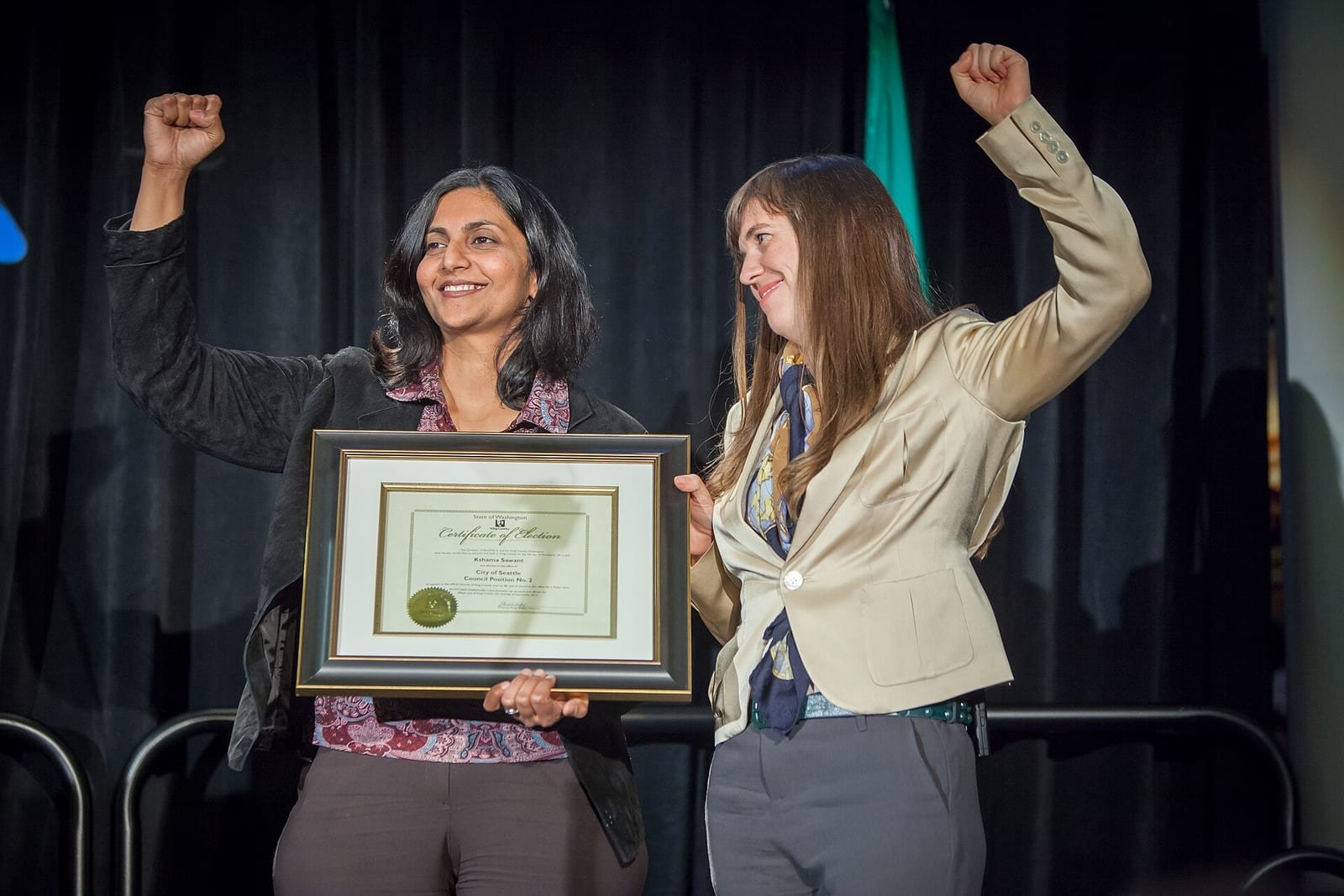
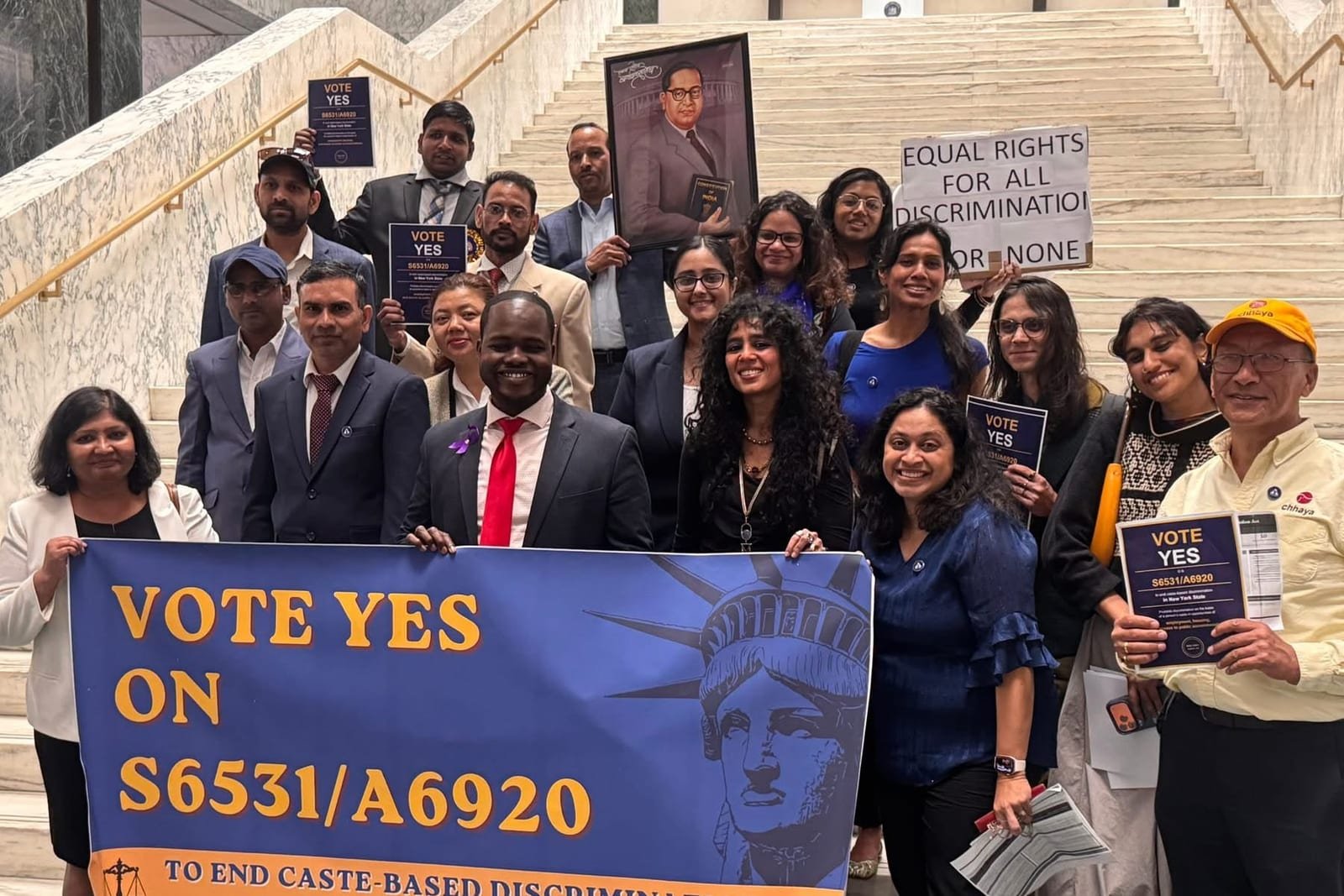
The respondents’ proposals go beyond statues: caste equity policies at global companies, fellowships for young Dalit voices abroad, caste in university social justice curricula, digital libraries of Dalit scholarship, and alliances with Indigenous, Black and other marginalised groups. Several of those fights are already under way. In February 2023 Seattle’s city council voted 6-1 to become the first US city to ban caste discrimination explicitly, and no US state has yet done the same. In Australia, a national study for the Australian Human Rights Commission has recorded caste discrimination against people from oppressed castes. Two tests are next. In New York, bills to bar caste discrimination in employment, housing and public accommodations were sent back to committee on 7 January 2026, and whether they come out of it when the legislature next sits will show whether a US state follows Seattle. In New South Wales, an Australian state, the Law Reform Commission is reviewing the Anti-Discrimination Act, and the Law Society of New South Wales has asked it to protect caste expressly.
The paper ends on a line that fits the rainy day in Maryland. The statue, its authors write, as The Mooknayak reports, “becomes a demand, not for passive reverence but for the recognition of struggle and a refusal to be forgotten.”