Listen to this article
Read by an AI-generated voice · Report a mispronunciation
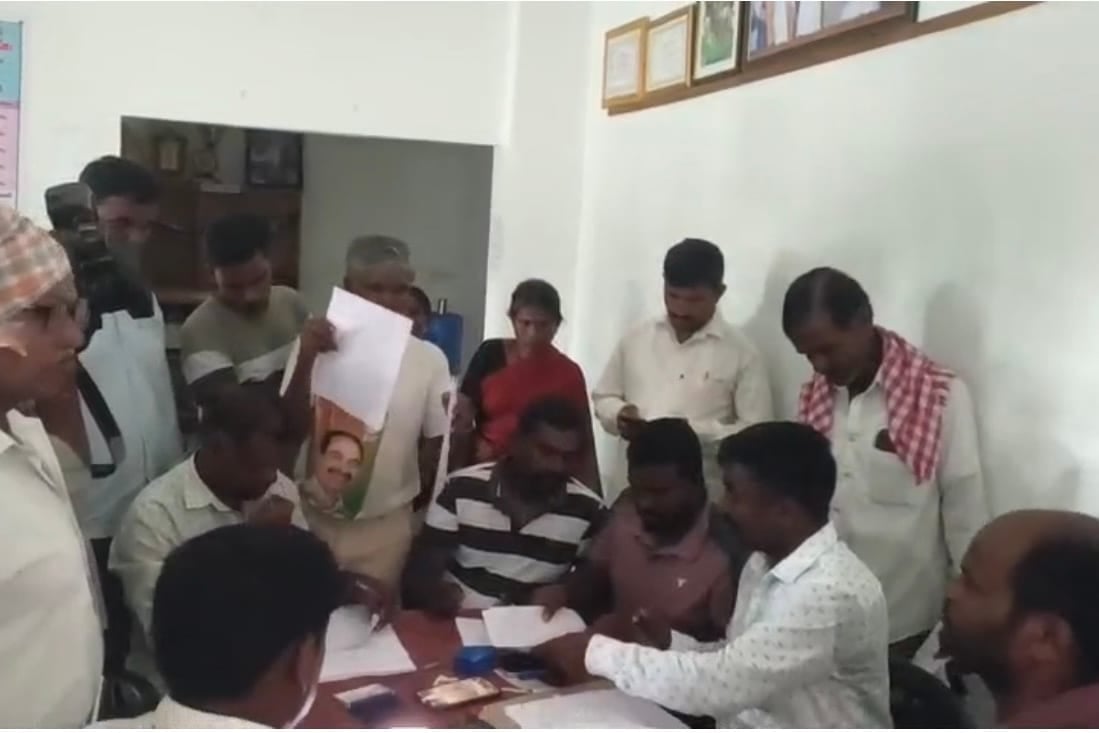
Dalit families in Lokurthi, a village in Damaragidda mandal, or sub-district, of Narayanpet district in the southern Indian state of Telangana, say people claiming their land are pulling down homes their great-grandparents built. Dalits are among the communities once branded “untouchable”. On 7 October they blocked the road at Damaragidda to demand government pattas for the plots their houses stand on, the Telugu daily Disha reported. A patta is the government record that names who holds a piece of land.
Their account, as Disha gives it, is of about 100 houses built on some five acres around 150 years ago, when the land was the village site. Now people the residents identify as belonging to the Reddy community, which Disha names as a caste community, say the land is theirs, and, the residents allege, are knocking the houses down with earthmovers.
The question in Lokurthi is not only who is telling the truth about five acres. It is which kind of proof counts. The residents say their families settled land that was set aside for houses, and they are asking now, generations later, for the paper that would say so. A claim made on paper can reach their homes before their own long possession is ever written down.
What the residents say happened
Disha’s report, filed from Narayanpet and published on 7 October 2026, is the only account of the dispute we have been able to find. It gives the residents’ account alone. The people they accuse are not quoted in it.
The houses sit in survey numbers 1 and 2/A of Lokurthi, the residents told Disha. Survey numbers are the plot numbers by which India’s revenue records divide land. When their grandparents and great-grandparents built there, the residents said, the land was within the gramakantham, the part of a village set aside for houses, and they worked hard to make permanent homes on it.
Now, they said, some people from the Reddy community claim rights over the land and are demolishing the houses with JCBs, the backhoe loaders used across India for this. The residents told Disha the claimants are pressing them, and have issued notices as well, to choose: pay Rs 300,000 (Rs 3 lakh, about US$3,400 at 2025 rates) for the houses, or see them pulled down.
They said they had taken the problem to the revenue officials and to the district Collector, the district’s senior civil servant, without result. For 15 days they had held dharnas, sit-in protests, outside the office of Damaragidda’s tahsildar, the mandal’s chief revenue officer, and outside the Collector’s office, demanding government pattas for their house sites. Officials had promised to survey the land and do justice to the Dalit families who built there, the residents said, but were stalling.
They demanded cases under the law against caste atrocities, naming as targets those who, they said, had created records over their land illegally. They said it was unfortunate that leaders of the main political parties had not responded, and warned of a larger movement led by the Communist Party of India (Marxist), the CPI(M), a left party, and Dalit organisations. Revenue officials had promised to resolve the matter within three days, the residents told Disha.
We have not found a later report of what the officials did after that promise, and the residents’ figures for the houses, the acres and the 150 years are their own.
The mechanism: what a village site is, and what it lacks
About 100 houses on some five acres, built about 150 years ago on what the residents say was then the village site — residents of Lokurthi, to Disha, 7 October 2026
Telangana’s own law knows exactly what the residents are describing. The Telangana Bhu Bharati (Record of Rights in Land) Act, 2025, the state’s new land-records law, defines a “Village Site”, which it says may go by any other local name, as the land set apart in a village for dwelling. Gramakantam and abadi are two of those names.
i
Shared with creditOriginal on Siasat.comThe same Act says a separate Record of Rights, the official register of who holds land, shall be prepared and kept for abadi and non-agricultural land, in a form to be prescribed by rules. Among the ways a person’s rights can enter the record, it lists a house-site allotment by the authorities and an ownership certificate under the Telangana Occupants of Homesteads law. Those are papers the state issues. The Act also lets a person in lawful possession whose land has no entry in the record apply to a prescribed officer for a new entry, to be decided after an inquiry. Where others have made entries over a person’s land, as the residents say has happened in Lokurthi, the Act lets that person apply to an officer, within a period the rules set, to have the entry rectified, or sue in a civil court for a declaration of the right. Every one of these routes asks a family that built on the village site long before any of these papers existed to prove its history to an officer or a judge.
That is where caste enters. The law sorts people into those who hold a paper the revenue office can read and those who hold only a history, and in Lokurthi the families asking for pattas to homes they have lived in for generations are Dalit. The family with a paper has a claim an officer can check at a desk. The family without one has to persuade an officer to come out and look.
Lokurthi’s residents are asking for pattas, and they say officials have promised to survey the land. The survey numbers they give, 1 and 2/A, may themselves point to the problem. Their account is that the land was the village site when their families settled it. A survey number is how the revenue record divides land into plots that can have a named holder. If those plots now carry someone else’s name, the families who live on them have to prove a history that was never written down.
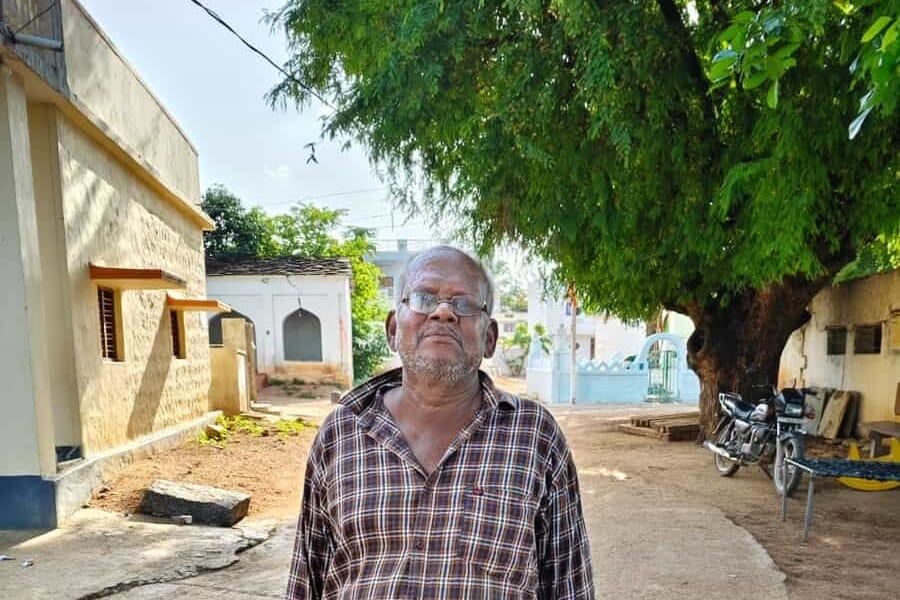
Telangana has seen a related problem before. In June 2025 Siasat.com, a news site in Hyderabad, Telangana’s capital, reported from Salaarnagar, a hamlet on the border of Mahabubnagar and Vikarabad districts. It was one of five villages in a pilot survey under Bhu Bharati, part of a plan the state’s revenue minister announced to survey 413 unmapped villages. The survey was to cover the grama kantham, the village site, which the report describes as land owned by the village panchayat, or village council. The report said Salaarnagar mirrors a larger problem across Telangana: ownership disputes caused not by encroachment from outside but “by technical errors and systemic issues within Dharani”, the state’s previous land-records portal. Palle Venkataiah, whom the report describes as a landless Dalit from the Madiga community, one of Telangana’s Dalit communities, explained why he had not filed a petition in the grievance programme running in his village. His family’s land, the report says, had been fraudulently registered in the name of a powerful man from his own community when he was a child.
“They will ask me to show some documents. We never had any, though we were tilling the land for generations.” — Palle Venkataiah, Salaarnagar, Telangana, to Siasat.com, June 2025
The same report recorded what a retired teacher from Salaarnagar said had happened in Kusumasamudram, a village in Vikarabad district. Reddy landlords had abandoned land there, and Backward Classes (India’s official term for a broad group of intermediate castes), Dalit and Adivasi (Indigenous) farmers tilled it for decades. Under Dharani, it was recorded in the former landlords’ names. A former village head from the landlords’ family received the pattadar passbooks, the title books issued to landholders, for the land, he said. “She asked those who have been tilling those lands for decades to pay her Rs 2 to 4 lakh to get them registered in their names. The farmers refused, saying it was unjust to pay for land they had worked on for so long,” he told Siasat.com. That is about US$2,300 to US$4,600 at 2025 rates; a lakh is a hundred thousand rupees. Siasat.com’s report carries no response from her. Lokurthi’s residents describe a similar demand: pay for houses they already live in, or see them pulled down.
What the atrocity law says about records
The residents’ demand for criminal cases rests on a specific part of India’s law against caste violence. That law is the Scheduled Castes and the Scheduled Tribes (Prevention of Atrocities) Act, 1989. Scheduled Caste is India’s official term for Dalit communities. Section 3(1)(f) makes it an offence for anyone who is not a member of a Scheduled Caste or a Scheduled Tribe, the official term for India’s Adivasi communities, to wrongfully occupy or cultivate land owned by, in the possession of or allotted to a member of either, or to get such land transferred. Section 3(1)(g) makes it an offence to wrongfully dispossess them of their land or premises. The Act says “wrongfully” includes “fabricating records of such land”.
That clause is the law’s own recognition of the mechanism: a paper made later can be the instrument of dispossession. Its reach in Lokurthi depends on what the police and the revenue office find. Telangana’s record in trials of crimes against Dalits is not encouraging: its courts convicted in 3.7% of the trials of crimes against Scheduled Castes they finished in 2024, against 33.9% across India, by the National Crime Records Bureau’s figures as compiled by The Dalit Project.
The strongest counter-reading
The people the residents accuse have not been heard. Disha’s report gives only the residents’ side, and it is possible that the claimants hold title to survey numbers 1 and 2/A that is older or better than the residents know, or that part of the five acres was never the village site at all. Not every land dispute between parties of different castes is a caste dispute.
But the counter-reading does not dissolve the question; it sharpens it. If the claimants’ papers are good, the families who say they have lived on the land for generations still hold no paper of their own, by their account. Whichever side is right about the title, the Dalit families are the ones asking the state to come and look, and the ones who say people claiming the land are knocking their homes down while it decides.
What to watch
- Whether the Narayanpet revenue administration surveys survey numbers 1 and 2/A, and whether it treats the residents’ houses as standing on the village site.
- Whether revenue officials act at all on the promise, reported by Disha on 7 October, to resolve the matter within three days; no later report of what they did has been found.
- Whether the families receive house-site pattas, and whether any demolitions stop while the survey is done.
- Whether the police register cases under the atrocities law on the residents’ complaint about the records, and what those cases find.
- How Telangana keeps the separate Record of Rights for abadi land that its 2025 Act calls for, and whether Dalit homes on village-site land are written into it.
The residents of Lokurthi are asking for pattas for the plots their houses stand on: a paper that would say, as they say now, that the homes their great-grandparents built are theirs. In the gap between a village site and a record of rights, a family’s account of 150 years on the land can count for less than a single entry in the record.