Listen to this article
Read by an AI-generated voice · Report a mispronunciation
Seppakkam is a village in Thiruvallur district, on the northern edge of Chennai, the capital of the southern state of Tamil Nadu. Its houses stand barely 50 metres from a pond of coal ash, the waste of a power station owned by the state. The people who live there are Dalits, among the communities once branded “untouchable”, and they have asked to be moved. A new study argues that to be heard, they first had to prove the pollution they live with.
The study is “Producing proofs: Caste, gender and the politics of unseeing chemical violence in Chennai’s petrochemical outpost”, by Rishabh Raghavan of the Max Planck Institute for Social Anthropology in Germany, published on 16 November 2026 in the journal Environment and Planning E: Nature and Space. It is an ethnography, a study built on time spent with the people it describes. Its abstract says the residents “must contest the modes of governance that obscured the chemical pollution that they habitually endure”, and that they did it by producing, verifying and publicising proofs: health camps, health reports, and an “expert public” who could “act as mediators”. The pollution was there to be seen. The labour of making the state see it fell on the people living in it.
What happened
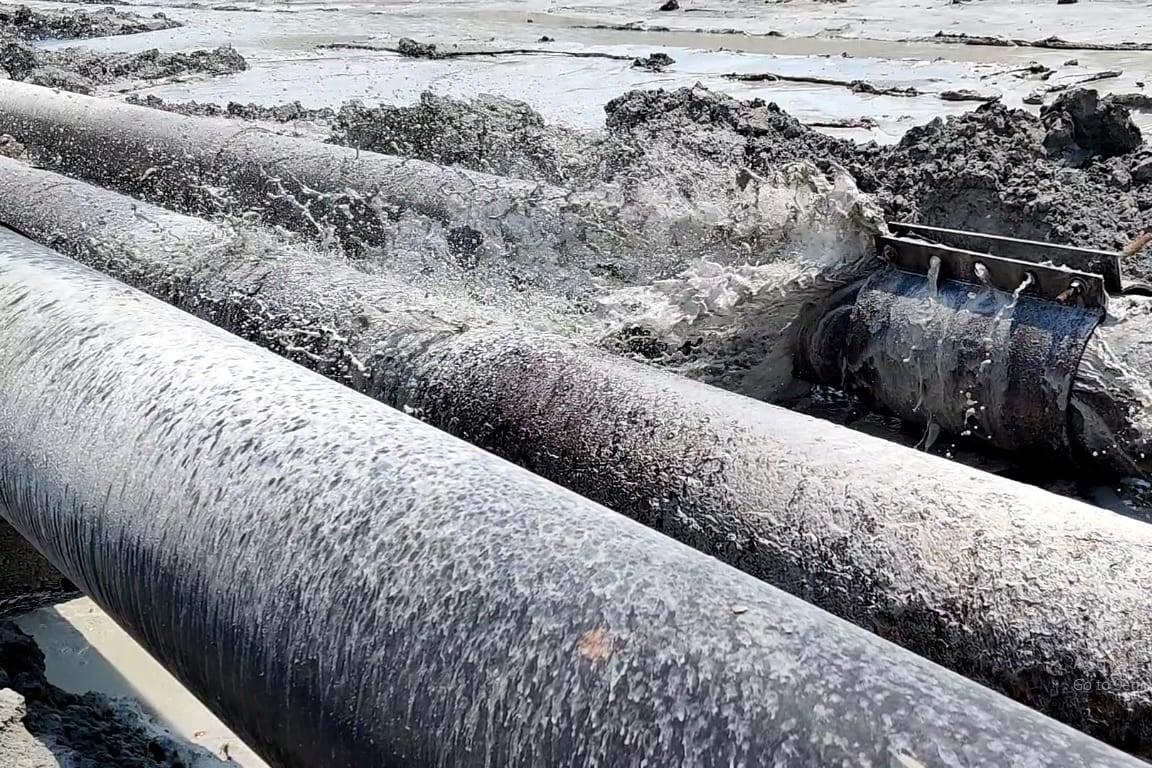
The North Chennai Thermal Power Station (NCTPS), run by the Tamil Nadu Generation and Distribution Corporation (TANGEDCO), the state’s electricity company, was commissioned in 1994, 25 km north of the city. It burns coal and makes fly ash, the fine powder left over. The ash is mixed with sea water and sent through pipes to the pond beside Seppakkam. Nagammal, a resident who manages the village’s water-treatment plant, said in a first-person account published by IDR, an Indian development-sector site, in 2025 that fifteen households lost their lands to build the pond and, thirty years later, “are still struggling for compensation in court”. Many residents have still not received compensation or jobs, The Quint, an Indian news site, reported in 2021.
The pipes leak. On a Monday in August 2020 a TANGEDCO pipeline burst and flooded the village with ash slurry, and about 60 families woke to it. Some residents waded into the ash pond in protest and said they wanted to leave Seppakkam. An official at the plant told DT Next, a Chennai daily, that a contract to replace the five rusted pipelines had been awarded, but that only 1.5 km of the 30 km had been replaced, because of the COVID-19 lockdown. TANGEDCO’s own 2020 report counted 22 leaks, The Quint reported.
The village has been emptying. The News Minute, a south Indian news site, reported in 2020 that more than 150 Dalit families had lived there and 60 remained, most of the rest having left because of the pollution. The Quint put the earlier figure at over 600 families; Nagammal spoke of 300 households, now “approximately 80 families”. The counts differ. The direction does not.
The mechanism: a harm that has to be proved
18.12 million cubic metres The fly ash a field survey found in the pond, against 6.11 to 8.11 million cubic metres in the plant’s own records. Source: an expert committee of the National Green Tribunal, as reported by The Wire Science
The proof has been there for years, and much of it came from experts appointed by a court. In 2017 a committee appointed by the National Green Tribunal (NGT), India’s specialist environmental court, tested water from Seppakkam’s borewells, wells drilled deep for groundwater, and found it severely contaminated with copper, manganese, cadmium, mercury, selenium, lead, chromium and nickel, above Indian drinking-water standards. It found the ash pond unlined, against environmental rules. And it found the plant’s records accounted for less than half the ash a field survey measured in the pond, The Wire Science, the science section of the Indian news site The Wire, reported.
That same committee recommended a separate study of what the ash does to human health. The water had been tested. A study of the people was only recommended.
Doctors and health workers who worked with the village gathered some of that evidence. Vishvaja Sambath, a doctor who has worked with the village, said she ran a medical camp there at which almost all the residents were found to have some illness, and called for a health emergency to be declared. A study by the Health Energy Initiative – India, a network of health professionals, also found residents facing severe illnesses due to the ash ponds and power plants nearby, The News Minute reported. Health camps and health reports are the kinds of proof Raghavan’s abstract names.
One resident says even the leaks are hidden. “If an official comes to visit the area, the NCTPS people switch off the pipes so that the leaks are not visible,” Ela Muthu, a resident, told The Wire Science in 2021, “or they hammer in branches of trees or cover the pipes with polythene sheets to temporarily plug the leaks.” The plant’s assistant executive engineer responsible for the pipes refused to comment to The Wire Science. Nurses at the government primary health centre, a basic public clinic, in Ennore, the area around the plant, told the same reporter they had diagnosed no cases of silicosis, a lung disease from fine dust that the report says is often mistaken for tuberculosis. A harm no record names is a harm the state does not have to answer for.
This is where caste does its work. TANGEDCO built the pond beside a village that was already there, on land its plant bought from the residents, who say they were underpaid. North Chennai holds a cluster of coal power plants, an oil refinery and the city’s largest garbage dump. Nityanand, a Chennai writer and activist, noted in 2022 that TANGEDCO’s own environmental assessment for a new plant there found that more than 37% of the population of its study area belonged to Scheduled Castes, Scheduled Tribes or Most Backward Communities. These are the official lists of Dalit, Adivasi (Indigenous) and other disadvantaged communities.
TANGEDCO’s pond sits beside a village the study describes as Dalit, and it is that village that has had to show what counts as evidence of harm, and to produce it. Raghavan’s abstract puts the two together: Dalit communities, it says, “disproportionately endure the experience of unseen chemical violence”.
Ash in the food, the homes and the graves
Residents have described the ash in their food, their homes and their graves. “We can’t eat as there is coal ash even in our food,” Elaiyaselvi, a resident, told The News Minute after the 2020 leak. Nagammal said wounds and rashes from the ash appear on children’s bodies, and that parents keep children indoors except for school.
“When we dig in the graveyard, we do not find soil but only ash. We are unable to lay our loved ones to rest in our own soil. We bury them in ash and water. All this is because of people who have created industries that benefit the government. And we people who have lived here have to die in the ash.” — Prabhakaran, speaking to The Quint for its 2021 report on Seppakkam and the neighbouring village of Kattukuppam
The study’s title names gender as well as caste. A later expert committee of the tribunal, which visited the area in December 2021, reported from its public consultation that across the area children and women were particularly affected, and that respondents particularly reported gynaecological problems. The burden of the ash in the home, in the cleaning, the cooking and the keeping of children indoors, runs through the residents’ own accounts.
The case for blaming regulation alone
The strongest reply is that this is a failure of regulation, not of caste. The ash harms everyone around Ennore Creek, the backwater beside the plant: fishers in neighbouring villages say they have lost their catch too, and the tribunal’s committees and the Tamil Nadu Pollution Control Board (TNPCB), the state’s pollution regulator, have acted. “We implement every court order within the time frame,” T. Rathi, an environmental engineer at the TNPCB, told The Wire Science. On this reading, the fix is better pipes and a lined pond.
It falls short on its own evidence. The tribunal’s experts found the contamination in 2017. In 2020 the village was flooded again, with most of the pipes still unreplaced. A later committee found the plant’s first and second stages had been running without a valid consent under India’s air and water pollution laws since 2015 and 2019, as Nityanand summarised its report. The regulation was there. What it did not do was move the people the pond was built beside. And a failure of regulation lands somewhere: here, on a Dalit village, in an area where TANGEDCO’s own assessment counted more than a third of the people as Scheduled Caste, Scheduled Tribe or Most Backward Community. Raghavan’s abstract describes the residents’ situation as one of “being unseen through environmental governance practices”. Being seen in a court file is not the same as being seen by the state that runs the pond.
What to watch
The study’s abstract does not name the dates of the fieldwork or say what the health reports found, and the questions it leaves for the record are plain ones. Has TANGEDCO or the Tamil Nadu government answered the demand to move Seppakkam’s remaining families? Have the fifteen households that lost their land been compensated? And has the separate health study the tribunal’s experts asked for in 2017 been done, and by whom? The record to follow is the tribunal case in which its later committee reported: OA 8 of 2016, an “original application” filed at its Southern Bench by an Ennore fisherman.
Until then, the people who live beside the pond remain the ones keeping the record. In Seppakkam, the proof of harm has been the residents’ job.