Listen to this article
Read by an AI-generated voice · Report a mispronunciation
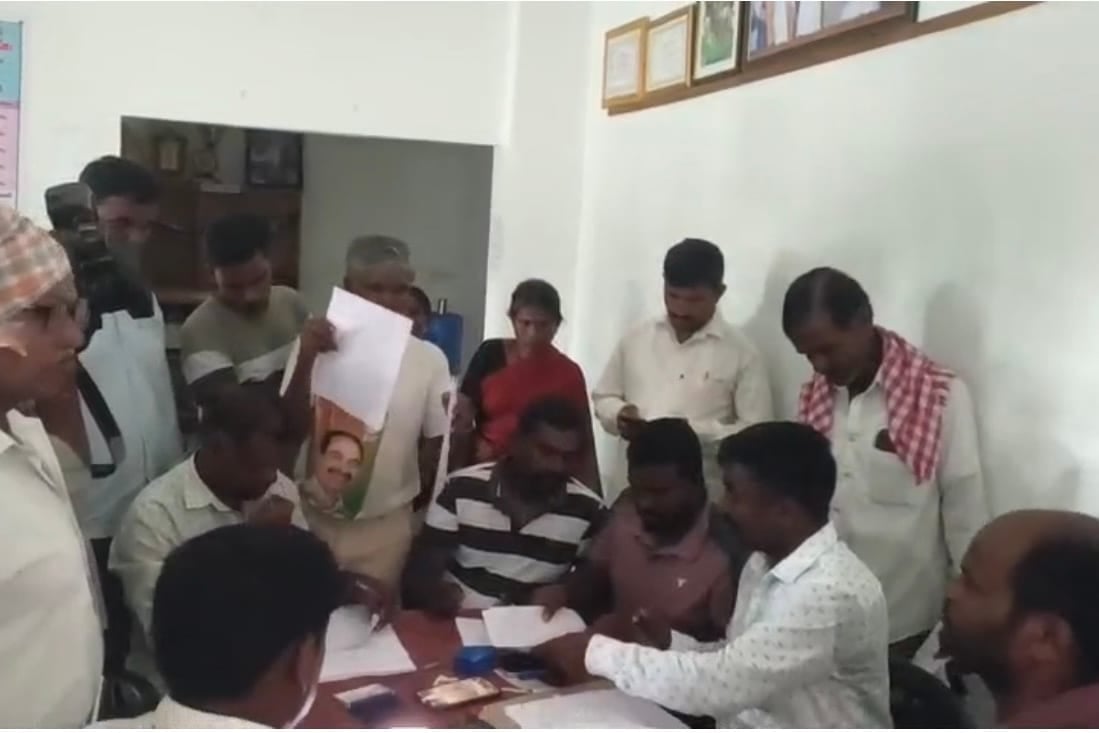
On 16 November 2026, Scheduled Caste people from villages in Sulur taluk, a revenue subdivision of Coimbatore district in the western part of the southern Indian state of Tamil Nadu, held a protest outside their taluk office. Scheduled Castes is the Indian state’s legal name for the Dalit communities, once branded “untouchable”. They have petitioned for many years for pattas, the government documents that record title to a piece of land, and no action has been taken on the government’s side so far, the Tamil daily Dinamalar reported. Office-bearers of several organisations joined what the paper called an attention-drawing protest.
The tahsildar, the official who runs the taluk’s revenue office, named in the report only as Lawrence, held talks with the protesters and promised to solve the problem within 10 days. The people called off the protest. If there is no solution by the promised date, the people said, Dinamalar reported, they will put up a hut in the taluk office compound and protest there.
That is almost all that is on the public record about this protest. The report does not name the villages or the organisations, or say how many families have petitioned or since when. But Sulur’s own recent history shows what kind of problem this is. Across 16 years of reports from this one taluk, families have petitioned, protested and resisted eviction, and none of the reports records a petition settled on its own. Read with cases elsewhere in the state, these reports point to how the revenue administration, which holds both the land and the paper, tends to answer: people wait until they make the wait public. This time, a promise with a date on it came only after a protest.
What a patta decides
In February 2018, a group of residents belonging to the SC community at Majara Varappalayam, in Kammalapatti village in Sulur taluk, petitioned the district collector, the senior civil servant who runs the district, for land pattas and permanent houses, the Times of India reported. About 150 families lived in 50 huts and shacks in the locality. “Over the past 15 years, newly-wed couples and those who have come to live in the locality from other places had no option but to sleep outside,” their petition said.
“We have to abandon our huts and seek a shelter when it rains heavily.” — Mayilathal, 60, a resident of Majara Varappalayam in Sulur taluk, speaking to the Times of India in February 2018
Another petitioner, Kalavathi, told the paper that they could apply for ration cards, the household cards for subsidised food, and for the free toilet scheme only if they had a land patta. As there was no poromboke land, the government land held for common use, in Varappalayam, they asked for land along the Koduvai Senjeri Hill Road.
Those two details are the mechanism in small. A patta is not only a title. On Kalavathi’s account it is the paper that opens other entitlements, so a family without one waits for more than a plot. And where no common land lies free, the decision on where Dalit families may live sits with the revenue office that must find some.
The same taluk, other years
The Sulur reports run back further. In 2022, the Times of India reported, 135 Dalit families in Samalapuram town panchayat, a small-town council in Sulur, were staging a black-flag protest after the state’s Public Works Department (PWD) asked them to vacate. Thol. Thirumavalavan, founder of the Viduthalai Chiruthaigal Katchi (VCK), a Tamil Nadu political party, visited the settlement. “The water resources department under PWD recently served notices to 135 families to vacate houses by stating they encroached a water body. The Arunthathiyar community people in the settlement are residing here for over five generations. Where do they go all of a sudden if they are pushed out of their houses?” he said. The Arunthathiyars are one of Tamil Nadu’s Dalit communities. “The state government should give them house patta,” he added.
In July 2010, residents of Vadavalli village, in the Sultanpet panchayat union (a block of village councils) of Sulur taluk, blocked the earth movers the authorities sent to evict them and staged a road blockade, The Hindu reported. They were taken to a wedding hall and released that evening. The next day they went to the district collector’s camp office to protest. The land was said to be panchami land, while a local landlord claimed it was his. In a petition, the residents said the landlord was influencing the authorities. They also accused him of ill-treating people of the “listed communities”, the Scheduled Castes. The Hindu’s report carried no response from the landlord. The collector referred the matter to the Revenue Divisional Officer, the next rung up the revenue ladder, to inquire.
Panchami land is the clearest case of the state’s paper and Dalit possession pulling apart. After a report on the condition of Dalits by J.H.A. Tremenheere, the colonial collector of Chengalpet district, next to Madras (now Chennai), in 1891, land was assigned to Dalits in Tamil Nadu from 1892 on conditions that barred its transfer to non-Dalits, The New Indian Express reported in 2009. At the time, the paper wrote, land was in the total control of Brahmins and Goundars, a landowning caste of western Tamil Nadu, and Dalits were bonded agricultural labourers and landless workers. Our explainer on panchami land traces what became of those grants.
12,415 acres (about 5,000 hectares) of panchami land in Tamil Nadu were held by non-Dalits, out of 104,494 acres counted in a reply to the activist Y. Aruldoss under India’s Right to Information Act. Counts differ: the same report puts the land first distributed at 1.2 million acres, and in September 2026 the state’s social justice minister said 186,000 acres of it were left. Source: The New Indian Express, 5 October 2009; the minister, as reported in our panchami explainer
The same report quoted D. Ravikumar, then general secretary of the VCK: “Landlessness and servitude are interconnected. Landlessness among dalits is very high in Tamil Nadu compared to the other states.”
The strongest counter-reading
The state’s answer is that it is handing out land titles at scale. In February 2026, in an official release listing the achievements of its Adi Dravidar and Tribal Welfare Department (Adi Dravidar is the state’s official name for its Scheduled Caste communities), the Tamil Nadu government said it had distributed free housing pattas to about 309,000 people of the Adi Dravidar and tribal communities who did not have houses, The Hindu reported. In April 2025 the government relaxed the rules of a one-time scheme to regularise homes the state classes as encroachments and issue free house-site pattas, raising the family income limit for a free patta across the state. On this reading, Sulur is a backlog that the system will clear.
It falls short in three ways. First, the 309,000 figure counts pattas given, not petitions waiting; the release as reported gives no figure for how many families are still waiting, or for how long. Second, the regularisation scheme gives title to land a family already occupies. The Majara Varappalayam families said in 2018 that no common land lay free in their locality; for them, the office has to find land before it can issue a patta. Dinamalar does not say which scheme the Sulur petitions fall under. Third, in the one recent case elsewhere in the state that the record follows to an answer, the answer came after families made the wait public, not before. In March 2026, Scheduled Caste residents from five hamlets of Sattangudi revenue village, in Mayiladuthurai district on the eastern coast, held a round-the-clock sit-in inside the Tharangambadi taluk office, cooking and staying overnight on the premises, The Hindu reported. Repeated petitions for house sites had brought no response, residents said; over 95 Dalit families had reportedly put up huts on nearby poromboke land, and residents alleged that revenue officials removed them with police protection. Only after the sit-in did the district collector, sources told the paper, assure them that the process of issuing pattas would begin after minor procedural issues were resolved.
Even land the state has already allotted needs its papers renewed. In July 2025, residents picketed the Sathyamangalam tahsildar’s office in Erode district, also in western Tamil Nadu, seeking house-site pattas for over 5,000 people, and urged the revenue department to issue computerised e-pattas for land allotted earlier through the Adi Dravidar and Backward Classes welfare departments (the Backward Classes are disadvantaged castes outside the Scheduled Castes).
What to watch
The tahsildar’s 10 days run out around 26 November. Whether the Sulur families get their pattas, a written timetable or nothing will show whether a promise made at a protest binds the office that made it. If nothing comes, the families have said they will build a hut in the taluk office compound. The public record still lacks the basic numbers: how many families have petitioned, from which villages, and for how many years. The revenue office holds them.
The Sulur families have not asked for anything the state does not already say it gives. They have asked for paper that lets them live on land as of right, and they have waited for it. On 16 November they got a date out of their taluk’s revenue office, and said that if it lapses they will put up a hut inside its compound.