Listen to this article
Read by an AI-generated voice · Report a mispronunciation
A reserved seat in a village council is only as sound as the count behind it. India’s Constitution ties the number of seats reserved for Scheduled Castes (SCs, the communities listed for affirmative action, among them Dalits, once branded “untouchable”) and Scheduled Tribes (STs, India’s Adivasi communities) in each panchayat (elected rural council) to their share of the local population. In Majhiwala, a gram panchayat in Balotra district in the western state of Rajasthan, a resident has told the Rajasthan High Court, the state’s highest court, that the count is wrong. The court has agreed to hear his appeal, but has listed it for after the vote. Behind that is a single clause of the Constitution, Article 243-O, which limits how a panchayat election can be challenged once it is under way.
What happened
On 3 October 2026 Rajasthan’s State Election Commission, the state’s independent poll body, announced the schedule for elections to 41 zila parishads (district councils), 457 panchayat samitis (block councils) and 14,403 gram panchayats (village councils), with more than 40.3 million voters, the Press Trust of India news agency reported. The polls run in four phases, from 23 October to 17 November.
A resident of Majhiwala, in Pachpadra tehsil (sub-district), had gone to the High Court against the reservation of the panchayat’s wards, and of the gram panchayat itself, for SCs and STs. According to the court’s order, his petition alleged that “since there were only 14 voters within the Gram Panchayat of the Scheduled category, no such reservation ought to have been made”, and that “the population shown for the purpose of reservation of wards is fake”. He also challenged a notification of 24 September 2026 on the reservation of sarpanch (village head) posts.
A single judge dismissed the petition on 9 October as not maintainable, because the election programme had already been published on 3 October and Article 243-O barred the court from interfering. He appealed. On 15 October a Division Bench (a bench of two judges) of Chief Justice Sanjay K. Agrawal and Justice Baljinder Singh Sandhu heard the appeal (D.B. Special Appeal Writ No. 1237/2026).
The bench refused to interfere “with the election process so as to hinder it”, and dismissed the stay application. But “considering the legal grounds raised regarding the maintainability of the writ petition”, it admitted the appeal and listed it for hearing after six weeks. The court recorded that the gram panchayat elections are to be concluded by 17 November 2026, so the hearing is listed for after the vote is due to end.
Why it matters
Article 243D of the Constitution says the seats reserved for SCs and STs in every panchayat “shall bear, as nearly as may be, the same proportion” to the total seats as their population in that panchayat area bears to its total population, and lets those seats be allotted by rotation among the panchayat’s constituencies. The count sets how many seats are reserved. If it overstates a community’s share, more seats may be reserved than the proportion supports; if it understates it, fewer. Reserved seats exist to open village councils that dominant castes have long held, so the count decides how far that opening reaches.
“This reservation has ensured the representation of marginalised social groups, and given women like me an entry point into a space which is highly patriarchal and occupied predominantly by men from dominant castes.” — Shanti Lata, a Scheduled Caste ward member in Baladiyabandha panchayat, Dhenkanal district, in the eastern state of Odisha, speaking to BehanBox, 2020
Majhiwala’s appellant says the count overstates the scheduled population. The order records no account from Majhiwala’s SC and ST residents, whose reserved seats the petition challenges; the only respondents were the State and its election officials, who defended the reservation. Others in Rajasthan have made the opposite complaint this year: in August the Rajasthan president of the opposition Congress party, Govind Singh Dotasara, said the reservation lottery limited the representation of SC, ST and Other Backward Classes (OBC) communities and demanded that the government disclose the survey and method behind its OBC figures, The Mooknayak reported. Either way, the question is the same: who checks the numbers, and when.
What does Article 243-O say?
i
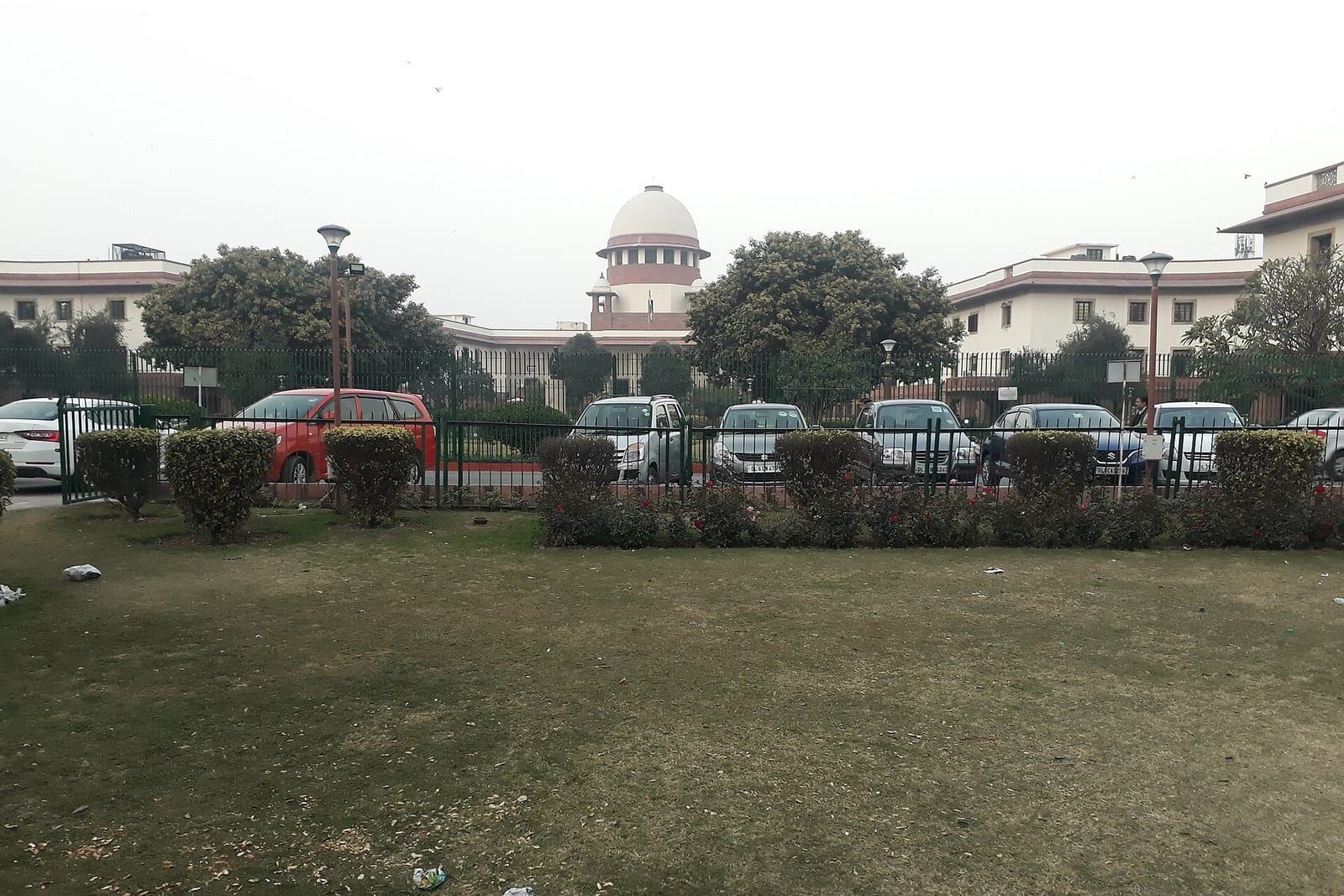
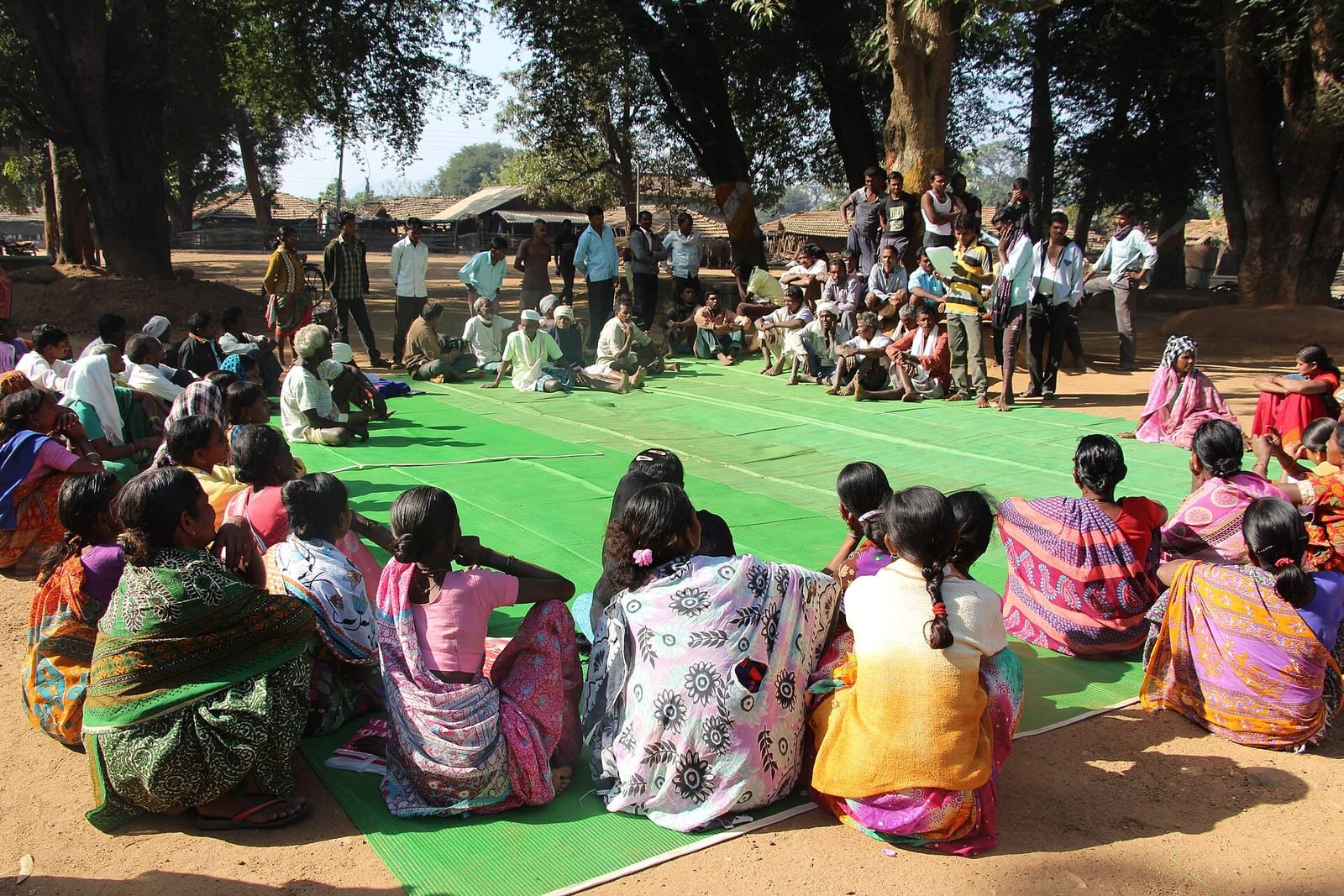
CC BY-SA 4.0Original on Wikimedia CommonsIt has two clauses. The first says the validity of any law on the delimitation of panchayat constituencies or the allotment of seats to them “shall not be called in question in any court”. The second says “no election to any Panchayat shall be called in question except by an election petition” presented in the manner a state law provides. Both were added by the Constitution (Seventy-third Amendment) Act, 1992.
In Rajasthan, panchayat election petitions are brought under Section 43 of the Rajasthan Panchayati Raj Act, 1994.
When does the election “begin”?
This is what the appeal turns on. The appellant’s lawyers argued that on 3 October only an election programme was issued, and that no election notification under Rule 23 of the Rajasthan Panchayat Raj Election Rules, 1994 had followed, so the bar was not yet attracted. The state government’s senior law officer, Advocate General Rajendra Prasad, answered that the programme covers the whole state and starts the process, that the reservation was done “in a fair and transparent manner”, that it is “purely an administrative exercise”, and that the petition raised disputed questions of fact a writ court should not decide.
For the interim, the bench took the State’s view of the timing. It held that the programme of 3 October set “the election process in motion”. It cited rulings of India’s Supreme Court, among them Election Commission of India v. Ashok Kumar (2000), as having held “that where elections are imminent, the High Court … should be cautious and refrain from passing orders that may interrupt, delay or postpone the election process”, and added, in its own words: “The bar contained in Article 243-O of the Constitution also serves this object.” It admitted the appeal on “the legal grounds raised regarding the maintainability of the writ petition”: whether the single judge was right that the bar applied at all.
Is the bar absolute?
The appellant relied on a 2023 Supreme Court judgment about the election to the Ladakh Autonomous Hill Development Council, Kargil, an elected regional council in Ladakh, a union territory in India’s far north, Union Territory of Ladakh v. Jammu and Kashmir National Conference, to argue that it is not. In that case the court said constitutional courts “under normal circumstances are loath to interfere” once a notification is issued and the election process starts, but that where there is “unjust executive action or an attempt to disturb a level-playing field between candidates and/or political parties with no justifiable or intelligible basis”, they are “duty-bound, to step in”. The Majhiwala order records the appellant’s reliance on that judgment but does not discuss it in its reasoning; at the interim stage, the bench declined to intervene.
Is Majhiwala the only case?
No. On 2 November another Division Bench of the same court, in a case about Akbarpur gram panchayat in Karauli district, also in Rajasthan, set aside a single judge’s order for a fresh reservation lottery. It held that the announcement of the election programme “materially changed the position”, and left the correctness of the reservation itself undecided, LawChakra reported.
Key terms
- Gram panchayat: the elected village council, the lowest tier of India’s three-tier rural local government.
- Ward: a constituency within a panchayat that elects one ward member, or panch.
- Sarpanch: the head of a gram panchayat.
- Writ petition: a direct petition to a High Court under Article 226 of the Constitution, asking it to correct an unlawful act by the state.
- Election petition: a challenge to an election result, filed after the vote before the authority a state law names.
What’s next
The appeal is listed for hearing six weeks after 15 October, after the gram panchayat polls are due to end on 17 November. If the bench holds that the bar did not yet apply on 3 October, challenges like this one could be heard before a vote. If it holds that it did, they are left to an election petition under state law, the route Article 243-O names, after the vote. Either way, Majhiwala votes on the reservation the State notified.