Listen to this article
Read by an AI-generated voice · Report a mispronunciation
Most readers outside South Asia meet caste in one of two ways: as an old religious diagram of four ranks, or as a village name attached to a killing. Both hide the thing itself. Caste is a working system. It decides who owns land and who works it, who is taught and who teaches, who may marry whom, and who cleans the sewer.
Caste is best read from below, as Jotirao Phule, Iyothee Thass, Periyar and B.R. Ambedkar read it. A hierarchy is fully visible only from its bottom rung, and the people made to carry caste have produced its sharpest analysis.
Why does it matter now?
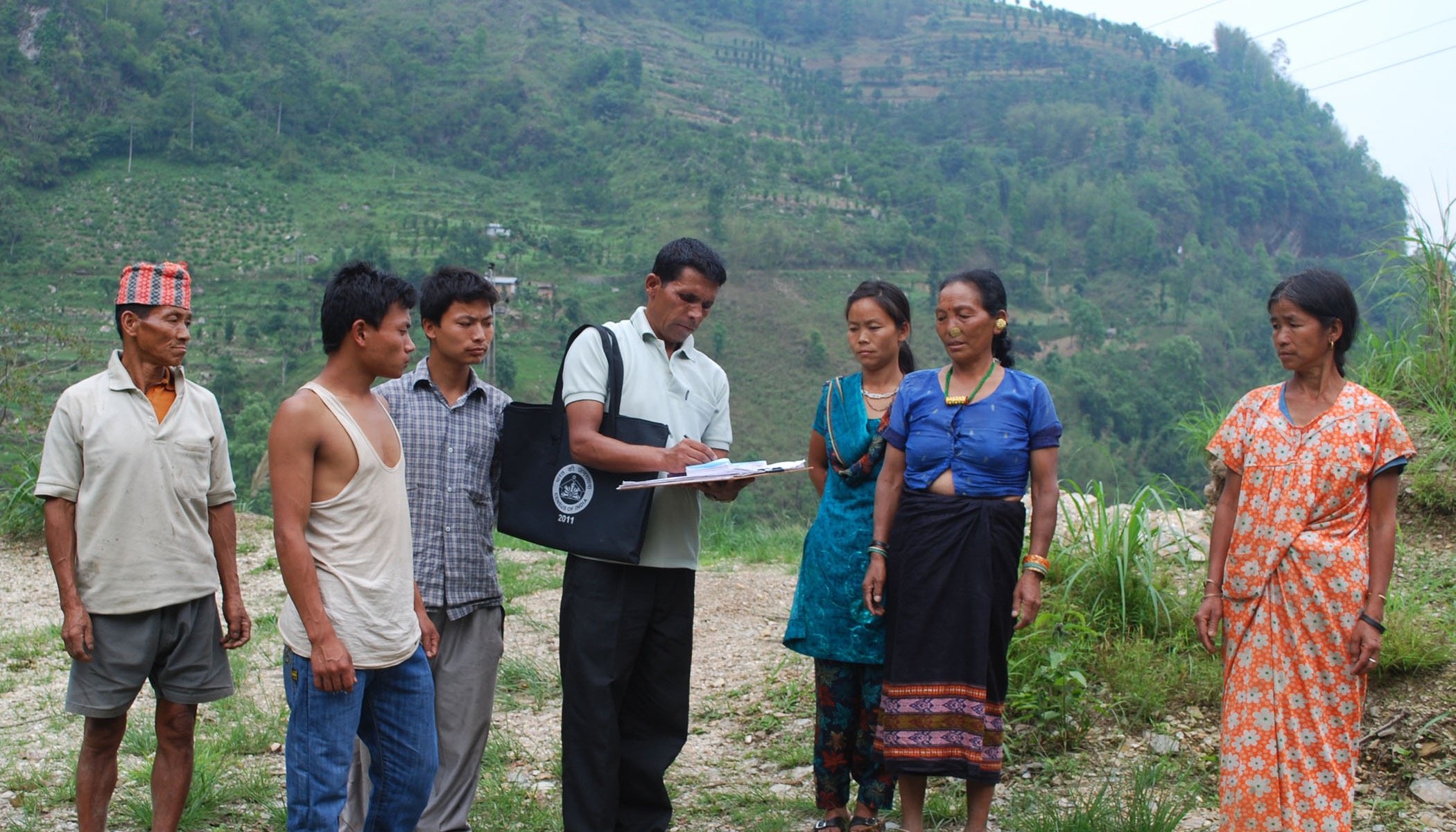
India’s new census is already in the field, and it asks every person their caste: households in Ladakh and snow-bound parts of three other Himalayan regions were counted first; Uttar Pradesh, Punjab, Goa and the rest of Uttarakhand are counted from 1 December 2026 to 4 January 2027; and most of the rest of India from 25 January to 28 February 2027. Since independence the census has counted castes only within the Scheduled Castes and Scheduled Tribes, and the last enumeration of all castes was in 1931. The census notification set its reference date at midnight on 1 March 2027 for most of India. We explain what the caste column can and cannot settle in a separate piece.
What is caste?
Jati is the lived unit. People are not born into one of four abstract ranks. They are born into a jati, a hereditary birth group with its own name, traditional occupation, rules about who may share food and water, and a place in a local ranking. There are a great many of them: the official lists of the western state of Maharashtra alone have 494 entries.
Varna is the theory caste tells about itself. The fourfold scheme of Brahmin (priest), Kshatriya (warrior and ruler), Vaishya (trader) and Shudra (servant), with a further population pushed outside it altogether as “untouchable,” comes from Brahmanical scripture, the texts of the Brahmin priesthood, beginning with the Purusha Sukta hymn that Ambedkar dissected in Who Were the Shudras?. It is worth knowing, but as the system’s own ideology rather than a description of how people live.
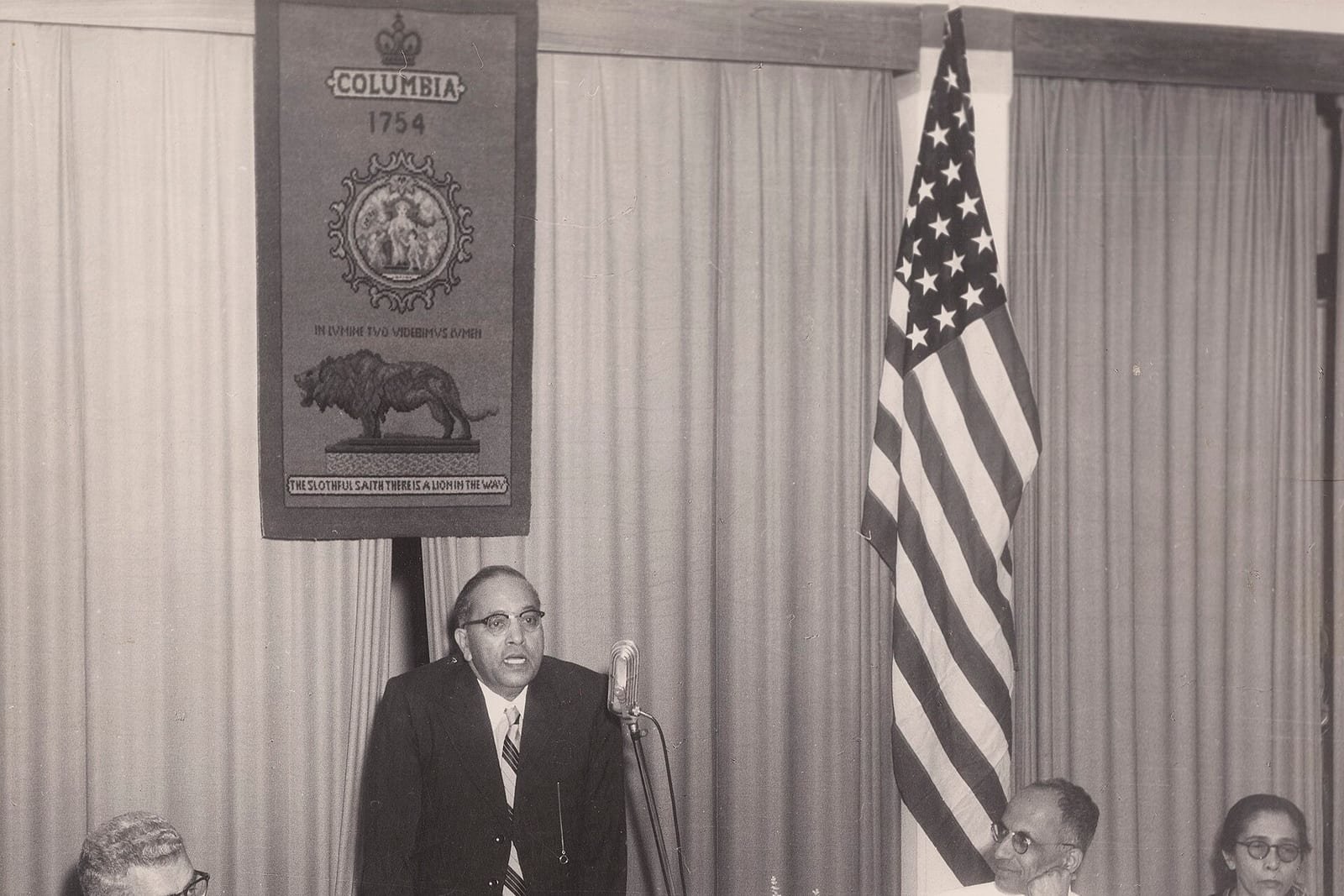
Ambedkar supplied the mechanics. In “Castes in India,” the paper he read at a Columbia University anthropology seminar on 9 May 1916, he argued that endogamy, the rule of marrying only within the group, is “the only one that can be called the essence of Caste.” A caste, he wrote, is “an Enclosed Class.” Twenty years later, in Annihilation of Caste, he wrote that the caste system “is not merely division of labour. It is also a division of labourers.” We set out his endogamy thesis in full in How caste began.
The design principle is graded inequality. Every caste has another beneath it, so each rung has something to defend against the rung below. Ambedkar pointed to the Purusha Sukta, the hymn that gives the four varnas their order, and wrote in Who Were the Shudras? that no other society has “an official gradation laid down, fixed and permanent, with an ascending scale of reverence and a descending scale of contempt.” Untouchability, the rules that bar people from wells, temples, kitchens and marriages, is the enforcement floor of that ladder.
“Caste is a notion, it is a state of the mind,” Ambedkar wrote in Annihilation of Caste. It is a notion with very material instruments.
The genes record the wall. Population geneticists have traced the same story in DNA. A 2013 study in the American Journal of Human Genetics found that two ancestral populations of India mixed widely until mixture “became rare because of a shift to endogamy”. A 2016 study in PNAS found that mixing was “rapidly replaced by endogamy about 70 generations ago, among upper castes and Indo-European speakers predominantly”.
How many people does caste touch?
India’s 2011 census counted 201.4 million people in Scheduled Castes and 104.3 million in Scheduled Tribes in a population of 1.21 billion, about a quarter of the country, as we have reported. “Scheduled Caste” is the legal category for Dalits, the communities once branded “untouchable”; Scheduled Tribes are Adivasi, or Indigenous, communities.
Nobody knows how many Indians belong to the Other Backward Classes (OBCs), the large band of castes ranked as Shudra. The Mandal Commission, the central government’s Backward Classes Commission, which reported in 1980, put them at about 52% of the population, a figure extrapolated from the 1931 census. States have since counted for themselves. The eastern state of Bihar’s caste survey, released on 2 October 2023, found, as All India Radio’s news service reported, Extremely Backward Classes at 36.01% and Backward Classes at 27.12%, together more than 63% of the state, with Scheduled Castes at 19.65%. The southern state of Telangana’s survey, NewsMeter reported, put Backward Classes at 56.33% of the state, including Backward Class Muslims.
Caste does not stop at India’s borders. Human Rights Watch, speaking with the International Dalit Solidarity Network, told the UN Human Rights Council in 2016 that caste and similar discrimination affect “approximately 260 million people globally,” most of them in South Asia.
Does caste exist outside Hinduism?
Yes, and the law’s refusal to admit it is itself a caste position. The Constitution (Scheduled Castes) Order of 1950, as amended, says that no one professing a religion other than Hinduism, Sikhism or Buddhism can be a member of a Scheduled Caste; Sikhs were added in 1956 and Buddhists in 1990. Dalit Christians and Dalit Muslims remain outside it, and with that outside the reserved seats, jobs and the main law against caste violence. We explain who writes the lists, and why a national commission’s 2007 finding that caste survives conversion still stands.
In October 2022 the central government set up a commission under K.G. Balakrishnan, a former Chief Justice of India (the head of India’s Supreme Court), to examine the question again. In June 2026 The Hindu reported, as reprinted by Catholic Connect, that its report was ready and would be submitted “in a few days.”
Where did the resistance begin?
Caste has been contested for as long as it has been written down. The modern revolt took shape in western and southern India in the 19th century.
Pune. In 1848 Savitribai and Jotirao Phule opened a school for girls at Bhide Wada in Pune, in the western state of Maharashtra. Jotirao Phule’s Gulamgiri (“Slavery”) came out in 1873, dedicated “To the good people of the United States” for their part in ending slavery there. The same year he founded the Satyashodhak Samaj, the Society of Seekers of Truth, which worked for the social rights and political access of women, Shudras, Dalits and other oppressed groups, and was open to people of every caste.
Madras and Travancore. In Madras (now Chennai, capital of the southern state of Tamil Nadu), Iyothee Thass, a physician in Siddha, a traditional Tamil system of medicine, born into a Dalit (Paraiyar) family in 1845, founded the Sakya Buddhist Society in 1898 and launched the Tamil newspaper Oru Paisa Tamizhan (“One Paise Tamilian”) on 19 June 1907. In Travancore, in present-day Kerala, in India’s far south-west, the Dalit leader Ayyankali, of the Pulaya community, rode a bullock cart with brass bells in 1893, a privilege the dominant castes kept for themselves, and later declared “no classroom, no tilling”: if Dalit children were kept out of public schools, Dalits would stop working the fields. Periyar E.V. Ramasamy, the Tamil rationalist leader, joined the Vaikom satyagraha, a campaign of mass nonviolent protest for the right to walk the roads around a temple, in April 1924, and later launched the Self-Respect Movement.
What did Ambedkar do?
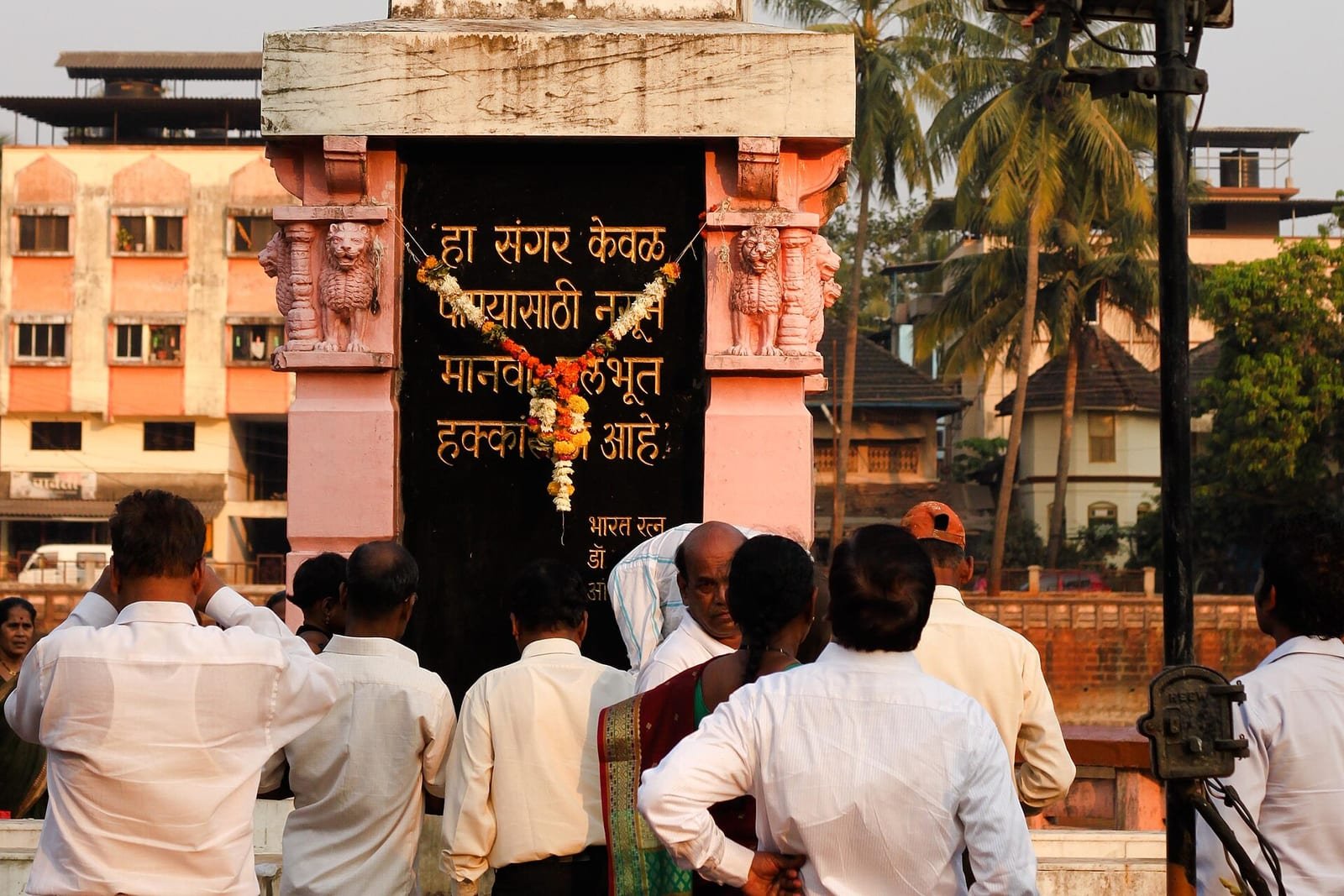
Bhimrao Ramji Ambedkar was born into a Dalit family in 1891, in a caste then branded “untouchable.” On 20 March 1927 he led a march to the Chavdar tank, a public reservoir at Mahad, in Maharashtra, and drank its water, asserting an equal right to public water. At a second satyagraha in Mahad that December, he and his supporters burned a copy of the Manusmriti, the law book that ranks people by birth.
In 1932 the British government’s Communal Award gave the “Depressed Classes,” as Dalits were then called, separate electorates: seats for which only Dalit voters would choose. M.K. Gandhi opposed this and announced a fast unto death. Under that pressure Ambedkar signed the Poona Pact on 24 September 1932, which gave up separate electorates for 148 seats reserved for the Depressed Classes and filled by voters of all castes.
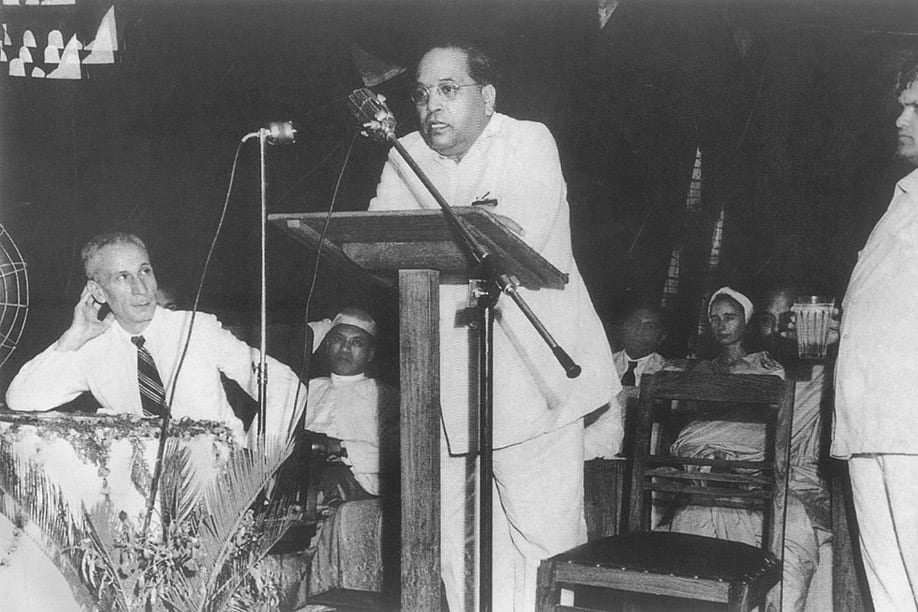
The Jat-Pat-Todak Mandal, a Hindu reform group in Lahore, now in Pakistan, invited him to preside over its 1936 annual conference, then cancelled the conference once his address was printed. He sold the printed speech himself as Annihilation of Caste. Its argument is that caste cannot be reformed while the scriptures that sanctify it keep their authority.
As chairman of the Constitution’s Drafting Committee, Ambedkar wrote equality into law. Article 17 says: “‘Untouchability’ is abolished and its practice in any form is forbidden.” He did not mistake the document for the deed:
“On the 26th of January 1950, we are going to enter into a life of contradictions. In politics we will have equality and in social and economic life we will have inequality.” — B.R. Ambedkar, speaking to the Constituent Assembly, the body that wrote India’s Constitution, on 25 November 1949 (Constituent Assembly Debates)
On 14 October 1956, at Nagpur, in central India, he converted to Buddhism with hundreds of thousands of followers: more than three lakh (300,000) by the historian Ramachandra Guha’s account, and six lakh (600,000) by the account of Krishna Mohan Lal, a PhD research scholar at the Tata Institute of Social Sciences in Mumbai, writing in the Indian news magazine Outlook. He gave them 22 vows.
What is reservation, and what is it for?
Reservation is India’s system of quotas in legislatures, government jobs and public education. It is often argued about as if it were an anti-poverty scheme. It is a representation mechanism: a remedy for centuries in which a few castes held a monopoly over priesthood, land, learning and office.
i
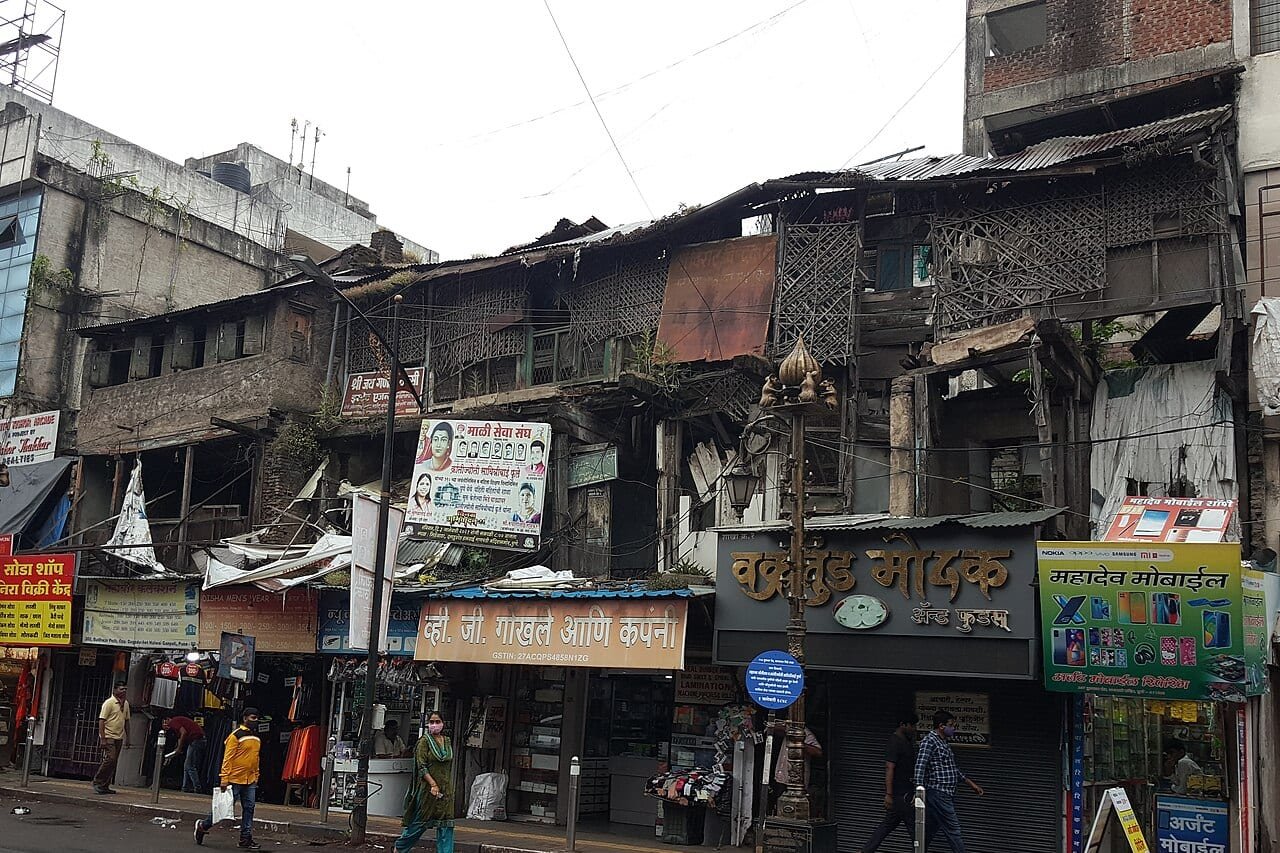
CC BY-SA 4.0Original on Wikimedia CommonsSeats for Scheduled Castes and Tribes in the Lok Sabha, Parliament’s lower house, and in state assemblies were meant to last 70 years; they were due to expire on 25 January 2020, and a 2019 amendment, introduced as the 126th Amendment Bill, extended them by another 10 years. In Indra Sawhney (1992) India’s Supreme Court upheld a 27% quota for OBCs in central government jobs, excluded their better-off “creamy layer,” and held that reservation should not exceed 50% except in exceptional circumstances.
In 2019 the 103rd Amendment created a 10% quota for “Economically Weaker Sections” among people not covered by caste quotas. The Supreme Court upheld it 3:2 on 7 November 2022. Dissenting, Justice S. Ravindra Bhat wrote that leaving poor Dalits, Adivasis and OBCs out of a poverty quota was wrong: “Our Constitution does not speak the language of exclusion.”
Graded inequality runs inside the Scheduled Caste list too. A seven-judge bench of the Supreme Court ruled 6:1 that Scheduled Castes are not a single, uniform group and that states may sub-classify them to share the quota more fairly. The southern state of Telangana became the first state to put such a split into effect, Scroll reported, with a 2025 law splitting its 15% SC quota into three groups of 1%, 9% and 5%.
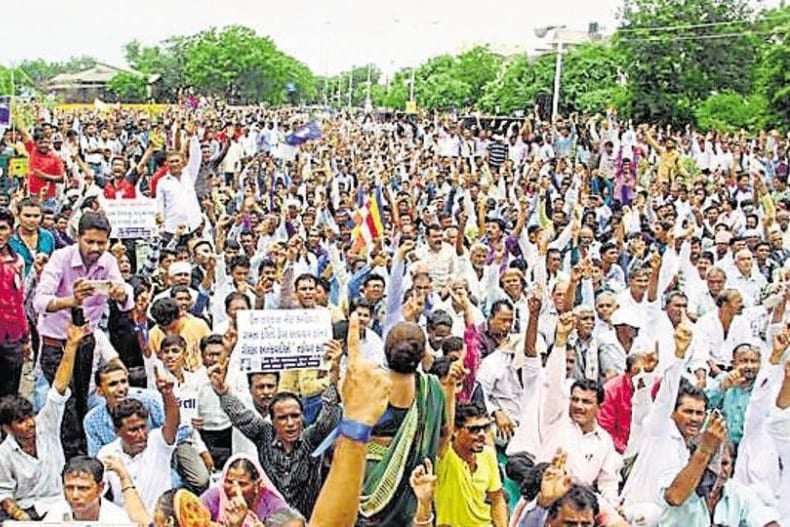
Every protection has had to be defended. In 2018 the Supreme Court, in Kashinath Mahajan v State of Maharashtra, added safeguards against arrest under the Scheduled Castes and Scheduled Tribes (Prevention of Atrocities) Act, India’s 1989 law against caste violence. Dalit and Adivasi groups answered with mass rallies across the country, in which several people died. Parliament undid the safeguards with an amendment the same year, and the Supreme Court upheld the amendment in February 2020.
Is untouchability still practised?
In the India Human Development Survey of 2011-12, a national household survey by the National Council of Applied Economic Research (NCAER) and the University of Maryland, as the Indian Express reported, 27% of respondents said they practised untouchability in some form. The law written to punish it, the Protection of Civil Rights Act of 1955, saw only 13 cases registered in all of India in 2022, by the Ministry of Social Justice’s own report, as The Leaflet reported.
How does caste shape work and wealth?
The hereditary jobs. Surveys under India’s 2013 law against manual scavenging, the cleaning of human waste by hand, identified 58,098 people doing it. Of the 43,797 whose caste was recorded, 42,594, or 97.25%, were from Scheduled Castes, the government told Parliament in 2021, The News Minute reported. The government reported in 2026, according to Outlook, that 498 sanitation workers died cleaning sewers and septic tanks between January 2019 and June 2026, while saying no death had been reported “due to manual scavenging.” The 2013 law makes it a crime for anyone to send a person into that work without protective gear and safety precautions. Sanitation workers’ own count runs well above the official one: the Safai Karmachari Andolan, their movement, counted 101 deaths in the first 188 days of 2026 alone. The Supreme Court in 2023 raised compensation for a sewer death to Rs 3 million (Rs 30 lakh, about US$36,000 at 2023 rates).
Hiring. In a 2009 study, Sukhadeo Thorat and Paul Attewell answered private-sector job advertisements with matched résumés from equally qualified applicants under different names. For every 10 applicants with what the Deccan Herald’s account calls “upper-caste” Hindu names who were called to interview, only six Dalit applicants were.
Housing. In a rental-housing audit in Delhi and its suburbs, reported by the Deccan Chronicle, home-seekers with identical profiles but different names met landlords face to face. Nearly every Hindu home-seeker from the dominant castes (97%) got a positive response, while nearly one Dalit in five (18%) was turned away outright.
Capital. A study of board members at India’s top 1,000 companies, reported by the Deccan Herald, found 93% from “forward castes,” the study’s term for the dominant castes, and 3.5% from Scheduled Castes and Tribes. Economists at the World Inequality Lab estimate that the castes outside the SC, ST and OBC lists, which they call “upper castes” and which make up just over a quarter of the population, own nearly 55% of national wealth (2018-19) and nearly 90% of billionaire wealth (2022-23). Scheduled Castes hold 2.6% of billionaire wealth; Scheduled Tribes hold none.
Who holds the institutions?
The courts. Of 593 High Court judges appointed between January 2021 and January 2026, 26 (4.38%) were from Scheduled Castes and 436 (73.52%) from the general category, judges outside the SC, ST, OBC and minority counts, India’s law ministry told Parliament in February 2026, LiveLaw reported. India has had two Dalit Chief Justices: K.G. Balakrishnan, from 2007 to 2010, and B.R. Gavai, sworn in as the 52nd Chief Justice in 2025.
The prisons. Two in three undertrial prisoners, people held while awaiting trial, come from Scheduled Castes, Scheduled Tribes and OBCs, by the 2023 prison statistics of India’s National Crime Records Bureau (NCRB), the government’s crime-data agency, as Scroll reported. The prison manuals of several states assigned jail work by caste until the Supreme Court struck those rules down on a petition by the journalist Sukanya Shantha after her reporting on them.
The newsrooms. A 2022 Oxfam India and Newslaundry study found that about 90% of leadership positions in the media outlets surveyed were held by general-category people. In the news channels, newspapers and magazines whose leaders it counted, Scroll’s account of the study gives Scheduled Caste journalists 1.59% of leadership roles and Scheduled Tribe journalists none; Newslaundry, counting mainstream newsrooms only, found no SC or ST journalist in a leadership role. Dalit journalists who built their own newsrooms explain what that does to the news.
The temples. Under its All Caste Archakas scheme, which legal challenges held up for years, Tamil Nadu gave appointment orders to 24 priests trained under the scheme, for temples including Kapaleeshwarar in Chennai’s Mylapore, an exception that shows how closed the priesthood still is.
Who may marry whom?
Endogamy is the engine of caste, and it still runs. In the India Human Development Survey, as Scroll reported, 95% of married women said their husband’s family was of the same caste. In a 2021 Pew Research Center survey, 64% of Indians said it was very important to stop women in their community from marrying into another caste.
The price of crossing the line can be death. On 13 March 2016, in Udumalaipettai, in the southern state of Tamil Nadu, men hacked Sankar, a 22-year-old Dalit man, to death near a bus stop because he had married Kausalya, from the Thevar community, a dominant caste in the region. A trial court sentenced six people to death for the killing, including her father; on appeal the Madras High Court, Tamil Nadu’s highest court, acquitted her father and commuted the other five men’s death sentences to 25 years in prison.
Why do so few caste crimes end in conviction?
Crime figures measure what police register, not what happens. In 2024, by NCRB data reported by ThePrint, India’s police registered 55,698 crimes against Scheduled Castes, with Uttar Pradesh, India’s most populous state, highest at 14,642, and 9,966 against Scheduled Tribes. At the end of 2024, 287,694 cases under the Atrocities Act were pending trial, by NCRB data tabled in Parliament and reported by SCC Times, the most in five years. Of the trials of crimes against Scheduled Castes that courts finished in 2024, only 33.9% ended in conviction, by the NCRB’s court table, as we reported; we set out there why the law rarely sticks.
The massacres show it most starkly:
- Kilvenmani, Tamil Nadu, 25 December 1968. Dalit farm labourers had demanded a little more paddy as their wage. Land-owning men and their henchmen, The News Minute reports, burned 44 Dalits to death in a locked hut, 20 women, five men and 19 children; on appeal the Madras High Court quashed the case in 1973.
- Tsundur, in the southern state of Andhra Pradesh, 6 August 1991. By the prosecution’s account, a crowd of more than 400 people chased eight Dalits along an irrigation canal and hacked them to death; a special court sentenced 21 of the accused to life imprisonment in 2007, but the Andhra Pradesh High Court later acquitted all the accused, men from the dominant castes.
- Bathani Tola, Bihar, 1996. 21 people were killed in an attack that the Deccan Herald attributes to the Ranvir Sena, which the paper calls a militia of “uppercaste Rajputs and Bhumihar”; the Patna High Court, Bihar’s highest court, later acquitted all 23 people convicted at trial.
- Laxmanpur Bathe, Bihar, 1 December 1997. Suspected members of the Ranvir Sena, Millennium Post reported, massacred 58 Dalits; the 26 men convicted in 2010 had their convictions set aside by the Patna High Court.
- Khairlanji, Maharashtra, 29 September 2006. A crowd led by men of the Kunbi-Maratha caste, by Scroll’s account, killed four members of a Dalit family, Mahars by caste; on appeal the Bombay High Court, the highest court for Maharashtra, commuted the death sentences and found no evidence of caste hatred. We traced how three courts read caste out of the case.
In Hathras, in the northern state of Uttar Pradesh, a 19-year-old Dalit woman died in September 2020 after an alleged gang rape. Police cremated her at about 2.30 in the morning without her family present, the National Commission for Women said, citing reports. A special court later convicted one man of culpable homicide not amounting to murder and of offences under the Scheduled Castes and Scheduled Tribes (Prevention of Atrocities) Act, and acquitted three.
Who is fighting it?
Politics. The Dalit organiser Kanshi Ram set up BAMCEF, the Backward and Minority Communities Employees Federation, in 1978, and DS4, the Dalit Shoshit Samaj Sangharsh Samiti, in 1981, to prepare the Bahujan community, the oppressed-caste majority, for politics, and then founded the Bahujan Samaj Party (BSP).
The campus. In December 2015 the University of Hyderabad barred five Dalit students, members of the Ambedkar Students’ Association, from its hostels and common places, as Newslaundry reported and we recounted, and they slept in the open in a camp they called the velivada, the Dalit ghetto. One of the five, the PhD scholar Rohith Vemula, died by suicide on 17 January 2016. His last letter said: “The value of a man was reduced to his immediate identity and nearest possibility.” In 2019 his mother, Radhika Vemula, and Abeda Salim Tadvi, whose daughter Payal Tadvi had also died, petitioned the Supreme Court over caste discrimination on campus, which led to new equity rules that the Supreme Court has since frozen; we follow that fight.
The sewers. Bezwada Wilson, born to a Dalit family that had done manual scavenging for generations, of the Safai Karmachari Andolan, the sanitation workers’ movement, won the 2016 Ramon Magsaysay Award for the campaign to end manual scavenging.
The diaspora. In June 2020 California’s civil rights agency sued Cisco and two managers, alleging caste discrimination against a Dalit engineer. The agency dropped its claims against the managers in April 2023 but kept suing Cisco, which denies wrongdoing; the case is still open. On 21 February 2023 Seattle became the first US city to ban caste discrimination. California’s statewide bill, SB 403, was vetoed by Governor Gavin Newsom in October 2023. We track where caste discrimination is now illegal in the US.
Key terms
- Dalit: the political name chosen by people from castes once branded “untouchable.” It is not a caste.
- Scheduled Caste (SC): the legal category, set by presidential order, through which the state counts Dalits and gives them reserved seats, jobs and the protection of the Atrocities Act.
- Other Backward Classes (OBC): the castes ranked as Shudra and others the state recognises as socially and educationally backward.
- Dominant caste: the caste that holds land and local power in a place, whatever its rank in scripture.
- Atrocity: the legal term, from the 1989 Act, for crimes against Scheduled Castes and Tribes.
What’s next
The numbers that matter most are about to change. Census 2027 will be the first full caste count since 1931. The Socio-Economic and Caste Census of 2011 also asked about caste, but its caste data was never made official; the central government told the Supreme Court it produced more than 46 lakh (4.6 million) different caste names. How the 2027 count is designed, coded and published will decide whether it ends a century of guesswork or repeats it. The Balakrishnan commission’s report on Dalit converts was reported ready for submission in June 2026.
If you or someone you know is struggling, help is available. In India, call Tele-MANAS on 14416. In Australia, call Lifeline on 13 11 14.