Listen to this article
Read by an AI-generated voice · Report a mispronunciation
On a Monday in late October 2026, a sessions court (a district-level criminal trial court) in Kalol, a town in Gandhinagar district of the western state of Gujarat, sentenced three men to life in prison for slaughtering cows. Its 76-page judgment, written in Gujarati, sets out what the Manusmriti and the Vedas, Hinduism’s earliest scriptures, say about the cow, the Indian legal news site LiveLaw reported. The Manusmriti is the Sanskrit lawbook of the caste order. Almost a century ago, a conference of Dalits at Mahad, in the western state of Maharashtra, burned it on a pyre as the charter of their indignity, as the Indian news site Sabrang recounts. Dalits are among the communities once branded “untouchable”. B.R. Ambedkar, the Dalit jurist and leader, led the conference.
A court that reaches for that book to explain a sentence is doing more than decorating a judgment. It is bringing the scriptural order Ambedkar fought into the reasoning of the state. And on the cow itself, the scripture the judgment calls on was answered long ago, by the man who led its burning.
What the court did
The prosecution’s case was that on 22 August 2024 the accused slaughtered cows at a house in Kalol taluka (sub-district) for sale, and that about 277 kg of beef, knives and an axe were seized at the spot, according to LiveLaw. The court found the charges proved against three men beyond reasonable doubt, on the evidence of witnesses, a veterinary doctor and a forensic report, and acquitted two others on the benefit of the doubt.
The judgment of the trial judge, Additional Sessions Judge Brijeshkumari Rameshwarsinh Rajput, discusses the religious and cultural place of the cow, LiveLaw reported. It says the Manusmriti recognises the cow not merely as an animal but as a pillar of society and religion, in LiveLaw’s summary. It cites the word for the cow in the Rigveda, the oldest of the Vedas: “Adhanya”, meaning one that should not be killed. Against this backdrop, LiveLaw reported, the court said it was deciding the case on its merits, keeping in view the importance of cows. The judgment also called the cow the “mother of the world” and the “abode of 33 crore”, or 330 million, deities, according to the report in the Indian Express, a national daily, cited by the Indian news site The Wire.
The cow’s sacredness returns at sentencing. “If such accused, who have cruelly cut the body parts of cows into pieces and separated them, are not punished in accordance with the law, then, over time, Gau Mata will become extinct from the earth,” the court said, as LiveLaw translated it. Gau Mata means “Mother Cow”. The court refused the defence’s plea for probation and sentenced the three men to rigorous imprisonment (imprisonment with hard labour) for life under the Gujarat Animal Preservation Act, 1954, as amended in 2017.
That amendment made life imprisonment the maximum penalty, The Wire reported. Until then the law’s maximum was seven years, according to the Indian news site The Quint. The court gave the most the law allows.
Harsh Sanghavi, Gujarat’s Deputy Chief Minister (the state government’s second-ranking minister), celebrated the verdict on X on 29 October. “This verdict under the Gujarat Animal Preservation Act is a clear message that the law will never spare those who commit cow slaughter in Gujarat,” he said, The Wire reported. Sanghavi tagged his post “Gau Raksha”, a phrase that means cow protection and also names the vigilantism over alleged threats to cows, which “has claimed many Muslim and Dalit lives in Gujarat and elsewhere”, The Wire noted. The three men are Muslim.
Not the first time
In November 2022, a district judge in Tapi district, also in Gujarat, sentenced a man, then 22, to life in prison for transporting 16 cows, The Wire reported. “A cow is the living planet of 68 crore holy places and 33 crore gods,” that order says, crore being ten million: 680 million and 330 million.
In June 2023, Justice Samir Dave of the Gujarat High Court, the state’s highest court, hearing a plea to end the pregnancy of a 16-year-old rape survivor, said girls in the past married at 14 or 15 and had a child before 17, and told the lawyer for her father, who brought the plea: “You will not read it, but do read Manusmruti once for this,” LiveLaw reported. That remark was made aloud at a hearing. The Kalol judgment puts the Manusmriti in writing, in a sentence of life.
How the sacred cow made untouchability
In The Untouchables: Who Were They and Why They Became Untouchables?, Ambedkar took on the reading of the Rigveda’s word for the cow that the Kalol judgment refers to. LiveLaw spells the judgment’s word Adhanya and Ambedkar spells his Aghnya; each glosses it as a cow not to be killed.
Those who say Hindus never killed the cow rest on the Rigveda’s word Aghnya, “one who does not deserve to be killed”, Ambedkar wrote, and conclude that “since the Vedas are the final authority in the matter of religion”, the Aryans, the people of the Vedas, could not have killed cows. That, he answered, was “based on a misreading and misunderstanding of the texts. The adjective Aghnya applied to the cow in the Rig Veda means a cow that was yielding milk and therefore not fit for being killed” (The Untouchables, Part V). He quoted the scholar he called Mr. Kane: “It was not that the cow was not sacred in Vedic times, it was because of her sacredness that it is ordained in the Vajasaneyi Samhita that beef should be eaten.” The Vajasaneyi Samhita is a Vedic text.
For Ambedkar this was not a quarrel about diet. It was his answer to where untouchability came from. “There is no community which is really an Untouchable community which has not something to do with the dead cow,” he wrote. The Brahmins, the priestly caste at the top of the caste order, came to what he called a “new-found love and reverence to the cow”. The people he called the Broken Men, whom he took to be Buddhists, kept eating the meat of dead cattle, and were cast out: “the main cause of their Untouchability was beef-eating” (The Untouchables, Part IV). He cited the Veda Vyas Smriti, a Hindu law text. It counts among the Antyajas, those outside the four varnas, “others who eat cow’s flesh”. The varnas are the ranked orders of caste society.
i
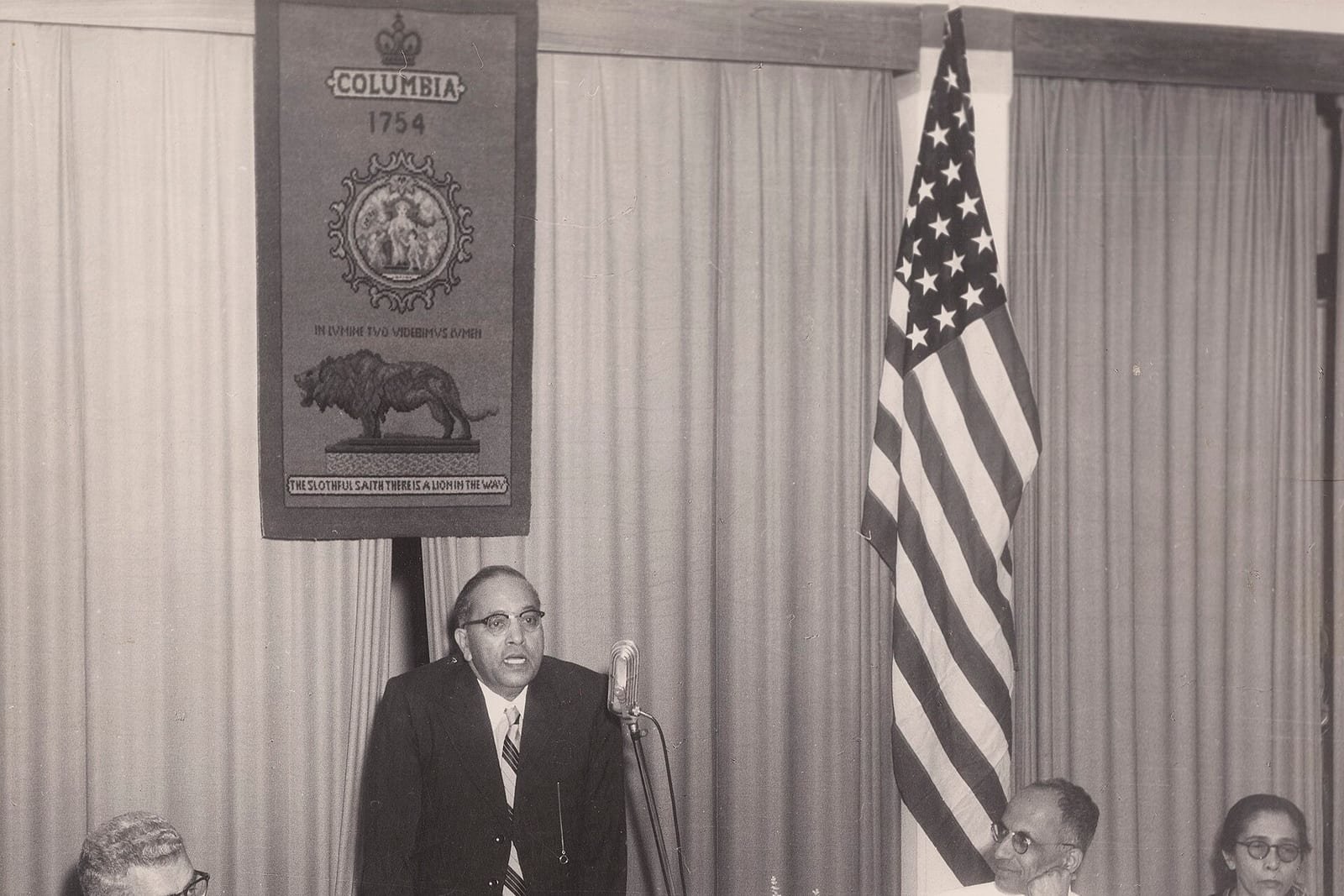
Public domainOriginal on commons.wikimedia.orgAmbedkar set this out as a new theory of the origin of untouchability, and its history can be argued. The structure he described has not gone away. The sacred cow ranked people by what they did with cattle, living and dead, and the caste order left the work of the dead cow to Dalits.
Five years. The sentence a Gujarat court gave in March 2026 to the five men convicted of flogging Dalits who were skinning a dead cow at Una in 2016 (LiveLaw).
Una: who pays for the sacred cow
Men calling themselves cow protectors caught Vashram Sarvaiya and his family, Dalits, skinning a dead cow on 11 July 2016, and beat them. They were from what the Indian news site The Mooknayak calls the socially “upper” castes. The attack was in the Una sub-district of Gir Somnath district, also in Gujarat. “While we were skinning a cow — which was killed by a wild animal — in a forest near Mota Samadhiyala village, a group of 45 cow vigilantes caught and beat us for two hours,” he told The Mooknayak. His family gave up the work and, in 2018, left Hinduism for Buddhism. They were not alone in refusing the dead cow’s work: about 20,000 Dalits marched to Una in the Dalit Asmita Yatra (Dalit pride march), which ended there on 15 August 2016 with a pledge to stop removing cow carcasses, The Mooknayak reported.
“We were proud of being Hindus, but Hindus tortured us. This incident made us realise why we continue to practice such a religion where we are subjected to assaults and humiliation because of our source of livelihood.” — Vashram Sarvaiya, activist, flogged at Una in 2016, to The Mooknayak
In March 2026, almost ten years on, a special court for atrocity cases convicted five of the men tried and acquitted 35; the five were sentenced to five years for hurt, wrongful confinement and insult, and for offences under India’s law against caste violence, as an earlier Dalit Project piece sets out.
It was also alleged that the Dalit men were illegally put in a police lockup and beaten by police officials, LiveLaw reported. The 41 men tried for Una included four police officers. The case against one ended when he died, and the other three were acquitted, the earlier piece notes.
India’s law against caste violence is the Scheduled Castes and Scheduled Tribes (Prevention of Atrocities) Act; Scheduled Castes and Scheduled Tribes are the official categories for Dalits and for Adivasi (Indigenous) communities. Each of the offences under its section 3(1) that the five were convicted of carries between six months and five years, under the Act, as the earlier piece sets out. The reported convictions do not include the attempt-to-murder count in the charge sheet, the formal list of charges, the earlier piece notes.
The two cases are different crimes under different laws. That is where the state’s severity shows. The law allows up to life imprisonment for killing a cow. On flogging Dalits in the cow’s name, the atrocity-law counts that ended in conviction carry at most five years each, and the sentence came almost ten years after the flogging.
The case for the judgment, and where it falls short
The defence of the Kalol judgment is plain. The conviction rests on evidence: witnesses, a veterinary doctor, a forensic report, the remains at the scene. Gujarat’s legislature, not the judge, set life imprisonment as the maximum penalty in 2017. On this reading the scripture is commentary, and the sentence would have been the same without it.
It falls short on the judgment’s own words. The court did not leave the scriptures in a preface. It said, LiveLaw reported, that it was deciding the case on its merits, keeping in view the importance of cows, an importance it had just drawn from the Manusmriti and the Vedas, and it came to the sentence through the image of Gau Mata vanishing from the earth. The law set a ceiling, the court went to it, and the court gave scripture as part of its reason. A sentence handed down under India’s Constitution has to be explained in its terms, not the Manusmriti’s.
What to watch
No appeal had been reported when LiveLaw and The Wire covered the sentence. If the three men appeal, the Gujarat High Court will read the judgment’s reasoning as well as its findings. Whether it says anything about the scripture will show whether this is one judge’s preface or a habit the higher courts accept.
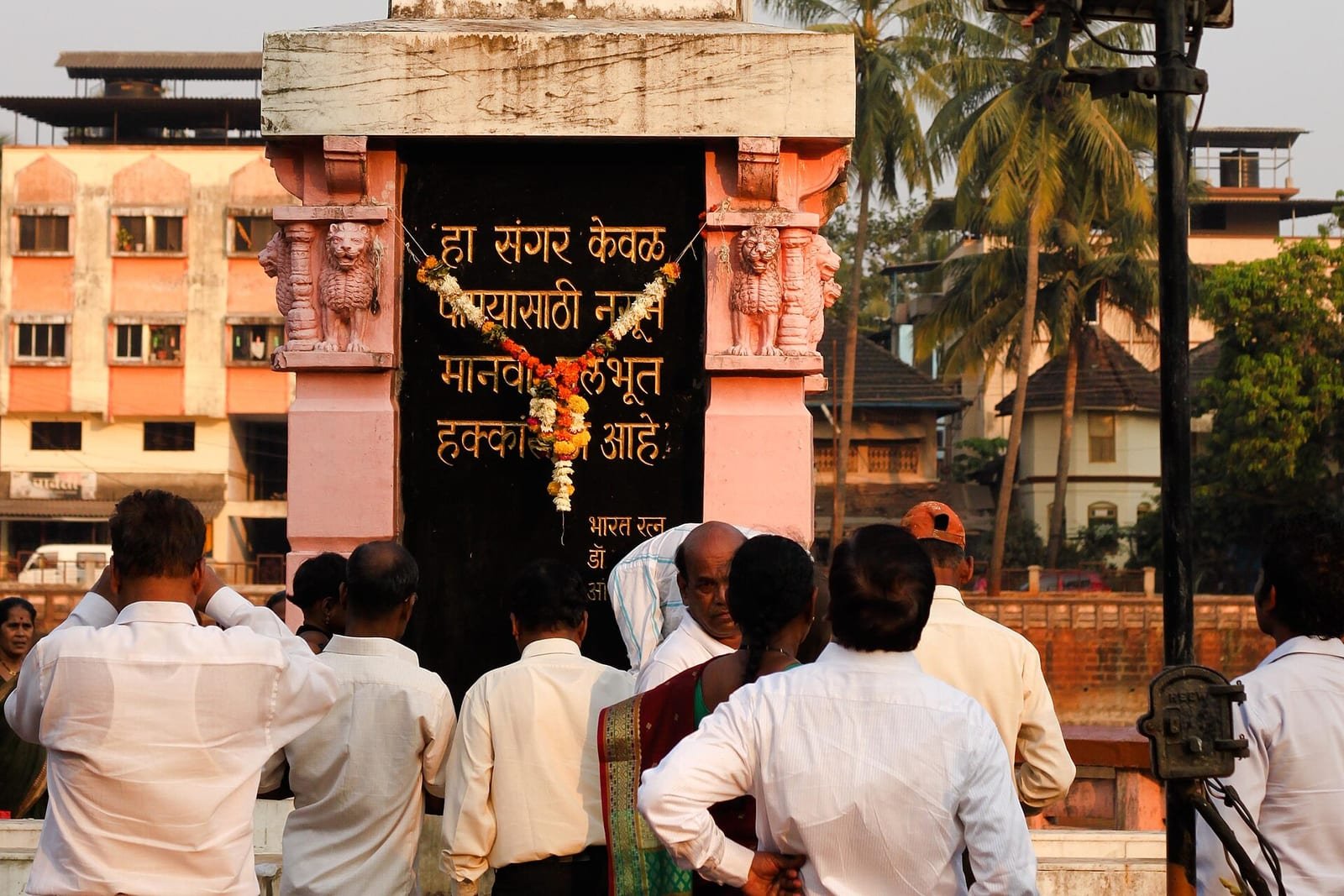
Also to watch is 25 December 2027, the centenary of the Manusmriti Dahan, the burning of the Manusmriti. On the evening of 25 December 1927, at Mahad, Ambedkar’s associate Gangadhar Sahastrabuddhe and several Dalit sadhus (Hindu ascetics) laid the book on a pyre under a banner that read “Bury Brahmanism”, the order that puts the Brahmins at the top, Sabrang reported. Ambedkar told the gathering that the aim was to break down the varna system that held up inequality.
Almost a century after Mahad
Almost a century after Mahad, the book Dalits burned has a place in a Gujarat courtroom, quoted in a sentence of life. Ambedkar read the Rigveda’s word for the cow and found in the sacred cow the making of untouchability. The court read the same scriptures and found a reason for the heaviest sentence the law allows. The centenary will ask which reading India’s courts follow.