Listen to this article
Read by an AI-generated voice · Report a mispronunciation
In the early hours of 9 November 2026, in Metpur, a village in Khambhat taluka (subdistrict) of Anand district in the western Indian state of Gujarat, a 21-year-old commerce graduate named Saniya died in her family’s kitchen. Her family first said she had died by suicide, Inspector P.J. Bantva of Khambhat Town police station told the Press Trust of India (PTI), an Indian news agency. But doctors at the civil hospital, a government hospital, found the circumstances suspicious and recommended a post-mortem examination, which, Bantva said, established strangulation. Police say her father, Kaushalkumar Patel, strangled her after she refused, once more, to end a relationship he had opposed for about a year because the young man was from a different caste and earned little.
Had the doctors accepted the account they were given, there might have been no murder case, and so nothing for India’s crime statistics to count. Even when a case is filed, the official count of so-called “honour” killings covers only murders explicitly tagged with that motive, and leaves out those recorded as ordinary murder. It records very few: 38 across the whole country in 2023, by the count of the National Crime Records Bureau (NCRB), the agency that compiles India’s crime statistics, as ThePrint, an Indian news site, reported it.
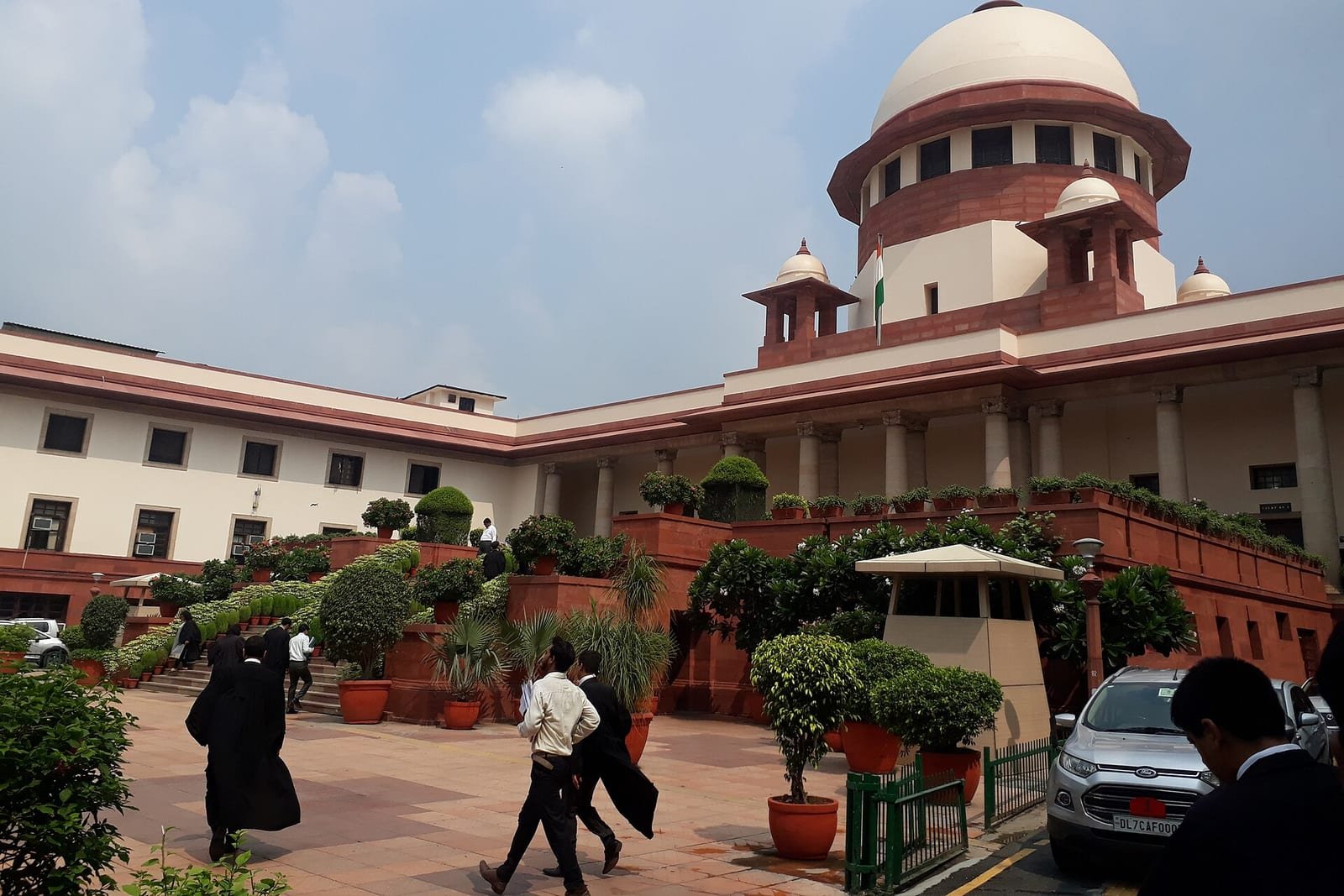
That matters beyond the statistics. Killings over a relationship across caste are one of the ways caste enforces marriage within the group, and the 2018 orders of India’s Supreme Court, the country’s highest court, to prevent them start from the record: the first thing they tell state governments to do is find the districts where such killings have been reported. A record that misses them can point the state’s watch at the wrong places.
What happened
According to Inspector Bantva, as PTI reported on 10 November, Patel had opposed his daughter’s relationship with a young man from the village for around a year, on the grounds that the young man was from a different caste and earned only 10,000 to 15,000 rupees a month (about US$110 to US$170 at 2025 rates). In the early hours of 9 November he tried again to persuade her to end it. When she refused, police say, he strangled her in the kitchen while the rest of the family was asleep.
The accounts differ on who first told the suicide story. PTI’s report says family members initially claimed that she had died by suicide. The Gujarat daily Gujarat Samachar reported that, by the police investigation’s account, the father tried to present the death as natural or as suicide, and took her body to Khambhat General Hospital after misleading family members about what had happened. Both say doctors found the death suspicious. The body was moved to Karamsad Hospital, in a town elsewhere in Anand district, for a forensic post-mortem, which, Gujarat Samachar reported, found death by asphyxiation from ligature strangulation.
Police arrested him, an official told PTI, and they have registered a murder case against him, Gujarat Samachar reported. On 10 November police produced him in court and asked for him to be held in police custody for questioning; the court rejected the request and sent him to judicial custody, held in jail on a court’s order rather than by the police. The killing has not been proved in court. The reports carry no statement from Patel or from a lawyer for him, and they don’t say which castes the two families belong to.
How a killing gets counted
The NCRB has listed “honour killing” as a motive for murder only since 2014, a post on the blog of the Vidhi Centre for Legal Policy, an Indian legal research group, notes. Its counts have been small, and uneven. The Supreme Court’s 2018 judgment cited NCRB figures of 28 such cases in 2014, 192 in 2015 and 68 in 2016; for 2014 the Vidhi post gives 18 instead. Figures from parliamentary answers, compiled in the Vidhi post, give 25 such murders in 2020, 33 in 2021 and 18 in 2022. For 2023, ThePrint’s reading of the NCRB report gives 38, out of 27,721 murders recorded nationally that year.
38 Murders recorded across India in 2023 with so-called “honour” as the motive, out of 27,721 murders that year. Source: NCRB, Crime in India 2023, as reported by ThePrint
The people who track these killings on the ground say the real number is higher than the official count. A study of caste-based “honour” crimes in seven states, Gujarat among them, by the Dalit Human Rights Defenders Network and the National Council for Women Leaders, put it plainly, referring to the Indian Penal Code (IPC), India’s criminal code at the time: “As there is no law, most cases get registered under murder or other provisions of the IPC. Very few cases are properly registered as honour killings.” The gap shows when the counts are set side by side. India’s Home Ministry put the number of such killings at about 145 for the three years from 2017 to 2019, the Vidhi post says, while one group in Tamil Nadu counted 195 in that southern state alone over five years.
Gujarat’s recent cases show how such a death can enter the record as something else first. In March 2025, in Bhavnagar district, also in Gujarat, police said a father strangled his 19-year-old daughter over her relationship with a young man from another caste, and that he and his brother secretly and hastily cremated her. According to police, he told her late mother’s relatives that she had consumed poison; it was they, unsatisfied with his answers, who alerted police. In September 2026, in the Gujarati city of Rajkot, police suspect a woman’s brother and two other men of stabbing to death the Dalit man she had first eloped with more than seven years earlier and later returned to. Dalits are the communities once branded “untouchable”. In two of those three killings, by the police accounts, the death was first explained away: as a suicide in Anand, as poison she had taken in Bhavnagar. In both, it was someone outside the household who first doubted the story: doctors in Anand, her mother’s relatives in Bhavnagar.
What the record is guarding
In both Gujarat cases where a father is accused, police named caste as a reason (in Anand, alongside the young man’s income). B.R. Ambedkar, the Dalit jurist who chaired the drafting of India’s Constitution, argued in 1916 that endogamy, marriage only within the group, is what makes a caste “an enclosed class”, and that enforcing it fell on women, through sati (the burning of a widow on her husband’s funeral pyre), enforced widowhood and girl marriage. A daughter who chooses a man from another caste opens that enclosure from inside the family. The violence that follows closes it again.
Suraj Yengde, a Dalit scholar, has argued that arranged marriage in India exists primarily out of fear of that kind of choice, when the partner is Dalit:
“The fact that we have ‘arranged’ marriages in India is primarily because of the fear of Dalit Love, which has the ability to inject the ideals of justice, compassion, forgiveness…into closed orthodox minds; hence, it is banished by a prejudiced society.” Suraj Yengde, Caste Matters, 2019, as quoted in The Hindu
The Anand reports don’t say whether either family is Dalit. But the boundary Yengde describes is the one police named in Anand: a different caste. If the police account is right, a killing hidden as a suicide hides twice. It hides the crime, and it hides what the crime was defending.
The strongest objection: a murder is a murder
The objection runs like this. The Law Commission of India, which advises the government on legal reform, said in 2012 there was “no need” to add “honour” killing to the murder law as a separate offence, because the existing law already covers it and a new clause could cause confusion. Patel faces a murder case whatever motive the police record. On that view, a column in a statistical table changes nothing for Saniya or for justice.
It changes a good deal for the next couple. In Shakti Vahini v. Union of India in March 2018, the Supreme Court set out what states must do before anyone is killed. Its first preventive step is that state governments “should forthwith identify Districts, Sub-Divisions and/or Villages where instances of honour killing or assembly of Khap Panchayats have been reported in the recent past, e.g., in the last five years” (khap panchayats are self-styled community councils). Police stations in those areas are to be “extra cautious” whenever an inter-caste or inter-religious marriage comes to their notice. The Court also ordered “Special Cells in every District” to receive complaints from threatened couples, each with a 24-hour helpline, and asked states to consider a safe house at each district headquarters, open to unmarried couples “whose relationship is being opposed by their families” as well as married ones. By the police account, that describes Saniya’s situation.
The first of those steps depends on what has been reported. A district where killings were filed as suicides, or as murders with no motive written down, can drop off the list of places to watch, and its police stations may never be told to be extra cautious. The cells are meant for every district, and states were asked to consider a safe house in each, but they help only a couple who know they exist. Whether Gujarat has built the rest is unclear: in a petition to the Gujarat High Court, the state’s highest court, in 2021, an inter-faith couple said the state government had evaded answering applications under the Right to Information Act, India’s freedom-of-information law, asking whether the safe houses and special cells existed, and the court asked the state why no safe house had been set up. Whether a special cell exists in Anand district today, and whether Saniya knew of one, the reports don’t say.
What to watch
- The charge. Whether police in Anand record the motive as an “honour” killing, so that the case appears in that column when the NCRB publishes Crime in India 2026, and whether the trial goes to a fast-track court, as the 2018 judgment directs for such cases.
- Gujarat’s list. Whether the Gujarat government has identified the districts the Supreme Court told it to, and whether Anand is among them.
- The cells and safe houses. Whether each Gujarat district has the special cell, helpline and safe house the 2018 directions describe, and whether couples know how to reach them.
Doctors at a hospital in Khambhat looked at a young woman’s death and did not accept the story they were told. That doubt turned a reported suicide into a murder case. Whether it also becomes a count, and helps put Anand on the list that tells police where to look next time, may depend on what someone writes in the motive column.