Listen to this article
Read by an AI-generated voice · Report a mispronunciation
What happened in 1964-65?
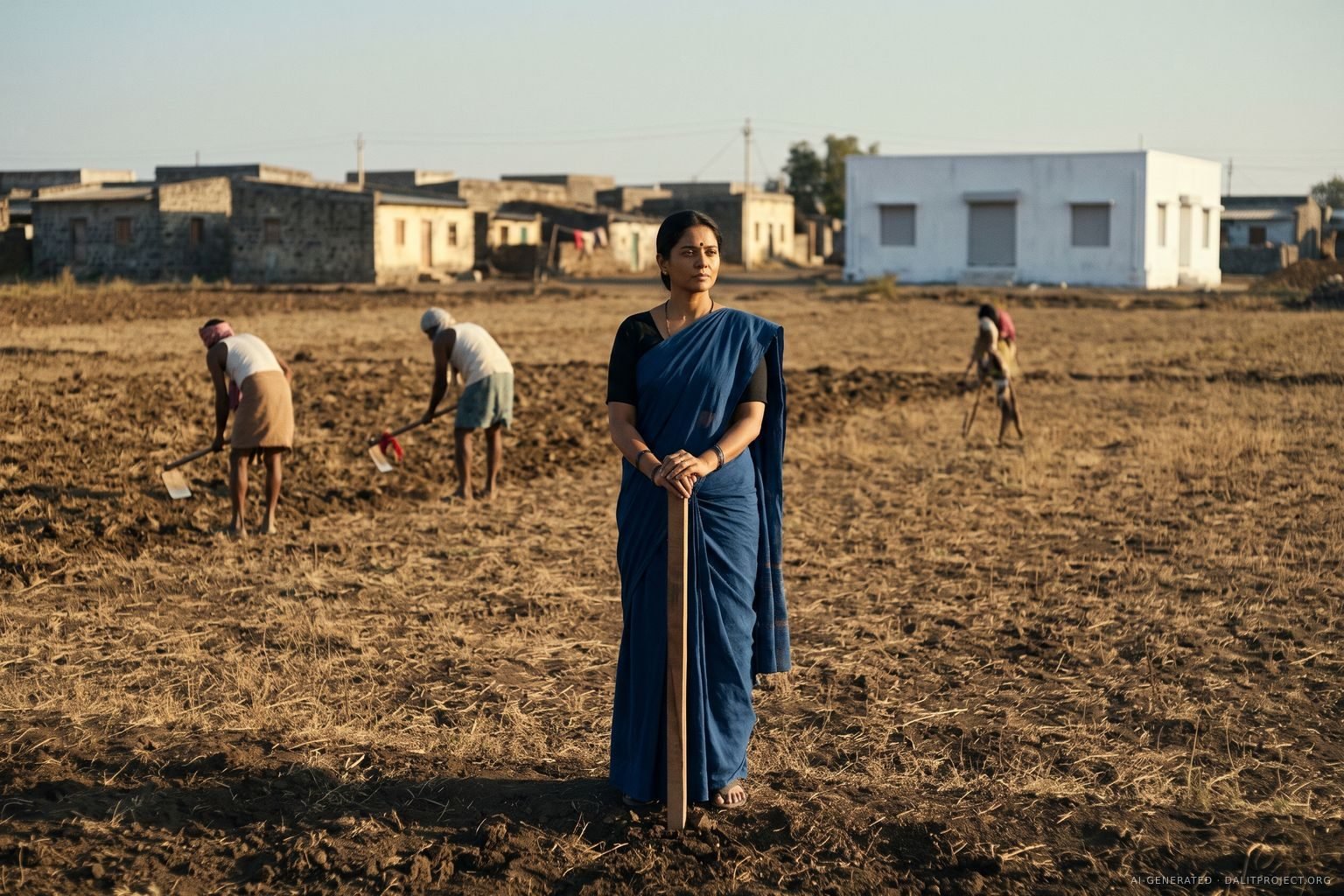
On 6 December 1964, the anniversary of the death of B.R. Ambedkar, the Dalit leader who chaired the drafting of India’s Constitution, Dalits began courting arrest in a campaign for land. Dalits are the communities once branded “untouchable” under the caste order. A satyagraha is non-violent civil disobedience: protesters break a law openly and court arrest. On its first day, hundreds were arrested in Punjab, Madras (now Tamil Nadu), Mysore (now Karnataka), Delhi, Gujarat, Uttar Pradesh and Maharashtra, Anand Teltumbde writes in his history of the Dalit movement, Dalits: Past, Present and Future. People courted arrest daily for over a month, and “over 360,000 people were imprisoned by 30 January 1965,” he wrote in an excerpt from another of his books published by ThePrint.
The campaign was run by the Republican Party of India (RPI), the party of Ambedkar’s movement, and led by Dadasaheb Gaikwad. Gaikwad, born Bhaurao Krishnaji Gaikwad in 1902 into a Mahar family in Nashik district, Maharashtra, was a founder member of the RPI and sat in the Rajya Sabha, Parliament’s upper house, from 1962 to 1968, his Wikipedia biography records. The Mahars are a Dalit community.
Why does it matter?
Until then, Teltumbde writes, the Dalit struggle “had revolved around either the abstract issue of discrimination or of political representation”. This one asked for property. “If the dalits were to raise material issues demanding their share in resources, it would be difficult to contain without a structural overhaul,” Teltumbde wrote of the government’s reading of it. This was “the first ever land struggle at the national level,” his history says.
Where did the demand for land come from?
From Ambedkar. In States and Minorities (1947), he proposed that the state own all agricultural land and lease it to collective farms, so that “there will be no landlord, no tenant and no landless labourer,” the scholar Awanish Kumar writes in the Review of Agrarian Studies. At a meeting in Agra, in Uttar Pradesh, on 18 March 1956, Ambedkar told his followers to occupy government wasteland and, if challenged, to say: “We will not leave the land, though we are willing to pay the appropriate revenue to the government,” Kumar quotes him, from a Marathi biography of Gaikwad.
The first land satyagraha came in 1953 in Aurangabad district, in the Marathwada region of Maharashtra, where more than 1,700 people were arrested, Kumar writes. A second began on 30 July 1959 in Dhadhane, a village in Nandurbar taluka (sub-district), and spread across Maharashtra. Some 50,000 volunteers courted arrest before it was called off on 17 October 1959, when the state government accepted all 15 of its demands, Teltumbde’s history records. He says the promises were not kept, and the RPI took the demand national.
What did the 1964-65 campaign ask for?
On 1 October 1964 a procession marched from the Red Fort, the Mughal-era fort in Delhi, to the Lok Sabha, Parliament’s lower house. The party’s president, N. Shivraj, had died two days earlier, and Gaikwad and two other party leaders, B.P. Maurya and B.D. Khobragade, led it together in his place. Teltumbde puts the procession at one hundred thousand people; Kumar, citing the historian Eleanor Zelliot, writes of 300,000 participants in a land satyagraha in Delhi around October 1964.
The leaders gave Prime Minister Lal Bahadur Shastri a charter that asked for the nationalisation of land and collective farming, a national minimum wage, a stronger reservation system, the extension of Scheduled Caste benefits to Dalits who had become Buddhists (Scheduled Castes is the legal name for Dalit communities on the government’s official list), and a revision of scholarships for Scheduled Caste students, Teltumbde’s history says. Reservation is India’s system of quotas in education, government jobs and legislatures. The leaders warned that a countrywide satyagraha would begin on 6 December if the demands were not met.
Teltumbde credits Gaikwad with the campaign’s slogan in Marathi, “kasel tyachi jamin, nasel tyache kay”, which he translates as “land to the tiller, but what about the landless”. It answered the main land reform of the day. “Land to the tiller” gave land to the tenants on record, and “although most Dalits actually tilled the land, they did not get to own it,” Teltumbde writes. The land “went to the erstwhile Shudra tenants on record, effectively excluding the Dalits”: tenants from the dominant cultivating castes, ranked Shudra in the caste order. Kumar records the slogan among the largely Dalit participants of the gairan (common land) movement of the 1950s and 1960s, and renders it as “Land to the tiller, but what about landless labour?”
How many went to jail, and how do we know?
The number everyone repeats, over 360,000 imprisoned by 30 January 1965, comes from Teltumbde, who cites J.V. Pawar’s Marathi history of the post-Ambedkar movement. Jignesh Mevani, then an independent member of Gujarat’s legislative assembly, gave the same figure in ThePrint in 2018. We found no government count of the arrests to set beside it. The government answered with police repression, Teltumbde writes: police beat people, paraded them in handcuffs, held women arrestees, many carrying their small children, kept people in custody for days and left them at faraway places. The satyagrahis paid no heed. Every day, landless families, Dalit and non-Dalit, with women carrying infants, came to court arrest.
“Such has been the grip of the upper-caste, upper-class hegemony on all the organs of the state that land reforms, a programme which is in harmony with the preamble of the Indian Constitution, could never materialise.”
— Jignesh Mevanii
Source: in ThePrint, April 2018
What did the government give?
It accepted five demands and promised to consider five more, Teltumbde writes:
- an oil portrait of Ambedkar in the Central Hall of Parliament;
- a halt to demolitions of huts standing on 6 December 1964 until their occupants got other land;
- the distribution of fallow land to the landless;
- the extension of Scheduled Caste concessions to Buddhists;
- filling the backlog of reserved posts.
The satyagraha was called off on 3 February 1965.
How much land did Dalits get?
i
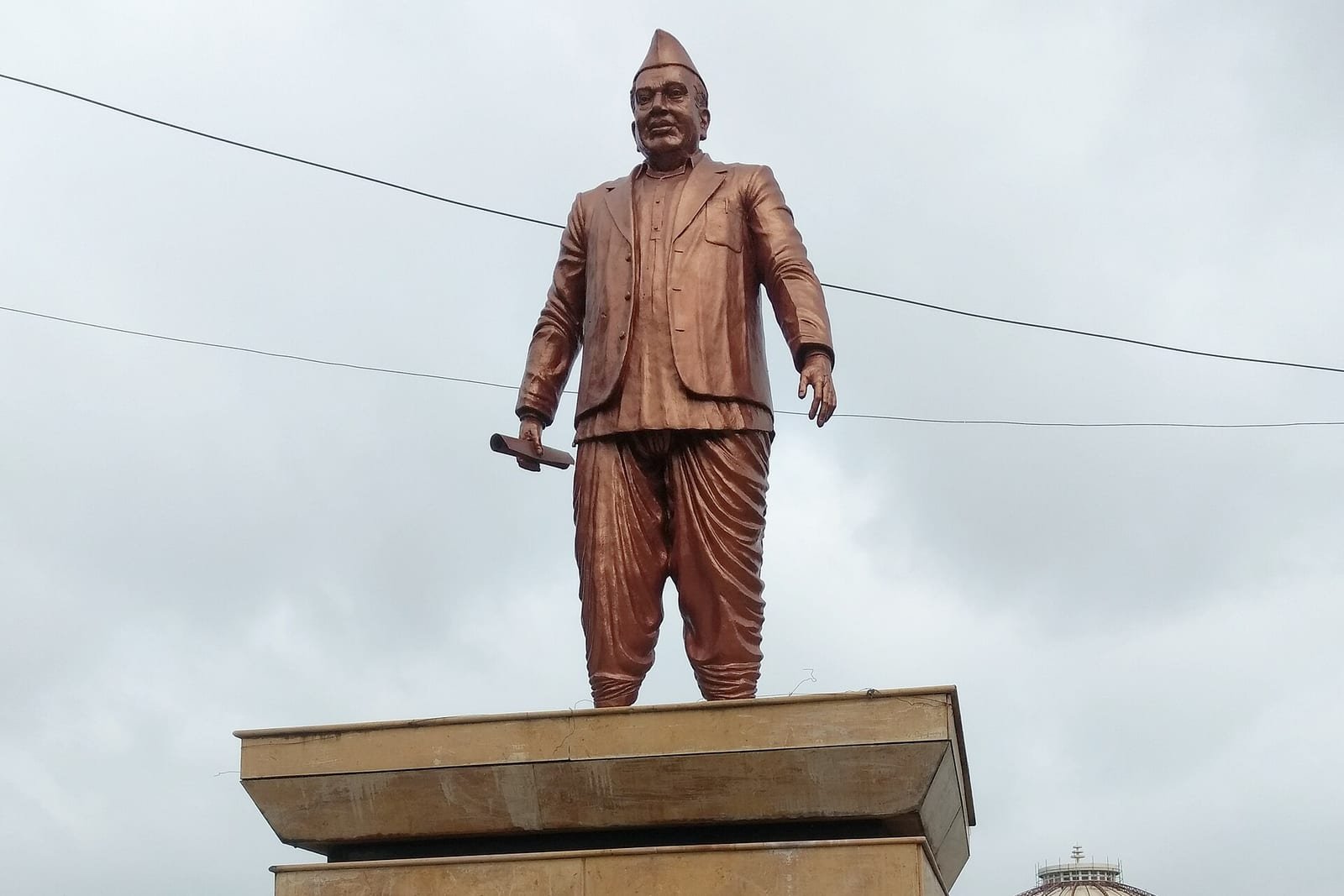
CC BY-SA 4.0Original on Wikimedia CommonsTeltumbde’s history says that, according to the “Perumal committee”, 3,916,676 acres of land titles went to Dalits between January and August 1965. The committee’s own report reads differently.
The Committee on Untouchability, Economic and Educational Development of the Scheduled Castes, chaired by L. Elayaperumal, was set up by a central government resolution of 27 April 1965, weeks after the satyagraha ended. Gaikwad was one of its members and later its vice-chairman, its 1969 report records.
The figure is in that report. It is the total of a table of wasteland allotted to Scheduled Castes and Scheduled Tribes combined since Independence, in acres as of August 1965: about 3.9 million acres (1.6 million hectares) given over 18 years to Dalits and Adivasis, India’s Indigenous peoples, together. It is not a count of land given to Dalits in 1965.
i
Source: Elayaperumal Committee report, 1969The report found “no improvement” for landless Dalit farm workers in that decade. In 1965-66, Scheduled Castes got 39.2% of the land allotted in Maharashtra but 2.8% in Rajasthan, even though Rajasthan reserved 25% of the land for Scheduled Castes, Scheduled Tribes and Other Backward Class communities. “The Scheduled Castes are not getting justice from the State Governments,” the committee concluded.
Why is it so little known?
The detailed record lies in Marathi: the sources Teltumbde cites for the arrests and the slogan are Marathi histories of the movement, as are some of those for the charter. Mevani’s English account of Gaikwad draws on his book.
Teltumbde also blames what followed. Soon after the satyagraha, he writes, the Congress party began building an alliance with the RPI through Yashwantrao Chavan, then a central government minister. In his account, the alliance sped up the RPI’s decline. “Never thereafter did the dalit leadership raise the land question, save for a flash in March 1983,” he wrote. The statue of Ambedkar at Parliament, which came up in 1967, was “in response to the land satyagraha,” his history argues.
Key terms
- Fallow land, wasteland: government land not under cultivation, the main land the state could give out.
- Scheduled Castes and Scheduled Tribes: the legal names for Dalit communities and Adivasi (Indigenous) communities on the government’s official lists.
What’s next
If an official arrest count was kept, it would be in the parliamentary debates and state government records of December 1964 to February 1965, the months the satyagraha ran. The land count has a gap of its own: when the Elayaperumal committee asked every state for at least five years of figures on land allotted to landless Scheduled Castes, only Madras sent complete ones, its report records. Our explainers on Tamil Nadu’s Panchami land and Kerala’s land reform follow the land question into the present.