Listen to this article
Read by an AI-generated voice · Report a mispronunciation
On 26 September 2026 an anonymous account on X posted a table of 35 readings from university courses and called them “a poison”. A day later India’s federal Education Ministry, citing the Prime Minister’s Office, asked central universities to “furnish comments” and report enrolment in the courses named. The list was not random. Most of the texts are by Ambedkarite scholars, writing in the tradition of B.R. Ambedkar, and together they trace one argument across more than 150 years: caste is a system of power, built and kept by people, and it can be taken apart.
Why it matters now
The post named Jyotirao and Savitribai Phule, B.R. Ambedkar, Periyar, Gail Omvedt, Kancha Ilaiah Shepherd, Braj Ranjan Mani and Sharmila Rege, according to Scroll and The Pioneer. These are the writers through whom Dalit students, from the communities once branded “untouchable”, and students from other oppressed castes meet their own history in a classroom. No order requiring universities to drop Ambedkar or Phule has been reported. But a teacher at a Delhi University college told Scroll that a colleague’s superiors were asking teachers to submit details of the books they teach. The question of what students may read about caste has moved from the classroom to the state.
“The X account called these writings as ‘poison’. Is teaching Ambedkar, Periyar and Phule poison? Is the PMO saying institutions cannot teach these books?”
— N. Sukumar, professor of political science at Delhi University, speaking to Scroll
Timeline
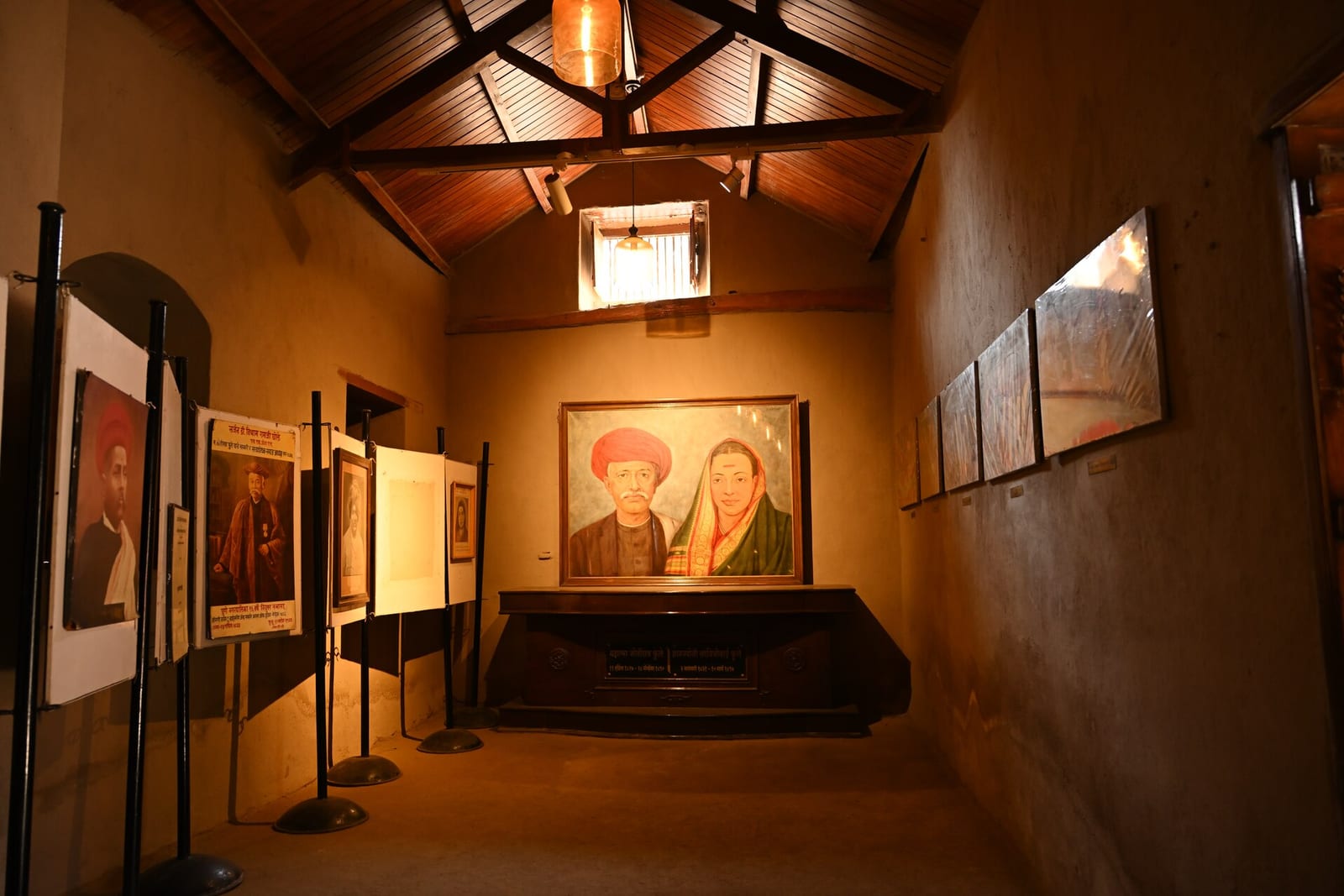
- 1848: Savitribai and Jyotirao Phule, with Sagunabai Kshirsagar, open a school for girls at Bhide Wada in Pune.
- 1873: Jyotirao Phule publishes Gulamgiri (Slavery) in Marathi and, on 24 September, founds the Satyashodhak Samaj, the Society of Truth Seekers.
- 1916: Ambedkar, then 25, writes “Castes in India”, arguing that caste is a product of sustained endogamy, marriage only within the group.
- 1925: Kudi Arasu, the Tamil weekly of Periyar’s Self-Respect Movement, starts publishing.
- 1936: A Lahore reform society calls off the conference Ambedkar was to address; he publishes his speech himself as Annihilation of Caste.
- 1994: Gail Omvedt’s Dalits and the Democratic Revolution.
- 1996: Kancha Ilaiah’s Why I Am Not a Hindu.
- 2005: Braj Ranjan Mani’s Debrahmanising History.
- 2013: Sharmila Rege dies; her last published book, Against the Madness of Manu, is a collection of Ambedkar’s writings on Brahmanical patriarchy.
- 26–27 September 2026: The anonymous post, then the ministry’s “URGENT” email to universities.
Origins: the Phules
The tradition on the list begins in 19th-century Pune, in the western state of Maharashtra. Jyotirao Phule’s Gulamgiri, written in Marathi with a preface in English, is one of the earliest critiques of the caste system; the writer Omprakash Kashyap has called it the “‘seed text’ for an anti-brahmanical consciousness”. Phule dedicated it to “the good people of the United States as a token of admiration for their sublime disinterested and self sacrificing devotion in the cause of Negro Slavery”, The Caravan notes. His Satyashodhak Samaj opposed idolatry, denounced the caste system and rejected the need for priests.
Savitribai Phule made the argument in practice. The school she opened with Jyotirao and Sagunabai in 1848 taught girls mathematics, science and social studies, and by 1851 the couple ran three girls’ schools in Pune with about 150 students. She also wrote poetry, including “Go, Get Education”, which urged the oppressed to free themselves through learning. Her place on a reading list about caste is not incidental: the first lesson of this tradition is that who gets to read is itself a caste question.
How it grew, in three phases
Ambedkar’s argument (1916–1956). Ambedkar’s 1916 paper “Castes in India” offered the insight that the caste system thrives by its control of women, and that caste is a product of sustained endogamy. Twenty years later, Annihilation of Caste took on caste’s defenders directly. To those who called it a division of labour, he answered that “the Caste System is not merely a division of labour. It is also a division of labourers”, graded one above the other. He located its root in belief, not bricks: “Caste is a notion, it is a state of the mind”, and so “the enemy you must grapple with is not the people who observe Caste, but the Shastras which teach them this religion of Caste”. Our essay on the book’s argument reads it more closely.
The southern movement. In Tamil Nadu, Periyar’s Self-Respect Movement campaigned for rationalism, women’s rights and the eradication of caste. The work of his on the list joins caste to gender. “To insist that chastity is only for women and should not be insisted upon for men, is a philosophy based on biased individual ownership,” he argued, in a passage Scroll quotes from his Collected Works.
The scholarship (1990s–2010s). From the 1990s, scholars working with the movement turned these arguments into academic fields.
- Gail Omvedt, an American-born sociologist who became an Indian citizen in 1983 and worked with Dalit and anti-caste movements, wrote Dalits and the Democratic Revolution. It traces the Dalit movement from the 19th century to Ambedkar’s death in 1956 in three states, Andhra, Maharashtra and Karnataka, and its encounters with Gandhi and with Marxism.
- Kancha Ilaiah Shepherd, a political theorist and former professor of political science at Osmania University in Hyderabad, wrote Why I Am Not a Hindu: A Sudra critique of Hindutva philosophy, culture and political economy. Sudra is the varna, or broad caste order, of the labouring castes; Hindutva is the ideology of Hindu nationalism.
- Braj Ranjan Mani’s Debrahmanising History argues that egalitarianism is neither alien to India nor the gift of the West. It follows a counter-tradition against caste and Brahmanism, the order that places Brahmins at the top, through Buddhism, the saint-poets, Sufism and Sikhism, to Phule, Iyothee Thass, Narayana Guru, Periyar and Ambedkar.
- Sharmila Rege, who led the Krantijyoti Savitribai Phule Women’s Studies Centre at the University of Pune and died in 2013, developed a “Dalit feminist standpoint perspective”. Her Against the Madness of Manu gathers Ambedkar’s writings to show how he laid the base for a feminist take on caste. The title names the Manusmriti, an ancient Hindu law text.
35 readings on the anonymous list, set against courses at four universities and colleges. Source: the post, as reported by The Pioneer
Where it stands today
i
CC BY-SA 4.0Original on Wikimedia CommonsThese texts sit in postgraduate courses across disciplines. The ministry’s email pointed to MA English and MA Political Science at Delhi University and MA History at Jawaharlal Nehru University (JNU) and the Central University of Punjab. Ravikant Kisana, an academic and writer, called them standard texts that have been part of university curricula for decades. Ajay Gudavarthy, who teaches political science at JNU, said they are “critical reading across several disciplines” there.
Getting them in took work, much of it, by Sukumar’s account, by first-generation Dalit teachers and teachers from other oppressed castes. Sukumar, who has described himself as “a first-generation Dalit teacher”, said “it is the first generation of Dalit-Bahujan graduates who went back to academia and introduced so many of these writers and reading”. He introduced Ilaiah’s Why I Am Not a Hindu in his department. Delhi University’s paper on literature and caste was once an elective that departments did not have to offer; teachers “fought for this to become an essential course in the English department at the undergraduate level”, he said. He now has “over a 100 students” in his class, he said.
The texts he teaches, he said, “just talk about everyday negotiation of equality, justice, freedom”. An assistant professor at a Delhi University college, who asked Scroll not to name him, said the books make students ask “who was allowed to learn, read, own land, enter temples, exercise freedom, define and produce knowledge”.
Key players and institutions
- The authors’ movements: the Satyashodhak Samaj, the Self-Respect Movement and the Ambedkarite movement, whose texts these are.
- Teachers and departments: a syllabus at a central university is cleared by the department board, the school board and the academic council, according to Sowmya Dechamma CC of the University of Hyderabad.
- Students: the Birsa Ambedkar Phule Students Association at JNU said that if a text is academically contested, “the appropriate response is to engage with it intellectually, not to initiate administrative scrutiny”.
- The state: the Prime Minister’s Office and the Education Ministry’s Department of Higher Education, which asked ten central universities for comments. None of the reports by The Pioneer, The Wire and The News Minute includes a statement from either explaining the request.
Open debates
The post’s objection is an old one. It called them “anti-Hindu propaganda”; Deccan Herald summarised its charge as material that promotes an anti-Brahmin and anti-Hindu worldview. In 1936 Gandhi made a version of the same reply to Ambedkar, accusing him of selecting the wrong interpretations of the Shastras, the Hindu scriptures; Ambedkar answered him in the second edition. The texts do criticise Brahmanism and its scriptures. That is their subject, and the scholars who teach them say that is why they belong in a classroom. R. Mahalakshmi, who teaches history at JNU, said Ambedkar’s work on caste and untouchability needs to be studied because caste remains prevalent in Indian society.
A second debate runs inside the tradition. The thread blamed a “leftist cabal”, but some of the texts are critical of the Indian left, The News Minute notes. Omvedt’s book, for one, examines the movement’s encounters with Marxism as well as with Gandhi.
What to watch
- The universities’ replies to the ministry, and whether any department, board or academic council revisits a reading.
- Requests to teachers for lists of the books they teach. “I think the queries have already started,” the Delhi University college teacher said.
- Enrolment. The same teacher fears scrutiny will “replace curiosity with caution” and shrink the courses. The next admissions will show whether it does.
- Student and teacher bodies. JNU’s Birsa Ambedkar Phule Students Association has answered in a statement; Sowmya Dechamma CC hopes teachers’ associations will resist any such intervention. Whether they act together is open.
The anti-caste readings on the list began with a school for girls in Pune and a book about slavery. The question they keep asking is the one the post raised without meaning to: who decides what Dalit and other oppressed-caste students may read about their own history.