Listen to this article
Read by an AI-generated voice · Report a mispronunciation
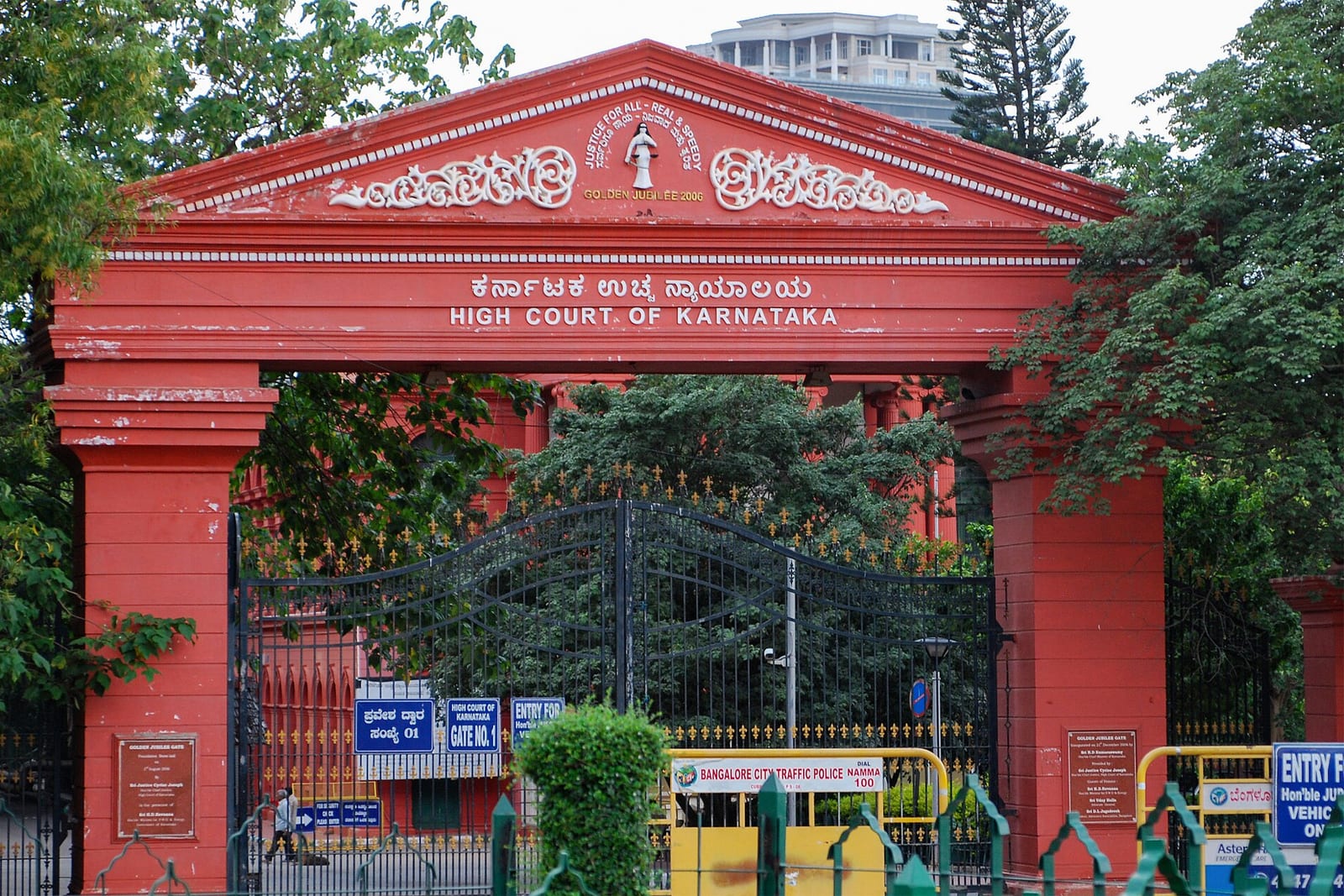
In October 2022 Karnataka, a state in southern India, raised its reservation for Scheduled Castes, the legal name for Dalit communities, among those once branded “untouchable”, and for Scheduled Tribes, the legal name for Adivasi communities. Reservation is India’s system of seats in colleges and posts in government kept for groups the Constitution recognises as held back, above all by caste, which for generations shut Dalits and Adivasis out of schools and public office. The increase came first by ordinance and then by an Act of the state legislature, in force from 1 November 2022. On 12 October 2026 the Karnataka High Court, the state’s highest court, struck the increase down.
The case turned on a limit India’s Supreme Court has set. Reservation for backward classes, Scheduled Castes and Tribes included, should not pass 50% of seats or posts except in “extraordinary circumstances”. Karnataka’s law took the total to 56%. Its case for passing the limit leaned on population.
What happened
The law is the Karnataka Scheduled Castes and Scheduled Tribes (Reservation of Seats in Educational Institutions and of Appointments or Posts in the Services under the State) Act, 2022. Section 3 set reservation in admissions to educational institutions at 17% for Scheduled Castes and 7% for Scheduled Tribes, and section 4 did the same for posts in state government service. The 32% for Other Backward Classes, an official category of disadvantaged castes outside the Scheduled Castes and Tribes, was unchanged, so in the court’s words the overall reservation “stands increased from 50% to 56%”.
The old figures were set as a stopgap. The judgment records that 15% and 3% were “tentatively fixed” in the State of Mysore, as Karnataka was then called, by a Government Order of 4 February 1958, “pending collection of data”, and “remained unchanged thereafter”.
Chief Justice Vibhu Bakhru wrote the judgment for a bench of two judges, with Justice K. S. Hemalekha. The court struck down section 3 “insofar as it takes the aggregate reservation beyond the ceiling of 50%”, as violating the equality guarantees in Articles 14 and 15 of the Constitution, and section 4 as violating Articles 14 and 16. Article 16 guarantees equal opportunity in government jobs.
Why it matters
For 64 years Karnataka’s Dalit and Adivasi quotas stayed where they were set “pending collection of data”, while the communities’ share of the population grew. When the state finally moved, the court did not question that both groups are held back. It said that the condition of backwardness “is satisfied”, and that the state’s commission “extensively records the various aspects adversely affecting” them. The ruling turns on what a state must prove to pass 50%, and whether population can be that proof.
What was the State’s case?
Lawyers for the State argued that the communities had grown while their quotas stayed the same, and that official data showed the old quotas did not secure adequate representation.
The court records the census argument. When the quotas were set, Scheduled Castes were about 13% of the state’s population and Scheduled Tribes about 0.8%. By 2011 they were 17.15% and 6.95%: together 24.10%, against reservation of 18%.
The State relied mainly on the Nagamohan Das Commission, appointed in July 2019 under a retired High Court judge, which reported on 2 July 2020 and recommended 17% and 7%.
Why did the court say population was the wrong test?
The commission’s first question, as the court quotes it, was whether reservation could be raised “in proportion to their population as per 2011 census: i.e., from 15% to 17% for Scheduled Castes and from 3% to 7% for Scheduled Tribes.” The court noted “that the figures of seventeen and seven per cent were specified by the Government in the reference”.
Article 16(4) of the Constitution allows reservation in posts for a backward class that, in the state’s opinion, is not adequately represented in state service. The Supreme Court read that as adequate, not proportionate, in Indra Sawhney (1992), its leading ruling on reservation, and again in Jaishri Laxmanrao Patil (2021), the High Court noted. “Thus, the fundamental premise that the reservation for backward classes must be in proportion to their population is erroneous,” the High Court held.
What did the court find wrong with the data?
i
CC BY-SA 4.0Original on Wikimedia CommonsThe commission “did not collect independent data” on who holds state jobs. It used an earlier committee’s figures for years up to 2016 and added state figures for 2017 and 2018. Reservation “which is to operate in the present and in the future, must be founded on contemporaneous data”, the court held.
It also compared Scheduled Castes and Tribes with no one else. “The question whether a community or caste is adequately represented would necessarily involve a comparison between its representation and the representation of other classes,” the court held, and the report “does not mention the representation of other classes or communities in the services of the State”. The court noted that the only table in the report comparing communities in public employment covers Brahmins and non-Brahmins in the princely State of Mysore from 1916 to 1918.
Newer figures were put before the court by those challenging the law. A report of the state’s Directorate of Economics and Statistics, dated 22 January 2024 and quoted in the judgment, counted 99,337 Scheduled Caste employees in state government service on 31 March 2023 (18.65%) and 26,871 Scheduled Tribe employees (5.05%). In 29 of the 33 departments it covered, Scheduled Caste representation was above 19%. The court said this “indicates that the representation of the Scheduled Castes and the Scheduled Tribes is significantly higher” than the commission’s tables showed.
What would count as extraordinary?
The court took the State’s grounds in turn. Reservation of 18% for groups that are 24.1% of the population “cannot be considered as so inadequate as to represent an extraordinary circumstance”. Growth from new communities being added to the lists “would not qualify as an extraordinary circumstance”. And the commission’s finding that some communities have been left out of reservation’s benefits “may perhaps present a case for internal reservation”, meaning sub-quotas inside the Scheduled Caste and Tribe shares. “However, it does not present a case for exceeding or breaching the 50% rule.”
The court set its own bar: “the least that would be necessary is to establish that, but for exceeding the limit, there is no possibility for the left-out communities to have any meaningful participation.”
It also held that the State should have consulted the National Commissions for Scheduled Castes and for Scheduled Tribes, the constitutional bodies that watch over their safeguards, first: its letters came “nearly three years after the Act was enacted”. The court did not rest its ruling on this point.
The case for the larger quota
Karnataka’s Deputy Chief Minister, G. Parameshwara, whom the Deccan Herald called “the Dalit face of the Congress in Karnataka” in 2018, said after the ruling: “Our demand is not for reservation as a symbolic announcement. Our demand is for reservation that is legally sustainable, socially meaningful and effectively implemented,” South First reported.
The court’s answer is that a share of the population is a claim every group can make. The commission had refused to take the increase from the Other Backward Classes’ 32%, because they too have less than their population share. The court said this “itself illustrates that a claim for reservation founded on the proportion of population, if accepted for one class, would equally be made by every other backward class.”
Key terms
- The 50% ceiling: the Supreme Court’s rule, from Indra Sawhney (1992), that reservation should not pass half of seats or posts except in extraordinary circumstances.
- Adequate representation: the test in Article 16(4): whether a group’s share of state posts is enough, judged against other groups. Population is relevant, but not the measure.
- Internal reservation: sub-quotas inside the Scheduled Caste or Tribe share, for communities that have gained least.
What’s next
Karnataka’s Advocate General, the state government’s senior lawyer, K. Shashi Kiran Shetty, told South First that the State is filing a petition in the Supreme Court to challenge the ruling. Watch for what happens to people already admitted or appointed under the larger quotas. Earlier interim orders, the judgment records, let recruitments go ahead on condition that any appointment would be “subject to the final outcome” of the case, and Mr Parameshwara has asked whether the ruling applies to them. Watch also whether the State takes up the route the court mentioned, internal reservation within the Scheduled Caste and Tribe shares.