
Listen to this article
Read by an AI-generated voice · Report a mispronunciation
In Poona under the Peshwas, Ambedkar wrote in 1936, “the untouchable was required to carry, strung from his waist, a broom to sweep away from behind himself the dust he trod on, lest a Hindu walking on the same dust should be polluted” (Annihilation of Caste, §2 [8]). In 2019, at two railway stations in Hyderabad, the geographer Pallavi Gupta found machines cleaning the platform that officials see, and Dalit women sweeping the tracks and toilets with short brooms (Gupta, pp. 241, 248–249). Our brief on her study tells that story.
Between the two brooms lie the end of Peshwa rule, colonial rule, independence and the market economy. Ambedkar’s argument explains why the broom stayed in the same hands: caste is a way of sorting workers, ranked from top to bottom, and it survives economic change unless it is attacked directly.
What Ambedkar argued
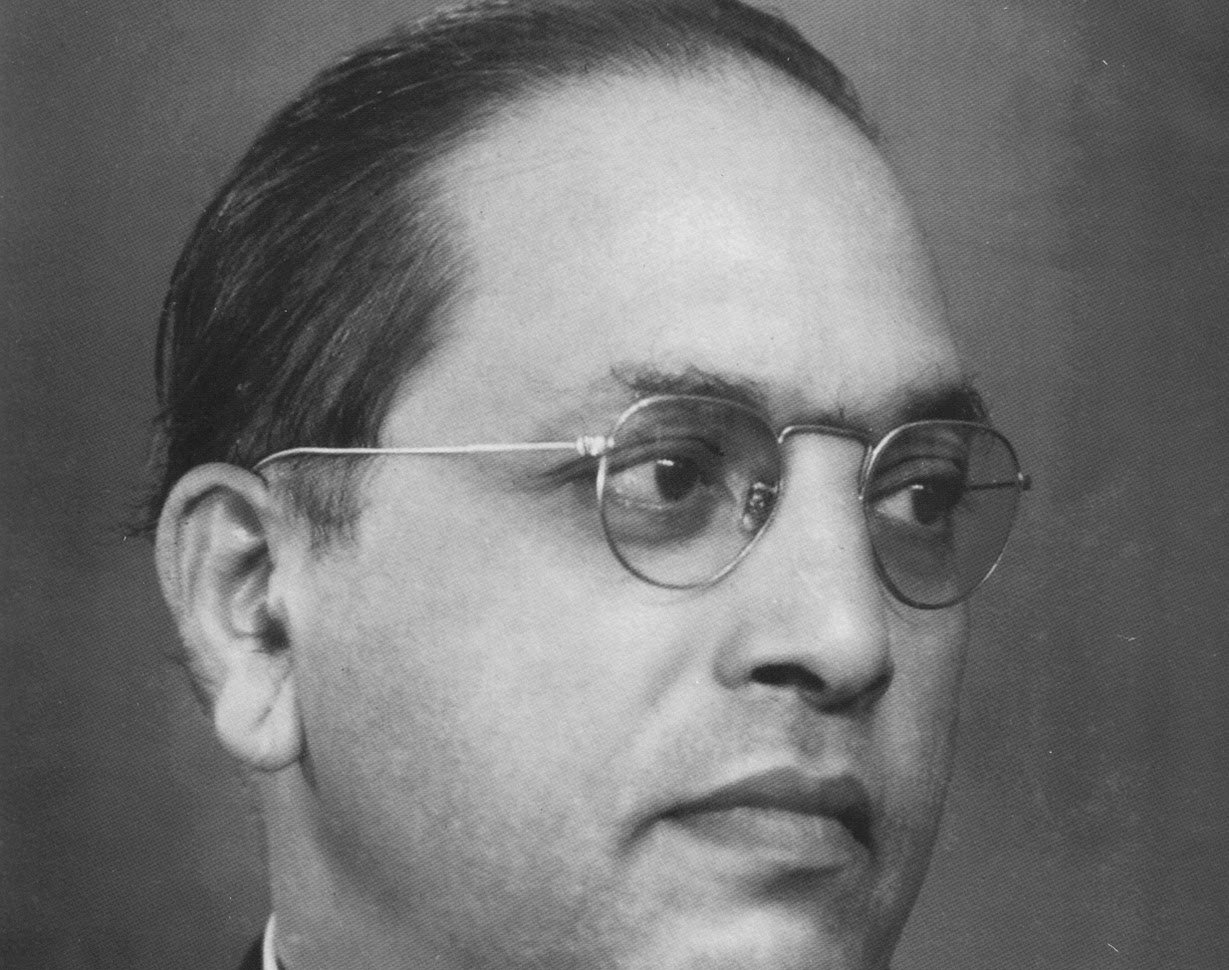
Ambedkar wrote Annihilation of Caste as a presidential address for the Jat-Pat-Todak Mandal, a Hindu reform group in Lahore. When the Mandal asked him to cut passages, he refused, the conference was cancelled, and he published the speech himself (Prologue [3], [9]).
Caste divides workers, not just work. Defenders of caste called it a division of labour, which every society needs. Ambedkar answered that “the Caste System is not merely a division of labour. It is also a division of labourers” (§4 [1]). And the divisions are ranked: “it is a hierarchy in which the divisions of labourers are graded one above the other.” Work is assigned not by ability “but on that of the social status of the parents” (§4 [2]). Because people cannot move to work that is not their caste’s, he argued, caste “becomes a direct cause of much of the unemployment we see in the country” (§4 [3]).
Money is not the only power. India’s Socialists held that property was the root of power and that economic reform must come first. Ambedkar disagreed: “Religion, social status, and property are all sources of power and authority, which one man has, to control the liberty of another” (§3 [7]). Workers will not join a revolution, he wrote, “unless they know that after the revolution is achieved they will be treated equally, and that there will be no discrimination of caste and creed” (§3 [10]). His conclusion: “Caste is the monster that crosses your path. You cannot have political reform, you cannot have economic reform, unless you kill this monster” (§3 [13]).
The grades keep the oppressed apart. Each caste, he wrote, “takes its pride and its consolation in the fact that in the scale of castes it is above some other caste” (§21 [16]). So “All are slaves of the Caste System. But all the slaves are not equal in status” (§21 [17]). That is why Marx’s call, “You have nothing to lose except your chains”, was in his view “quite useless” against caste: “Castes form a graded system of sovereignties, high and low”, and some stand to lose more than others (§21 [18]).
No one should be bound to an inherited calling. Gandhi, reviewing the speech, defended varna and wrote that “The callings of a Brahmin—spiritual teacher—and a scavenger are equal” (Harijan, 18 July 1936). Ambedkar’s reply asked whether a person must follow an ancestral calling “even if he finds it to be immoral” (Reply, §6 [22]). In the speech itself he had called this a form of slavery, found wherever “some persons are compelled to carry on certain prescribed callings which are not of their choice” (§14 [4]).
Caste is not race. Ambedkar rejected the claim that caste preserved racial purity. Caste, he wrote, “does not demarcate racial division”; it “is a social division of people of the same race” (§5 [3]).
The idea it is paired with: racial capitalism
Cedric J. Robinson, a scholar of the Black radical tradition, set out the idea of racial capitalism in Black Marxism (1983). He argued that capitalism was “less a catastrophic revolution (negation) of feudalist social orders than the extension of these social relations” into the modern world (Robinson, p. 10). Its tendency “was thus not to homogenize but to differentiate” (p. 26). In plain terms: capitalism did not wipe out older hierarchies. It kept them and put them to work.
Robinson wrote about Europe and the Atlantic, not caste. Other scholars made the link. Rahul Rao, a political theorist, sets Ambedkar’s division of labourers beside W. E. B. Du Bois’s argument, from the same decade, that poor white workers in the United States were paid a “public and psychological wage” for keeping apart from Black workers (Rao, p. 87). In Rao’s reading, Ambedkar’s graded inequality gives everyone except those at the very bottom a stake in “keeping the ladder intact” (p. 87). Gupta uses racial capitalism to study railway cleaning (Gupta, pp. 237–239).
Where the pairing helps
Both reject the hope that the economy will dissolve caste. Ambedkar told the Socialists that caste would survive their revolution (§3 [12]–[13]). Robinson argued capitalism differentiates. Both stand against the expectation, in Rao’s summary, that “market exchange will dissolve or attenuate the salience of precapitalist identities such as caste” (Rao, p. 88).
Both explain who ends up in the worst work. At the Hyderabad stations, cleaning had been contracted out. Gupta found “wages below minimum rate; untimely wages; non-payment of bonus; denial of PF; no job guarantee; and formulation of arbitrary rules” (Gupta, p. 242). PF is the Provident Fund, a statutory retirement saving. Most of the workers were Dalit women (p. 237). Gupta concludes that “women cleaners become domestic workers of the state” (p. 248). Jens Lerche, who studies labour in India, cites estimates of 60 to 100 million low-wage seasonal migrant workers, “or 10–17 per cent of the labour force in 2023”, among whom Adivasis and Dalits “overwhelmingly find themselves confined to the worst jobs and lowest pay” (Lerche, p. 324).
Where the pairing breaks
The source is different. For Ambedkar, caste is held in place by religion. “Caste is a notion, it is a state of the mind” (§20 [8]), and its sanctity comes from the Shastras, which must lose their authority before caste can go (§20 [9]). Robinson traces racial hierarchy to European civilisation. Lerche argues that for India “the link to overarching racialized structures emanating from pre-capitalist Europe and imposed worldwide through European empires becomes very tenuous” (Lerche, p. 323).
Caste is not race. Ambedkar said so in 1936 (§5 [3]). The scholars who use racial capitalism for India agree. Rao quotes Cháirez-Garza and colleagues: “race cannot be reduced to caste any more than caste can be reduced to race” (Rao, p. 92). Gupta writes that “it is important to ask what caste does, rather than whether caste is race” (Gupta, p. 239). The pairing is about what the two systems do to workers, not a claim that they are the same thing.
The remedy is different. Ambedkar’s remedy was inter-marriage, and before it, ending the religious authority that makes caste sacred (§20 [5], [9]). A theory of capitalism does not reach that far. Read alone, racial capitalism can make caste look like a tool of employers. Ambedkar’s point was that caste would outlast any economic order unless it was attacked directly.
Why it matters
- Dalits as authors of the idea. The best-known line on caste and labour was written by a Dalit leader, in a speech he refused to cut. Today, Gupta writes, the “Dalit refusal of the broom marks it as a political object” (Gupta, p. 248), and at one station cleaners unionised and won the minimum wage (p. 243).
- Policy and law. A 2015 government committee advised the railways to treat cleaning as “non-core” work done by contract (Gupta, p. 242). Once that happens, minimum wages and the Provident Fund depend on contractors who profit by cutting them.
- Caste now. “They ask us to do the cleaning work but don’t pay us salaries,” a cleaner named Ruji told Gupta (p. 243). The workers’ names are pseudonyms.
- Beyond India. Rao’s pairing of Ambedkar and Du Bois links Dalit labour to Black labour in the United States as overlap, not analogy (Rao, pp. 87–92).
The fine print
- A speech, not a survey. Annihilation of Caste is an argument made in 1936. Its claims about work are part of a wider argument about religion and reform, and it does not measure today’s labour market. Section 8 describes Adivasis in the language of its time.
- Narrow evidence. Gupta’s study covers two stations and 20 people. Lerche’s figure is a range of common estimates.
- The theory is debated. Lerche argues Robinson’s version must be reworked for India; Rao and Gupta build on Robinson while reworking him. Lerche notes that the India studies do not trace “how the racialization of Adivasis and Dalits has changed over time” (Lerche, p. 325).
- Who else to read. Dalit scholars have written at length on caste and class, among them Anand Teltumbde and Gopal Guru. We have not yet read their work directly for this piece.
Ambedkar’s broom and Gupta’s broom are ninety years apart. His question still stands: can any change in the economy end caste, if no one attacks what makes it sacred?
Talking points
- If every job were open to everyone tomorrow, would Ambedkar’s graded hierarchy still decide who cleans?
- When a contractor hires Dalit women to sweep, is the market using an old hierarchy, or making a new one?
- A counter-view: some Dalit writers have welcomed the market for its “putative caste neutrality” (as Rao reports, p. 88). What evidence would change your mind either way?
The works
- B. R. Ambedkar, Annihilation of Caste, 1936; third edition, 1944. Online edition by Frances W. Pritchett, Columbia University, with Gandhi’s articles in Harijan (July–August 1936) and Ambedkar’s “A Reply to the Mahatma”. Cited by section and paragraph.
- Cedric J. Robinson, “Racial Capitalism: The Nonobjective Character of Capitalist Development”, chapter 1 of Black Marxism: The Making of the Black Radical Tradition, revised third edition, University of North Carolina Press, 2021, pp. 9–28.
- Rahul Rao, “Is the Homo in Homocapitalism the Caste in Caste Capitalism and the Racial in Racial Capitalism?”, South Atlantic Quarterly 123(1), 2024, pp. 79–103. doi:10.1215/00382876-10920678
- Jens Lerche, “Racial Capitalism as a European Empire-Based World-System? Caste and Tribe and Racialized Neoliberal Capitalism in India”, in Jokubas Salyga and Kayhan Valadbaygi (eds), Mode of Production and the Historiography of Capitalism, Bristol University Press, 2026, pp. 317–330. doi:10.51952/9781529248005.ch017
- Pallavi Gupta, “Broomscapes: racial capitalism, waste, and caste in Indian Railway Stations”, Ethnic and Racial Studies 45(2), 2022, pp. 235–256. doi:10.1080/01419870.2021.1964557